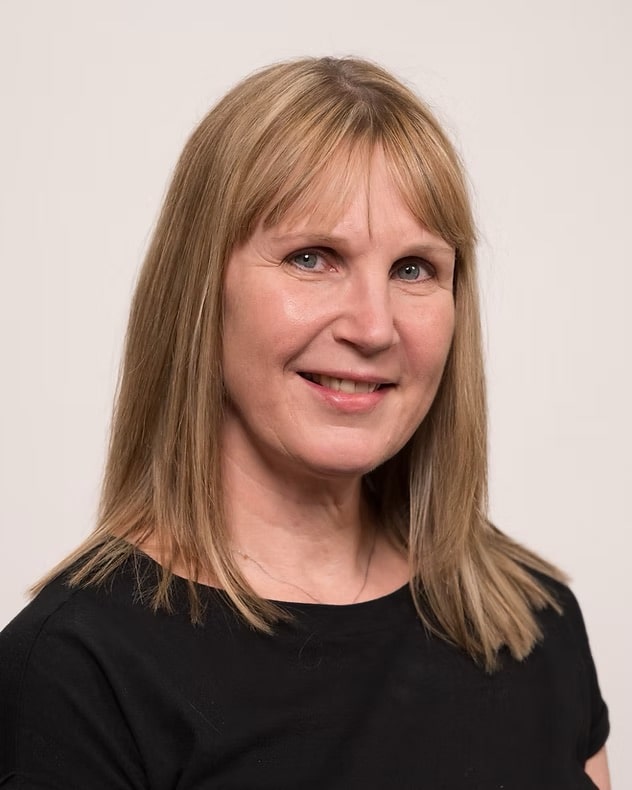
In this Maria Frankland interview, the bestselling psychological thriller author joins the Meet the Thriller Author podcast to discuss her writing journey, creative process, and the inspiration behind her latest novels. Known for fast-paced stories packed with twists, Maria Frankland books have earned a loyal following among fans of psychological suspense.
During the conversation, Frankland shares how writing became both a refuge and a career. As a child, she turned to books and libraries for comfort during difficult times, and that love of storytelling eventually evolved into a full-time writing career. Today, she has published more than two dozen novels, along with novellas, poetry collections, and writing guides for aspiring authors.
Frankland explains that her early novel The Man Behind Closed Doors began as a deeply personal story before transforming into a psychological thriller after she read Gone Girl. After dozens of rejections, she self-published the book, eventually leading to a publishing deal and the growth of her author career.
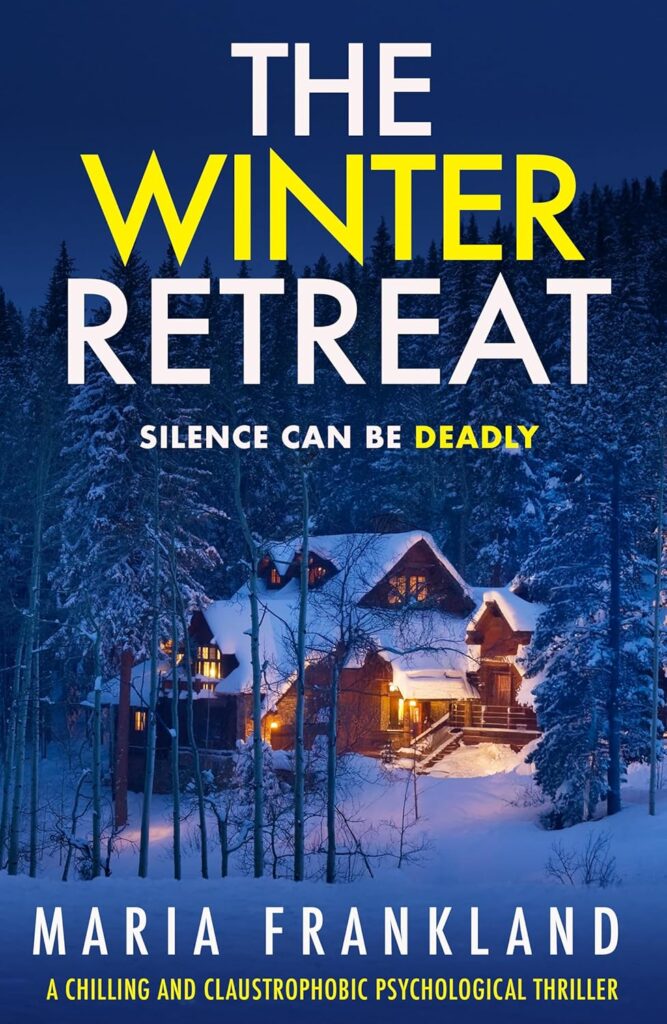
The interview also explores two of her newest titles. The Winter Retreat was inspired by a real yoga retreat where Frankland learned the building had once been used as a chapel of rest—an idea that sparked the premise of a tense, snowbound thriller. Meanwhile, her new novel The Road to Revenge draws inspiration from a road trip through the United States, including a stop in San Francisco.
Readers familiar with Maria Frankland books know that setting plays an important role in her storytelling. Many of her thrillers take place in Otley and the Yorkshire region of England, where she lives. Frankland says the landscape and local voice often become “almost like another character” in her stories.
Frankland also shares advice for aspiring writers, emphasizing the importance of writing consistently and staying connected to your manuscript every day.
Connect with Maria Frankland
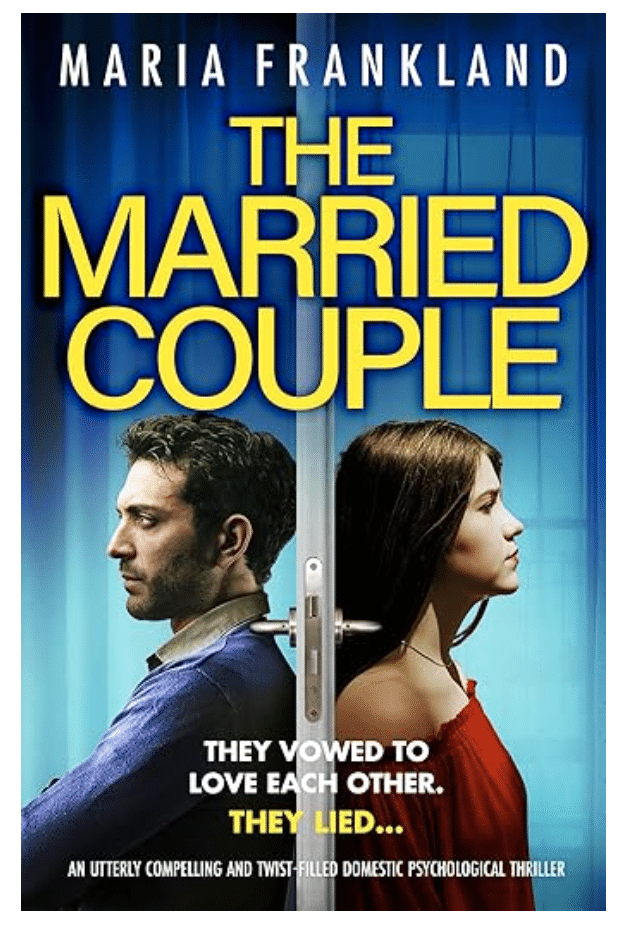
Latest Maria Frankland Book
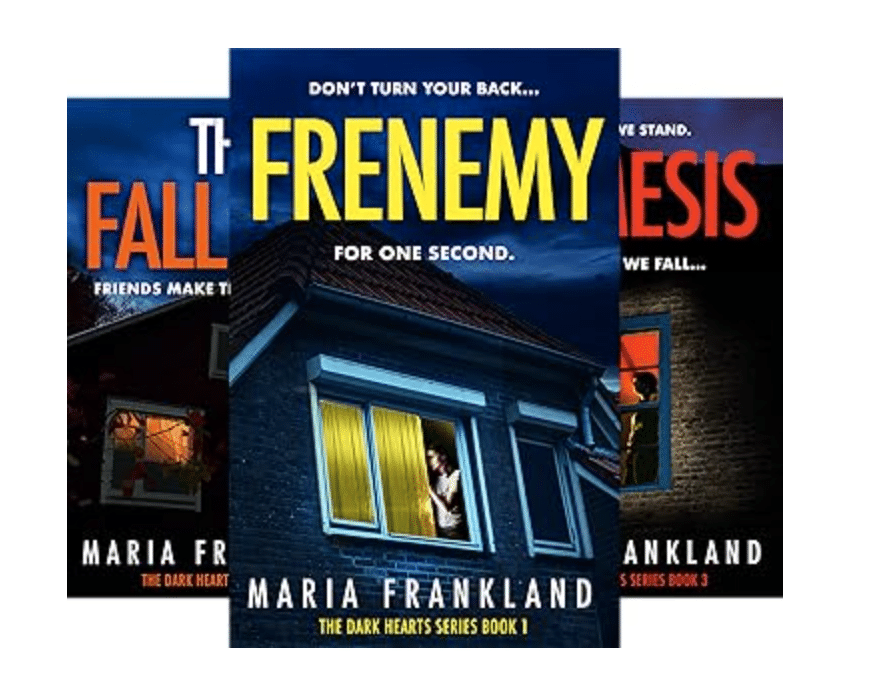
Maria Frankland Books
Show Notes and Transcript
- Maria Frankland interview: On episode 233 of Meet the Thriller Author, Maria Frankland discusses her journey from a difficult childhood and love of libraries to becoming a full-time psychological thriller writer.
- Prolific thriller author: Frankland has written more than two dozen novels along with novellas, poetry, and books for writers, building a loyal readership for her fast-paced, twist-filled stories.
- Origins of her career: Her early novel The Man Behind Closed Doors was initially rejected many times before she self-published it, later gaining attention and helping launch her professional writing career.
- New Maria Frankland books: The interview highlights The Winter Retreat and her latest thriller The Road to Revenge, which was inspired by a road trip through the United States.
- Advice for writers: Frankland emphasizes writing consistently and staying connected to your manuscript daily to maintain momentum and keep the characters’ voices alive.
Video
Transcript
Heads Up:
This transcript was generated with the help of AI and only got a quick once-over from a human. So if you spot a typo or something that doesn’t make sense… let’s just blame the robots. 🤖
[00:00:00.000] – Alan Petersen
You’re listening to Meet the Thriller Author, the podcast where I interview writers of mysteries, suspense, and thriller novels. I’m your host, Alan Petersen, a thriller author and fan of the genre myself. You’re listening to episode 233, where I’ll be welcoming Maria Frankland, the author of gripping Psychological Thrillers. Maria has written more than two dozen novels, and her stories are known for being fast-paced, realistic, and packed with twists that keep readers guessing right to the end. Maria joined me from the UK to talk about her writing journey, her creative process, and how she’s built a prolific career writing readers readers can’t put down. We also talk about two of her latest books, The Winter Retreat, which was released in December, and a brand new thriller, The Road to Revenge, which comes out on March 10th. Before we get to the interview, a quick reminder to rate and review the podcast on Apple, Spotify, or your favorite podcast app. It really helps other thriller readers and writers discover the If you’d like to check out my latest readers, visit thrillingreads. Com/books. All right, here is my interview with Maria Franklin.
[00:01:13.400]
Hey, everybody. This is Alan Petersen with Meet the Thriller author. On the podcast today, I have Maria Frankland, who writes psychological thrillers, and thrillers in general, and she’s joining me from across the pond here from the United States in England. Maria, thank you so much for being on the podcast.
[00:01:27.980] – Maria Frankland
Thank you for having me. I’ve I’ve listened to so many of the podcasts and so many of my favorite authors, but to be interviewed by you now feels quite surreal.
[00:01:37.900] – Alan Petersen
That’s great. Awesome. Glad to have you here. I’ve been a fan of your books. I love psychological readers and this type of thriller. It’s been fun. So excited to have you on here. Before we get into your books and what’s coming out, because you have a book coming out on March 10th, The Road to Revenge. So we’ll get into all that good stuff. But let’s get a little bit in for your journey and your to where you are today. You’ve published more than two dozen novels. I have to ask, did you always want to be a thriller writer or did that evolve over time? What was your journey like to get to where you are now?
[00:02:10.970] – Maria Frankland
Oh, right. Well, I always wanted to be an author, not necessarily a thriller author, so I’ll run you through how I got to that. I’ve always had a massive love of books and have been a writer, literally, since I could hold a pen, like so many other writers. But I had a particularly difficult and traumatic childhood, which led to me using the library as a place of safety and refuge when I couldn’t get in at home. I did end up in car. The And the library and books and reading and writing were my form of escape as a child, and a very welcome one too. So I was a real book worm and read avidly. So that’s where my love of books came from. And I continued writing throughout my teens. Also had a very tricky first marriage. So again, the pen and paper were my escape and my refuge and pouring things into my writing. I never really expected that eventually it would become my career. At that point, it was more therapy and escape, and I loved writing. But as I got through my 20s and did a teacher training degree, which also had an English degree, it was joint honors, I found I was loving the English side of it way more than the teaching side and excelled at the creative writing bit.
[00:03:43.420]
It reawakened my love of writing and that yearning to really do something with it beyond it just being a hobby. I would write in the early mornings when my children were still asleep and on my lunch breaks. I did become a teacher, but I only that lasted for three years. Before that, I was an administrator. So I hated being an administrator, really. I found it quite boring. For me, because I wanted to be able to use my imagination, I hated being a teacher even more and lasted three years in the job. So when my second marriage ended, which was actually on my 40th birthday, they say life begins at 40, the first thing I did was to enroll on an MA, her Master’s in Creative Writing, which was absolutely brilliant and springboarded me onto so many other things. By this time, I’d started writing a book. I’d been pouring all my unhappy marriage experiences into it, and I’d changed the genders around to try and hide the fact that I was right in it. I didn’t want to be sued or anything like that. At that point, because I’d swap the genders around, it was called The Man Behind Closed doors and was shaping up to be more of a family saga than anything else.
[00:05:05.360]
But it was when I read Gone Girl around that time, so I think we’d been around 2014 by now. I read Gone Girl and I thought what I’m writing could be a thriller. I could actually make somebody pass away quite horribly. So it evolved and it became fiction. And it And I worked on that through the MA I was doing. I also put my teaching career and my administration career behind me. I was still teaching, but carved out a career through my writing. So I was teaching it I was doing… I was going into care homes and leading creative writing workshops. I was teaching a course at the local night school called Write a Novel in a Year. I was teaching community centers. So I I became self-employed and I just loved doing this. So yeah, I finished The Man Behind the Color Stars, and yes, there was a killing in it. But then I hit a wall in that nobody wanted it. So after 46 rejections, I’d had enough. Although one of those submissions resulted in me being shortlisted for this international debut novelist competition. And that was really encouraging. I got down to the final 10 and went to a prize given in London.
[00:06:37.180]
And it assured me that the book had likes. I’ll come back to how much it had likes as I continue with this. So in the end, I self-published The Man Behind Closed doors, along with several other books. I used to think self-publishing was of a last resort and a plan B, but I’ve very much shown myself that it’s the way to go. And I’ve loved every minute of it. It’s not been easy, but The Man Behind Closed doors did eventually did get picked up by a publisher later on in my career. So, yeah, I’m jumping backwards and forwards here. I’m sorry, I will refer to the note I made and that might… Yeah. So, amidst all this, I met my second husband, Michael. And unlike my first husband, he’s been really supportive of my writing career, my first husband thought it was a complete waste of time. Oh, yeah, that’s hard. My second husband, Michael, is my proofreader, is my first reader, is the person who kicks me up the backside when I’m not getting on with what I’m supposed to be doing, like writing. And we married just before the lockdown, in the February, just before the lockdown.
[00:08:04.160]
And he moved over to Yorkshire from Lancashire, where he lived. Anybody who knows Yorkshire and Lancashire knows it’s like the dark side when you go across the border. So I know Daniel Hearst, who also lives in Lancashire. So we have a bit of a joke about that when we bump into one another. So yes, he moved over to the dark side. And because lockdown happened and I I was self-employed, all my work dried up. He just started a new job and was immediately laid off. Oh, wow. So we began marriage, surviving on loans and credit cards and hoping I might make some money from the man behind Closed Ours and the other books that I had ready to go. So, yeah, he’s been the wind beneath my wings as Michael. He went back to work 10 months after lockdown first happened and worked two jobs as a probation officer, which was a new career for him, and a carer at Weekend so that I could get my writing career off the ground. So it’s paid off in the end. But yeah, I’ve been very, very lucky. So like so many write-back, obviously, I’ve started off in lockdown.
[00:09:22.300]
But without him saying, I’ll pay all the bills and let you get on with it, I would be nowhere near where I am today with I’m just writing a book on the 28th. Oh, wow.
[00:09:32.940] – Alan Petersen
That’s a lot of challenges for a new marriage. Lockdown, you’re stuck together, you’re really discovering. So that’s great. I’m glad everything worked out well. It’s interesting. You mentioned that your first book that you self-published was picked up later. That’s very unusual, too. Usually the publishers want something new. So that says a lot about that book. That’s pretty cool.
[00:10:00.280] – Maria Frankland
Yeah, definitely. So yes, well, in my first year of writing, so 2020, I released four books. After the second one, I got a really, really awful review on Amazon, and I nearly gave up. It was so bad. I nearly gave up. But the readers did start coming, and some of them are still with me now. Some of them have become friends. I’ve got a wonderful community of readers. So in year two, I felt like I was going backwards, really, as far as the income was concerned, but the readers did still keep coming. Then year three, I attended. I scraped everything together and came to Orphanation, which was wonderful. But I came home wanting to do all the things as you do. So I pulled all my books out of Kindle Unlimited and went wide. What else did I do? I decided I didn’t like my covers anymore and I was going to redo them myself. And I’m not a cover designer, so I made a bit of a hash of that and ended up employing a new cover designer. I was running Kickstarters, I set up a Patreon, I was doing all the things, all these Silver Shiny.
[00:11:16.740] – Alan Petersen
Oh, yeah, all that stuff.
[00:11:18.220] – Maria Frankland
Yeah, and then after a few months, realized, actually, no, let’s go back and share you. And around this time as well, it was my 50th birthday when I got an email from Bookerchow saying they were interested in working with me. So, yeah, that’s the happy ending for The Man Behind Closed doors. Booker Chow rebranded that one as The Married Couple. It’s done really well, both for me and with them. So they took three of my back catalog and I wrote three new ones for them. So that was pretty much year four was my Booker Chow, yeah. But beyond that, so year five, I decided I wanted to go back as an indie. I just am. I’m a bit of a control freak. I like to name my books myself. I like to choose the titles. I like to keep the character names. I don’t like people turning around and saying, Oh, I don’t like that character or I’m not sure about that ending. I just like the autonomy of being an indie author and just being able to make all the decisions and work on the marketing and all that thing myself and really own my relationship with my wonderful readers.
[00:12:32.480]
So year five, when I went back as an indie, I think that’s where things have really taken off. And I’m suddenly bringing in lots and lots of new readers and seeing my books getting recommended a bit more on social media. So I think I’m living proof that it does take time. Oh, yeah. You got to be quite tenacious about it. But I think, yeah, and now I’m into year six and I can’t imagine doing anything else.
[00:12:59.060] – Alan Petersen
Yeah, that’s the one thing, You can’t stop, right? You have to… It’s a fickle memory if you can’t really take off for a couple of years.
[00:13:09.660] – Maria Frankland
Yeah, definitely.
[00:13:11.390] – Alan Petersen
Curious, too. Now, you said you read a lot when you were growing up Did you read a whole genre? What writer influenced you as an author?
[00:13:20.590] – Maria Frankland
Similarly enough, the one that really sticks in my mind is Mallory Towers. I think it could be in Ibleiton, but I can’t remember. That was set in a boarding school and I went into a very similar environment because I spent my teens in children’s homes. I think that resonated with me somewhat. I think all these difficult experiences before and after I went into car and then my first marriage. They say, what doesn’t kill you gives you, well, in my case, something to write about. I’ve been able to pull so much. I mean, at the time, things felt awful, but I’ve been able to pull so much of these past experiences into my writing. It now feels like a blessing that I’ve been through them because my readers do comment on how authentic these difficult scenarios in my writing are, these really toxic relationships. And that’s because I’ve been able to draw quite a lot of experience, which is great.
[00:14:22.180] – Alan Petersen
Yeah, it’s amazing. It’s like therapy. I’ve interviewed Dean Coons, and he mentioned he had a rough childhood, too, and the books were his lifeline. You don’t think about that, especially if you’re writing a little thriller here and there, you don’t think about that stuff. It could really help somebody.
[00:14:40.900] – Maria Frankland
Yeah, definitely. I have tried writing a romance, but somebody ended up killing somebody else. I think I’ll take it with the readers.
[00:14:49.600] – Alan Petersen
You can’t get the thriller out of your mind.
[00:14:52.280] – Maria Frankland
No, no, no. It’s those romance writers you’ve got to watch, really, because we thriller authors, I think we got all our darkness out onto the page, don’t we?
[00:15:01.820] – Alan Petersen
Yeah, I was just at a conference here in San Francisco last week, Left Coast Crime, and they talked a lot about how thriller authors are the nicest people you’ll come across, crime fiction writers. And it’s true, very helpful and giving you advice.
[00:15:19.100] – Maria Frankland
I think the author community as a whole is like that. It’s an industry. I’ve never come across anything where everybody’s so willing to help each other. No matter what stage we’re at, we’ll always reach back behind to pull somebody else along. Like the groups we’ve got on Facebook, it’s just such a wonderful community. I find that particularly within the Indie community as well. It’s wonderful.
[00:15:44.420] – Alan Petersen
Yeah. People share what works, what doesn’t work. It’s just wonderful. With regards to your books, you had one, The Winter Retreat came out December second, so that’s up and running. And then The Road to Revenge is now on a pre-order. Can you tell us a little bit about those books? What they’re about and how the idea came to you? I know authors hate when I ask about the idea, but people love to hear that.
[00:16:10.740] – Maria Frankland
Well, the Winter Retreat was actually born out of a yoga retreat. I was on with my sister in September. And when the yoga teacher said the room we were practicing in, she said this used to be a chapel of rest. I’m like, oh, that really got my writer brain going there. And I ended up spending a lot of the four days we were there in the corner making notes. My sister went around telling everybody what I do for a living and they were all like, oh. They noticed me writing something down. So that’s where that story came from. But I made it where it’s a real locked room environment where there’s more than one death in this one and everybody snowed in. So I set it, obviously in the winter. Yeah, and nobody can escape until the snowmelt. Great. Yeah, that’s gone really well. I’ve been really happy with that. And then the road to revenge, similarly, an experience. I mentioned as we were chatting before we started recording that I came over to the States in November, and there’s a little alternation. But then my husband and I took a road trip through some of America.
[00:17:30.080]
I mean, we only saw the minute area of it, really, because it’s so vast, isn’t it? You’ve got pipes in the UK, it’s just massive. And one of the places we came was San Francisco, where you are. And as I was saying, yes, we visited San Francisco, Angalea. It’s supposed to be the sunshine state. There for three days and it did nothing but rain. So we brought the rain over from it.
[00:17:56.740] – Alan Petersen
What did you feel at home?
[00:17:59.660] – Maria Frankland
So, yes, I set the road to revenge on that road trip. So I was constantly making notes and little recordings into my phone. And my husband’s like looking sideways at me. He’s driving like, oh, no. What’s she plotting?
[00:18:13.980] – Alan Petersen
I have to read that one.
[00:18:15.540] – Maria Frankland
Yeah. So it was lovely to set a book in America because most of my books are set in Yorkshire, in England, where I live. So it was nice to… Some of my readers, my advanced team who’ve already read the book, have said it was a bit jarring to be taken out of Yorkshire, but my American readers have absolutely loved it, and I’ve dedicated it to them as well. And it’s just nice to have that change and to set a book somewhere near It almost feels like a thank you to them for their support as well to be able to set a book in America.
[00:18:52.620] – Alan Petersen
We were on the same track because I was in author nation in November, too, and then I came home to San Francisco. Oh, there you are. We were like, We probably passed each other. They didn’t recognize.
[00:19:03.020] – Maria Frankland
Yeah.
[00:19:04.080] – Alan Petersen
Yeah, you mentioned that on the setting because, like you said, a lot of your stories are set. Is it Otley?
[00:19:10.330] – Maria Frankland
Is that the- Yeah, Otley is on the list.
[00:19:12.710] – Alan Petersen
Yeah. Tell us about it. Characters is important to you. In your latest book, now, it’s in a road trip in the United States. So can you tell us about that? What draws you to having a setting, be a main character in your books?
[00:19:29.640] – Maria Frankland
Yeah. Yeah, that’s a really good point. The setting is almost like a character, and it’s become part of who I am as an author. I think we all have our uniqueness. And yeah, my books are all set more or less in Otley or Perhaps in York, where I grew up as well. I just think the accent, you can probably hear my… I’ve got a Yorkshire accent that comes through in my characters. We’ve got beautiful scenery here. I live right on the edge of the Yorkshire Dale, so it’s very green, a lot of hills and valleys. So I bring that in. And so the readers who live further afield can see the landscape. But I think in Yorkshire as well, we’re very down to earth friendly people. And I think that comes across, even though my stories are so dark. There is a lot of Yorkshire-ness in the characters.
[00:20:27.460] – Alan Petersen
Yeah, I think I was just watching the American Warf in London the I love that movie when I was a kid, but I remember it’s set in the countryside in England and there’s moors and stuff. It’s like, That’s a cool setting. So what I’m asking now, too, with regards to your writing process, because we have aspiring writers that listen to this podcast, and I’m also nosy, so I want to see what everyone else is doing. For your books, do you outline? Do you go by the seat of your pants? What’s your process like?
[00:20:54.500] – Maria Frankland
Oh, a bit of both, really. I start off with a germ of an idea. So I’m often out walking the dog when these come to me. So people will see a mad woman with her in a way into her phone. It’s going on about who’s going to kill who and how. So I usually start off with that flash of an idea, and I have no shortage of those. They’re always coming to me. I don’t think I can live long enough for all the books I want to write. So then I usually allow myself a bit of thinking time on that book and start making notes. And that brings itself into a loose outline normally, but it’s very loose. When I start writing, generally I know some of the plot beats, and sometimes I’ve got an idea of a twist, but not always. Most of my stories, the prolog starts with a death, but you don’t know who and you don’t know why and you don’t know how, and then the rest of the story then leads back up to that moment. So usually that prolog is quite fully formed. But the who and the how and the twist then come to me as a surprise as I’m writing.
[00:22:06.480]
In fact, it always surprises me when I see in review. Sometimes I’ll see in a review that somebody might have figured out the twist and I think, well, you’re good, because even I didn’t know the twist until I got there. So sometimes I do need to then go back and put in a few little things to foreshadow the story. I’m a bit of both, really. I don’t overly plan. I couldn’t work like that. I do like to have just a little bit of an idea of where I’m going.
[00:22:38.400] – Alan Petersen
And what do you used to write your books, do you use a Scribner, Word, something else?
[00:22:43.120] – Maria Frankland
I used to use Word when I first started, but it was quite unyieldy. I need to go back and find something. So now I think I’m quite unusual because I write straight into Vellum.
[00:22:56.800] – Alan Petersen
Oh, wow. That is unusual. Cool.
[00:22:59.220] – Maria Frankland
Yeah. If you I think of what Velum looks like when you’ve uploaded a finished book, you have all your chapters down one side. It’s just really easy to navigate around to go from chapter to chapter and to make an end. And then, of course, when it’s finally ready, you just export the whole thing ready to publish. So yeah, I’ve probably written now around about 20 books into Velum. And yeah, I love it. So I don’t think they designed it as writing software, but that’s how I use it.
[00:23:28.880] – Alan Petersen
Yeah, No, that makes sense. Well, most of us Indies end up in Velum anyway at the end.
[00:23:34.660] – Maria Frankland
Well, that’s it. But I start in Velum.
[00:23:38.900] – Alan Petersen
What about for the editing and stuff? Because usually they want word documents. Do you send them a word, a doc copy?
[00:23:47.080] – Maria Frankland
Yeah, well, you can export a word document out when it’s ready. My first and second draughts I do at the same time in Vellum. Every day when I revisit my manuscript, I go back over what I’ve done the day before and edit it, and then I carry on writing. Then I do a third draft where I go back over the whole thing. Then a fourth draft where I read out loud, and then it goes to my husband, who’s my first reader.
[00:24:14.580] – Alan Petersen
Nice. Got the process going. And what do you have set hours? Do you say, I’m going to write every day from this time to this time? Do you have word account goals? What keeps you on track?
[00:24:24.460] – Maria Frankland
A bit of both, again, really. I do tend to write in the morning when I’ve got most The rest of my energy. In an afternoon, I tend to do the more businessy side and social media and marketing and ads and all that thing. But yeah, so it’s got to be more and I try to take weekends off these days now that things I’ve got a little bit more, well, a bit less pressured now that I’m in the ethics of my full-time career. I try to take weekends off, but I love what I do so much. It’s really difficult. I’m always thinking about my work, even if I’m trying to have a break from it sometimes.
[00:25:02.100] – Alan Petersen
How long does it usually take from when you first start writing a book till it’s ready to upload?
[00:25:08.400] – Maria Frankland
About four months, and that includes my advanced reader team. I’m quite quick now with writing. An average day, I can usually do about 4,000 words. I’ve got that first draft. Well, first time, second draft because I do those together. I’ve usually got that ready inside a month, which is a bit of an improvement because my first novel, The Man Behind Closed doors, took me six years to write. A little improvement. Yeah, so four months.
[00:25:40.680] – Alan Petersen
Your thriller, you’re known for being grounded and realistic. So I’m wondering about that. How do you keep the tension high, but you’re still trying to deliver the twists? Are you thinking about that when you’re writing your books? I know you need to satisfy the reader, but you don’t want to… How does that work?
[00:25:59.380] – Maria Frankland
Well, So I think I’m constantly pausing what ifs at the story. So I just keep stopping, particularly at the end of chapters. And I think to myself, well, what if that happened? And what’s the most outrageous thing that could happen now? And I’m constantly pausing those what ifs, and that can often take me in a completely different direction to how I’d first planned it out. But of course, the twist, I mean, sometimes that’s a real struggle. But in psychological readers, that’s the crux of the story. The readers want a twist, and they don’t want to know what it’s going to be ahead of time. So it’s really quite difficult sometimes to keep it fresh and original and unexpected. And there’s been times I’ve literally got to take myself off on a long walk with the dog and just chew it over. And sometimes I’ve got to completely forget about the book, full stop. And it always comes, though. It’s like magic. Yeah, I’m worried in case I’ll ever get the time when I’m writing a book and the twist won’t come. I don’t quite know how I’d handle that. But so far, as I said, I’m on Book 28 and the twist has never eluded me yet.
[00:27:14.240]
So as long as that keeps going for me.
[00:27:18.200] – Alan Petersen
Yeah, I was going to send you a website when I was doing a little research before the interview, you have a great section for writers. And I know I have a lot of spying writers to listen to this podcast, and you have a teaching background, and you’ve Have you written a book for writers? Can you tell us a little bit about that and helping writers?
[00:27:33.590] – Maria Frankland
I have a couple of free books on Amazon, one called Writing Inspiration, and the other is The Seven Secrets to Achieving Your Writing Dreams. They’re free on Amazon. Then I’ve got another four books about writing a novel, a collection of poetry, because I used to write poetry, short stories, and life story, because I have written a memoir as well. So these were all courses that I used to teach back in between 2014 and 2020. I was teaching these courses that I’d written myself. So when lockdown happened, I put them into a book. Because obviously I couldn’t teach anymore. And I wanted to give something to writers that they could afford easily during lockdown. And those books have done really well on Amazon and readers, writers, sorry, really enjoy them. And it does support the writing of… Write a novel in a year is basically where you write one page, which is 500 words every single day for a year. And it works. It’s how I used to approach my writing when I was first starting out. Yeah, it works.
[00:28:46.220] – Alan Petersen
What’s the biggest mistake you see new writers make?
[00:28:51.620] – Maria Frankland
Probably leaving a manuscript for too long. I think, especially when you’re a new writer, you need to make contact with your manuscript really every day until from start to finish, even if you’re just writing a paragraph or even just thinking about it or making a few notes. I think if you leave your your script for more than a couple of days, you stop hearing the character’s voices inside your head and you lose touch with the story. It stops living in you. I suppose even as an experienced writer, if I leave my manuscript more than a few days, it’s really hard to get back into it, which is why I tend to write my stories so quickly now, just to get the story out. Because if you stop writing, if you have too much of a gap, it just goes. It’s really hard to pick back up again and you lose the motivation and the interest and the excitement. That’s probably the biggest mistake I’ve seen new writers make.
[00:29:52.780] – Alan Petersen
Yeah, I might as well start over if you go too far. I always ask my guests before before I let them go, and we’ve already been touching this a little bit, but what advice would you have for someone who’s thinking about writing a thriller?
[00:30:06.010] – Maria Frankland
Do lots of people watching. Yeah, I’m often to be found sitting in a cafe imagining who people are and what their relationship between each other might be. So yeah, lots of people watching, lots of eaves dropping because you get a lot of lovely little juicy snippets of conversation that you can then turn into something else. I’d say just do it. You You just never know until you start writing just how good you’re going to be. And so many people are just frightened of starting. The amount of prospective writers I’ve spoken to say, I could write a book. And I think, well, do it then. There’s just no barrier to entry. All you need. And everybody’s got a computer nowadays or everybody can access pen and paper. So it’s just sometimes that fear of getting started. But there’s so many brilliant work workshops out there, so many groups and courses and everything like that to help people get going. It’s such a wonderful community to be a part of and always somebody willing to help. And you can ask if you get stuck with something.
[00:31:16.670] – Alan Petersen
And so what are you working on next? What’s up for you? I know you have the new release coming out next week, so you’re going to be very busy.
[00:31:24.860] – Maria Frankland
Yeah, I’ve been getting that ready. That comes out on the 10th of March, The Road to Revenge: Set in America. I’m now 15,000 words into my next book, which will be coming out in June, which is called The Twin Brother.
[00:31:41.420] – Alan Petersen
I like that title. That’s a good one. Yeah.
[00:31:44.860] – Maria Frankland
That’s about basically two couples, the husband’s a twins, but one of them has just died. The widow of the twin brother has a bit of a fixation with the twin left behind. That’s going to lead to quite devastating consequences.
[00:32:03.000] – Alan Petersen
That’s really good. Where can the listeners find you? Can you tell us your website, social media, all that good stuff?
[00:32:13.540] – Maria Frankland
Yeah, I’ve just had my website redone, so I’m really excited for people to visit it. That’s the mariafrankland. Co. Uk. Mainly, I hang out on Facebook. That’s where all my readers are. I’ve got a Facebook group, a wonderful place, which is my happy place on the internet. You can follow me on Facebook or Instagram.
[00:32:35.680] – Alan Petersen
All right, Maria. Well, thank you so much for being on the podcast. Really enjoy chatting with you.
[00:32:39.740] – Maria Frankland
Thank you for having me. It’s been great to meet you.
[00:32:43.540] – Alan Petersen
Thanks for listening to Meet the Thriller author, hosted by Alan Peterson. If you enjoyed this episode, be sure to subscribe and leave a review on your favorite podcast platform. It helps other Thriller fans discover the show. You can find all past episodes, show notes, and author interviews at thrillerauthors. Com, including conversations with icons like Dean Kuntz, Freda McFadden, and Lee Child. If you’re looking for your next gripping read, check out Alan’s own Psychological Thrillers and Crime Fiction Novels at thrillingreads. Com/books. Until next time, stay safe, keep reading, and keep the thrills coming.