

Meet the Thriller Author – Episode 241: Tom Towslee on Journalism, Crime Fiction, and Finding Lexi Divine
In this episode of Meet the Thriller Author, I sit down with crime and suspense author Tom Towslee to talk about his fascinating journey from journalism and political communications to writing gripping mystery and thriller novels. Before becoming a novelist, Tom worked as a newspaper and wire-service reporter before serving as communications director and press secretary for both a U.S. Senator and a state governor. Those real-world experiences have given his fiction an authenticity that readers have come to appreciate.
We discuss Tom’s latest novel, Finding Lexi Divine, which introduces readers to Charlie Doyle, a suspended police officer hired to track down a missing stripper. What begins as a simple missing-person case quickly spirals into a dangerous investigation involving drug trafficking, corruption, and murder. Tom also shares why he enjoys writing flawed, morally gray protagonists who aren’t perfect heroes but still earn readers’ sympathy.
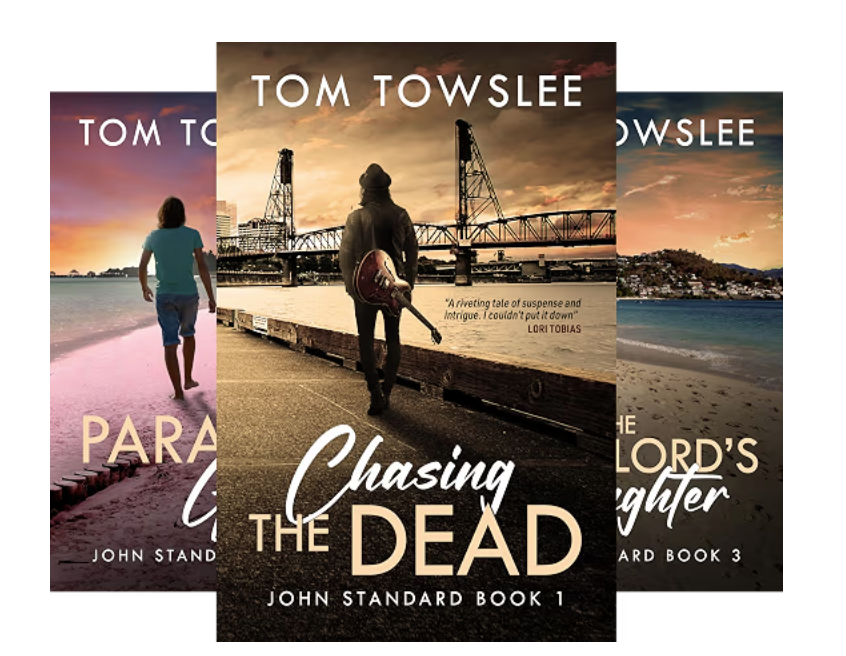
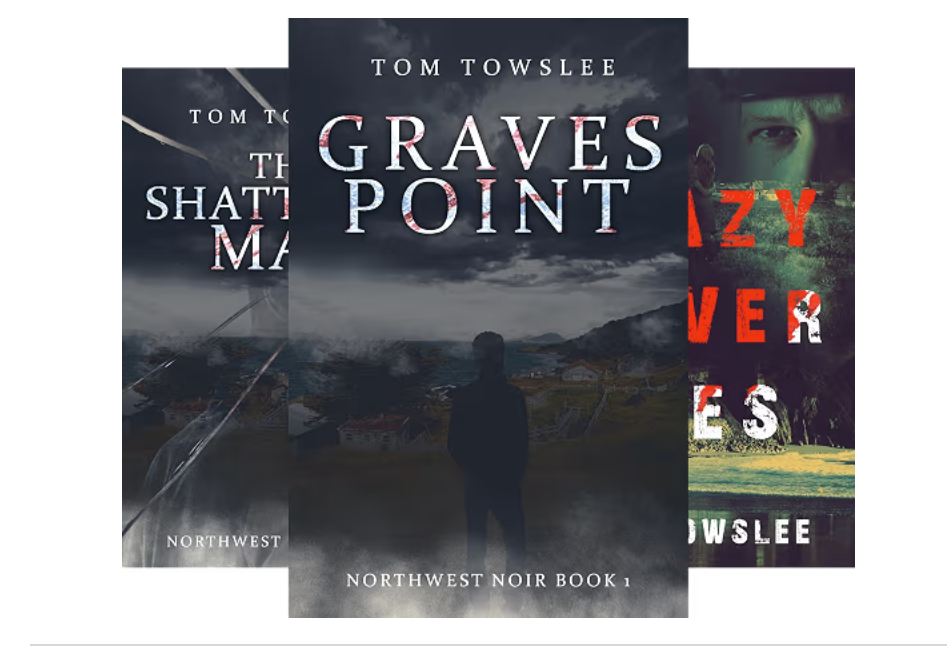
During our conversation, we explore how Tom’s years in journalism influenced his storytelling, why he prefers concise, action-driven prose, and how his time working in politics has shaped his understanding of power, secrets, and human nature. We also talk about his John Standard series, his Northwest Noir novels, and why the Pacific Northwest has become such an important backdrop for his stories.
Of course, we dive into Tom’s writing process as well. He explains why he likes to know the ending before he starts writing, how he uses Microsoft Word to draft his novels, and why he doesn’t stick to a rigid writing schedule. We also discuss the challenges of marketing books, using AI as an editing tool, and the valuable lessons he’s learned after publishing nine novels.
Finally, Tom shares advice for aspiring writers, reflects on the importance of finding your own voice, and talks about his interest in adapting his novels into screenplays. If you’re a fan of authentic crime fiction, compelling characters, and behind-the-scenes conversations about the writing life, I think you’ll really enjoy this episode.
Connect with Tom Towslee
Latest Book
More Books by Tom Towslee
Show Notes & Transcript
- Tom’s journey from journalism to fiction – How a career as a newspaper reporter, wire-service journalist, and political communications director inspired his transition to writing crime and suspense novels.
- Inside Finding Lexi Divine – Tom discusses the inspiration behind his latest thriller, introduces suspended cop Charlie Doyle, and explains why he enjoys writing morally complex protagonists.
- Crafting authentic crime fiction – We talk about balancing realism with entertaining storytelling, writing standalone novels versus series, and why the Pacific Northwest plays such a prominent role in his books.
- Tom’s writing process – From outlining and knowing the ending in advance to writing in Microsoft Word, editing, and overcoming the challenges of marketing books.
- Advice for aspiring writers – Tom shares practical lessons from publishing nine novels, finding your own voice, and why writers shouldn’t be afraid to put their work out into the world.
Click here for transcript
This transcript was generated with the help of AI and only got a quick once-over from a human. So if you spot a typo or something that doesn’t make sense… let’s just blame the robots. 🤖
[00:00:05.950] – Alan Petersen
You are listening to Meet the Thriller Author, the podcast where I interview writers of mysteries, thrillers, and suspense books. I’m your host, Alan Petersen, a lifelong fan of the genre and a thriller writer myself, and you’re listening to episode number 241. Before we get started, if you enjoy the show, I’d really appreciate if you could take a moment to rate and review the podcast on your favorite podcast app. It really helps other mystery and thriller fans discover the show. And if you’re looking for your next twisty read, be sure to check out my latest psychological thriller, The Ones You Know, now available on Amazon. You can learn more at thrillingreads.com/ones. Today I’m joined by author Tom Towslee. Before turning to fiction, Tom built an impressive career as a newspaper and wire service reporter before serving as a communications director and press secretary for both a United States senator and a state governor. Drawing on those experiences, he writes crime, mystery, and suspense novels filled with authentic characters, real-world detail, and plenty of twists. Tom is the author of the John Standard series, the Northwest North books, and several standalone novels. His latest release, Finding Lexi Devine, came out in April and continues his tradition of writing suspense that’s both grounded and compelling. So in this episode, we’ll talk about Tom’s journey from journalism to fiction, his writing process, the inspiration behind Finding Lexi Devine, and much more. So here is my conversation with Tom Towslee. Tom, thanks for being on the show.
[00:01:31.810] – Tom Towslee
Thanks for having me.
[00:01:32.680] – Alan Petersen
I did wanna mention we actually connected under some unusual circumstances. A scammer was impersonating me on the podcast, reached out to a number of other authors. You know, you have a fascinating background in journalism and politics, and so I figured let’s, uh, get you on the show for real.
[00:01:45.210] – Tom Towslee
I was very generous of you to, uh, to take pity on me who came very close to getting scammed, but, uh, uh, I’m much wiser for the experience and it turned out great. So I’m glad to be here.
[00:01:55.250] – Alan Petersen
Yeah, absolutely. Absolutely. So, so you have an incredible background. So you spent years as a reporter and you later worked in political communications. So just kind of curious, at what point did you decide you wanted to write novels instead of covering other people’s stories?
[00:02:09.210] – Tom Towslee
Well, you know, when I was a young reporter at a small town newspaper, I had an editor who introduced me to Raymond Chandler and Dashiell Hammett and Earl Durr Biggers and Igo Marsh. And so I started reading those. I just, you know, So, you know, when I ever get a chance, I’m going to, I’m going to take a shot at this and see what happens. After I left journalism, I had a little more extra time on my hands and I started writing. It was a rocky start. I tried self-publishing. That didn’t work out at all. I’m sure self-publishing is much, much better now than it was when I tried it, but it was a really bad experience. But eventually I found an agent, found a publisher. Uh, 9 books later, here we are.
[00:02:50.710] – Alan Petersen
What can a reader expect when they pick up one of your, uh, your books?
[00:02:53.390] – Tom Towslee
They’re going to find a protagonist. Well, I think like all protagonists in mystery fiction, they’re damaged in some way. Some are drunks, some are just cynical. Mine have just had a series of bad luck, found their way out of it, but they came out of it with a certain sense of fallibility about themselves. One of my friends who read my book said all my characters are disenfranchised knights, which I thought was an interesting term I had to look up. But yeah. The latest protagonist is a guy named Charlie Doyle, who is a suspended cop who, in order to make ends meet, was hired to find a missing stripper and uncovers a drug conspiracy on the way.
[00:03:44.110] – Alan Petersen
Your other books in the John Standard series, he was a freelance journalist. You are a journalist. Is that based on you?
[00:03:51.670] – Tom Towslee
Well, you know, I’m sure you get the same question, you know, what is— is Eli Shaw you? Yeah. You know, is John Standard me? I don’t know how you write a book without putting some of your, you know, self into certain characters. John Standard was, you know, actually my favorite, my first and my favorite protagonist. He started out in Portland, Oregon as a a freelancer who had lost his job at the daily newspaper and was trying to make ends meet. You know, through the course of the book, he, he, uh, he makes a little money. About that time, I was vacationing in Mexico. Now, um, your book Gringo Gulch— Zihuatanejo also has a Gringo Gulch, but it’s not the red light district. It’s a, a street that leads from the hotel district into town. And I’d walk that street every day. And, and at the end of the street, it takes a fork. Oh, and if you go to the left, you have to walk by all these restaurants with the waiters, uh, with their menus offering the best food in Mexico. Or if you take the right, you kind of go into town and you walk by a hotel with a sign outside that says, we speak Canadian.
[00:05:09.010] – Tom Towslee
And you walk a little further and you find a bar with a sign out front that says, ‘Cold Friggin Beer.’ And all of them are filled with these memorable characters. And I said, well, you know, let’s just move John Standard to Mexico. And I did, and he stayed there for 4 more books.
[00:05:26.870] – Alan Petersen
Oh, that’s great. So yes, very, very similar to the expat community that I grew up with. Very, like you said, very interesting characters that you find out there.
[00:05:34.950] – Tom Towslee
They are, they are.
[00:05:36.690] – Alan Petersen
And so I’m also curious because now you worked in government as well, so you’ve worked closely with elected officials and public figures. So I’m kind of wondering how that experience also has given you more of a perspective on power and secrets. I mean, we all hear about that stuff on the outside, but you’re like actually the inside. Can you tell us a little bit about that and how that makes it into your books and how real it is, what we hear in the news?
[00:06:01.860] – Tom Towslee
You know, I have not— well, I wrote one book called Graves Point, which is set in a small town on the Oregon coast. And it’s probably as close as I ever got to a, a true mystery, a true murder mystery. And the character in that book was an aide to a United States senator who becomes sort of disillusioned by the political process and decides to flee back to his hometown. And while he’s there, he uncovers a mystery that goes back to his teenage years. So yeah, there was a little bit of that in there, uh, a political scandal of sorts, usually involving, I think it involved campaign finance, but that’s about as close as I got. You know, I, I, I never wanted to be, you know, telling tales out of school, you know, the two politicians I worked for are still friends and I still talk to them and I still hear from them. And so, uh, I, I kept an arm’s distance from all of that.
[00:07:03.000] – Alan Petersen
And so for, uh, we talked a little bit about fighting Lexi Devine. Can you tell us a little bit about that then? Like what’s the, uh, You mentioned about the, uh, a cop that’s been suspended, but can you tell us a little bit about the story and how that all came together for you?
[00:07:14.310] – Tom Towslee
Uh, like I say, he was suspended for, uh, planting drugs on a drug dealer. So he, uh, sets out to try to make some money, does some work for a bail bondsman, and then he’s hired by this sketchy character, uh, to find this missing stripper named Lexi Divine. So he tracks her down in a small town on the Oregon coast. And I should say on the coast because I never really identify where it is. The, uh, the people who are looking for her show up and things turn bloody at that point. And she leaves and he comes back to the city and with a name, and the name is a local wealthy rug dealer, and, uh, turns out he’s not only importing rugs from Afghanistan, but they’re stuffed with drugs. So it kind of goes from there. He’s— this guy is a very amoral character, Charlie Doyle. Very amoral. He, you know, he, he hates scumbags, but he’s a very loyal friend. Um, he’s pretty indiscriminate about who he kills, doesn’t think too much about it. There’s a couple of interesting chapters where he talks with his psychiatrist.
[00:08:28.580] – Alan Petersen
Oh, so he’s trying to get help at least, right?
[00:08:31.300] – Tom Towslee
Well, he has to. Part of his suspension requires him to go to a psychiatrist.
[00:08:35.980] – Alan Petersen
Yeah, it’s always so fascinating that those characters, you know, like we see that with Michael Connelly and, you know, Rudy Bosch and all that. Is that— what’s the balance for you on that? Because like you said, he’s no saint, he’s an amoral character, but, you know, we want to root for him. Is that something that you think about when you’re writing these, where you’re thinking about these characters?
[00:08:52.260] – Tom Towslee
Yeah, I would say that this particular character would be a cross between Dirty Harry and Harry Bosch. You know, he’s, he’s, he’s, uh, he’s hell on people who he thinks are criminals, but he’s a very, very loyal friend and a bit of a loner. His best friend was an ex-boxer who is killed by an incompetent cop. Uh, that theme sort of runs through the whole book of, uh, of how he misses his friends and, and, uh, how he weaves this cop into his revenge against the drug dealers.
[00:09:26.820] – Alan Petersen
I was kind of curious, I was looking at your, at your books, uh, so you’ve written, now you’ve written these standalone novels, you’ve also written series fiction, uh, kind of curious what do you enjoy writing more? Do you enjoy like starting on whole new characters every time or continuing a series?
[00:09:43.850] – Tom Towslee
Well, you know, if you, if you read the John Standard series, um, the last book is called appropriately The Last Masterpiece.. And it has somewhat of an ambiguous ending. But as far as I was concerned, I, you know, I retired John Standard. And I went off and wrote what, what I, my, my publisher and I agreed we would call Northwest Noir. There’s 3 books: Graves Point, The Shattered Man, and Crazy Never Dies. And they’re all set in the Pacific Northwest. And after that, you know, I, I started thinking about this character Charlie Doyle. And, uh, um, you know, I, I think strippers are sort of a recurring, uh, uh, character in my book because, you know, uh, somebody asked me why. I said, well, you know, it’s an— it’s a good way to introduce sex into a book without getting anatomical. It is, it is. And the research is fun as well.
[00:10:48.350] – Alan Petersen
In your other books on these, uh, on the, um, on these Northwest Noirs, are they— do they all feature Charlie Doyle? Is it different characters?
[00:10:56.680] – Tom Towslee
Different characters, um, but overlapping locations.
[00:10:59.900] – Alan Petersen
Okay, guys, so the location is like the, the anchor of the, of the series, right?
[00:11:04.620] – Tom Towslee
Right. In, in the, uh, in the book Graves Point, uh, a lot of people, uh— I actually did a book club, and, um, the women who read it— I, I don’t know why book clubs are all women. I don’t know why there’s no men book clubs. But they got, they got really deep into this character. And they were telling me things about him that even I didn’t think of. And he, like I say, he’s sort of on the run, people are chasing him. He knows too much about a political scandal, people are trying to kill him. At the same time, he’s trying to unravel a mystery. And, and one of them said that they thought that the location was really the true character of the book. And I don’t think I’ve ever heard that before, where location can be as important as characters.
[00:11:53.920] – Alan Petersen
Yeah, that whole area too, the Pacific Northwest up there, it’s so— with the clouds and the rain and all the serial killers that seem to hang out in that area.
[00:12:06.680] – Tom Towslee
Yeah, well, we’ll keep telling you that. Keeps the riffraff out.
[00:12:10.120] – Alan Petersen
Yeah, exactly. So you’ve now published, what, you said 9 novels now?
[00:12:14.210] – Tom Towslee
Yeah.
[00:12:15.300] – Alan Petersen
I’m kind of curious, looking back on that, what do you think you’ve learned about your storytelling since you wrote your first book till the latest?
[00:12:23.270] – Tom Towslee
Well, a piece of advice I got early on from a fellow reporter of mine who was also a novelist said, you know, know how your book starts, know how it ends, and have fun getting from one to the other. So I always try to know how the book is going to end. I can’t say that that’s been true 100% of the time. Sometimes I don’t know the end till I get to the end, but I try not to do that because I— you want to leave Easter eggs along the way and drop, you know, clues and hints. That’s all— that’s been basically my rule is, uh, uh, know how your book ends. Try to make something happen in every chapter. You know, I don’t have any throwaway chapters. You know, I, I try to move the plot along. I think my journalism training makes my writing pretty sparse. If you’re going to learn anything about my characters, you’re going to learn them by what they do and maybe a little bit about what they say, but there’s not going to be any inner discussions and inner struggles that are going to come out in the book.
[00:13:21.570] – Tom Towslee
You’re going to see that through their actions, not through their emotions.
[00:13:24.920] – Alan Petersen
And also, with, with your background in journalism, what’s your research process like? Do you do a lot of research on these books or not really?
[00:13:31.160] – Tom Towslee
Certainly not as much as you do about the, uh, the criminal justice system in Costa Rica.
[00:13:35.560] – Alan Petersen
But yeah, to a certain extent, yes.
[00:13:38.500] – Tom Towslee
But I’m I’m writing about locations that I know about, and the characters are pretty fully formed in my mind. I’m, I’m, I’m not a police procedural kind of guy. Uh, I think there’s enough of those out there. Even my character Charlie Doyle, who’s a cop, although a suspended one, doesn’t really like fellow cops. You know, he doesn’t like their sense of humor, he doesn’t like the way they dress, he doesn’t like anything about them.
[00:14:04.290] – Alan Petersen
Now, get into your writing process. Um, getting a little nosy here, so what’s a typical day for you? I know it’s kind of hard to ask a writer about a typical day, but do you write every day? Do you have set hours? Do you write from the same spot?
[00:14:17.030] – Tom Towslee
Um, well, I write from the same spot. I try not to consider— I’ve had enough jobs, you know, so I try not to make my writing a job. I write to the point where I’m writing, and then suddenly I realize I’m not writing, I’m just typing, and I just walk away for a while, you know. I’ll spend more time thinking about plots and thinking about characters than I will actually writing. But when I— once I get it in my head, it goes pretty fast. But like I say, I don’t have a set schedule and, you know, I have plenty of time to write, but my wife keeps me busy. So it’s either while she’s playing tennis or late at night, one of the two.
[00:14:55.600] – Alan Petersen
And what do you use to write your books? Do you use like Microsoft Word or something else?
[00:14:59.520] – Tom Towslee
Yeah, yeah, yeah, Microsoft Word.
[00:15:01.740] – Alan Petersen
So what’s been the biggest surprise that you’ve encountered since you started publishing your books?
[00:15:07.420] – Tom Towslee
Trying to sell them.
[00:15:09.200] – Alan Petersen
Yeah, that’s always like, yeah, that’s half the battle, isn’t it?
[00:15:12.620] – Tom Towslee
You know, early on, one of my greatest, uh, achievements was selling a book to somebody I didn’t know.
[00:15:19.490] – Alan Petersen
Do you like the shows and stuff? Do you go to book shows and all that stuff?
[00:15:24.070] – Tom Towslee
I don’t. I don’t. I tell you, I’m not, I’m not a very outgoing person. I’m, you know, I, I was very good at marketing the people I worked for, but I’m not very good at marketing myself. And, uh, I, I, you know, I just, I just find the whole idea of going to book shows or, you know, I mean, I’ve got it. I’ve done a couple of book clubs And those were fine. Uh, my wife belongs to a book club and, you know, they’ve actually read a couple of my books, which I was totally amazed at. So I think out of the 9 I wrote, her book club has done 2. Yeah.
[00:15:55.250] – Alan Petersen
Were you a little nervous? Were you more nervous than the other ones?
[00:15:58.120] – Tom Towslee
Yes. Yeah. Yeah. Yes. Well, she’s an Englishman. She has a master’s in English.
[00:16:03.840] – Alan Petersen
Oh, wow. Yeah.
[00:16:04.580] – Tom Towslee
In English lit. My stuff is, is, God bless her, she reads it, but I know it’s hard for her, you know, it’s, you know, it’s, it’s not Emily Brontë. So, you know, I appreciate that she reads them and sometimes we quibble over grammar and usage, but most of the time— that was the early on, that was a big problem, was proofreading. And but now with this publisher that I have, discovering that function of read out loud has helped a lot. And now AI, it’s helped enormously as well.
[00:16:43.180] – Alan Petersen
Yeah, that’s good. Like, like your own little personal development editor before you go to send it to your editors and stuff. It helps clean things up a little bit, huh?
[00:16:52.000] – Tom Towslee
It does, it does. Um, uh, but there’s been some embarrassing moments, I have to admit.
[00:16:58.280] – Alan Petersen
Oh, I’m about to ask.
[00:17:01.410] – Tom Towslee
Just submitting the manuscript before it was ready to be submitted, you know, and having just pull it back and say, listen, I’m sorry, I pulled the trigger here a little early.
[00:17:10.550] – Alan Petersen
Oh yeah, we’ve all done that before too. We get all too eager ahead of ourselves.
[00:17:15.670] – Tom Towslee
Exactly.
[00:17:16.510] – Alan Petersen
Exactly. So, uh, so this is something that I always ask of my guests too, because I have aspiring writers that listen to the podcast. What advice do you have to someone who’s listening to this thinking about writing their first book?
[00:17:26.390] – Tom Towslee
Well, I was fortunate in that I was never afraid to write. I was never afraid that somebody was going to read it. When you work for United Press International, you write a story and you press a button and it goes out, it could eventually find itself to the world. Um, while I was working for UPI, I covered the, uh, um, the Rajneeshis, and everything I wrote about the Rajneeshis ended up on the, you know, the international wire, and I would get clips from all over the world. You know, I learned that you just can’t be afraid, to press that button. And a lot of people tell me, well, I don’t want, you know, I don’t like to write because I’m afraid somebody’s gonna read it, you know? And, and I tell ’em, you know, screw ’em. You know, writing is like fingerprints. You know, everybody has a different way of writing. I mean, you can read all the Raymond Chandler and all the Dashiell Hammett you want, but you’re never gonna write like that. You’re gonna write like yourself. And, uh, one of my old, uh, bosses, uh, a United States Senator, uh, He wanted to write a book and I said, well, Senator, you don’t have anything to say.
[00:18:34.580] – Tom Towslee
And he said, yeah, you’re right. Years later he wrote a book and he did have something to say and it was good.
[00:18:40.020] – Alan Petersen
It was good. He had to wait.
[00:18:42.480] – Tom Towslee
Yeah. You gotta wait. You have to wait, have to have something to say. That’s different with fiction.
[00:18:46.520] – Alan Petersen
Make it up.
[00:18:47.540] – Tom Towslee
You can make it up.
[00:18:49.700] – Alan Petersen
You know, I hadn’t thought about that though. You mentioned that the UPI wires back in the day. I mean, so you were probably very familiar with the concept of going viral before what we all now talk about going viral on the internet, because if one of those wires got picked up worldwide, you could be read by millions of people.
[00:19:05.720] – Tom Towslee
Exactly, exactly. Yeah, you know I remember a, a friend, a colleague of mine at UPI had confused the Holy Roman Empire with the Roman Empire, and he immediately— no sooner did he file the story than the phone rang And it was the editor, an editor at the New York Times, you know, sort of reaming me out for not knowing the difference between the Holy Roman Empire and the Roman Empire.
[00:19:38.320] – Alan Petersen
Oh yeah, I love you. Yeah, embarrassing way to— So right now, Tom, what are you working on next? Can you tell us what’s coming up next for you?
[00:19:48.220] – Tom Towslee
Well, you know, I’m not sure that I’m going to go back to writing novels again. I may try to turn some of my books into screenplays.
[00:19:56.090] – Alan Petersen
Oh, okay. Yeah.
[00:19:57.410] – Tom Towslee
Um, you know, I, I, I did turn the, the first John Standard book, I, I have turned into a screenplay, but I don’t know what to do with it. You know, it’s not like publishing. You know, there’s, you know, there’s people that’ll pay you to read it and they’ll give you, you know, you pay them to read it and they give you advice, but then what do you do? You know, and, um, you know, it’s frustrating because there’s so many places that need content now with streaming and And with all these streaming services and, and what have you, you think they’d be dying for content, but I just can’t seem to break the, uh, uh, break the code here and find out exactly what to do with them.
[00:20:38.050] – Alan Petersen
A whole different world. I wouldn’t even know where to begin to try to, to do that. What was the process for you from writing, converting, turning a novel into a screenplay? Did you enjoy that process? How was it?
[00:20:47.810] – Tom Towslee
Actually, I did. You know, there’s a, a, a software that you use called Final Draft.
[00:20:54.190] – Alan Petersen
Oh yeah, I’ve heard of that one. Yeah, it’s very, very user-friendly.
[00:20:58.210] – Tom Towslee
And, um, somebody told me, well, you just, you just dump your book into the— and then that doesn’t— well, no, that’s not what it does. Yeah, yeah. So yeah, it’s, it’s, it’s, it moves pretty fast if you have a, if you have a finished— if you’re working from an existing novel or an existing book. I think it would be much more difficult if you were starting from scratch on a screenplay. But working with— I mean, I’ve got 9 books I can choose from, so maybe I’ll spend my time doing that. You know, it’s summer here now, it’s beautiful. When the rain starts coming, maybe I’ll hunker down and go back to give it another try.
[00:21:36.220] – Alan Petersen
Yeah, well, if you break the code and you get one of your, uh, uh, screenplays sold, you have to come back and tell us all about it, how that, how that process works.
[00:21:43.980] – Tom Towslee
Nothing would make me happier.
[00:21:45.300] – Alan Petersen
Yeah. All right, cool. All right, Tom, so, uh, before I let you go, uh, for listeners who want to find more about you and your books, where can they find you online?
[00:21:53.540] – Tom Towslee
Actually, Amazon’s the best place. I do not have a website.
[00:21:56.190] – Alan Petersen
Okay.
[00:21:56.670] – Tom Towslee
Um, and there’s also the author’s page on Amazon. So all the books are there. The, uh, the John Standard books have been put into two volumes. There’s the first three books in one volume and the second two in another volume. Northwest Noir books are still separate. And then there’s Charlie— there’s Finding Finding Lexi Divine.
[00:22:17.940] – Alan Petersen
Okay. All right, Tom. Well, thank you so much for coming on the podcast. Really enjoy talking to you and your process.
[00:22:22.970] – Tom Towslee
You’re— same with you. Thank you very much for taking pity on a guy who was getting scammed, you know. I appreciate it.
[00:22:29.280] – Alan Petersen
Yeah, no, no, no problem at all. All right, thank you, Tom.
[00:22:38.290] – Voice Over
Thanks for listening to Meet the Thriller Author, hosted by Alan Petersen. If you enjoyed this episode, be sure to subscribe and leave a review on your favorite podcast platform. It helps other thriller fans discover the show. You can find all past episodes, show notes, and author interviews at ThrillerAuthors.com, including conversations with icons like Dean Koontz, Freida McFadden, and Lee Child. And if you’re looking for your next gripping read, check out Alan’s own psychological thrillers and crime fiction novels at ThrillingReads.com. Reads.com/books. Until next time, stay safe, keep reading, and keep the thrills coming.