

Legendary thriller author James Grady joins Alan Petersen on Episode 237 of Meet the Thriller Author to discuss his remarkable career, the enduring legacy of Six Days of the Condor, and his gripping new noir thriller, Shadows on Sidewalks.
Best known for writing the classic espionage novel Six Days of the Condor—later adapted into the iconic Robert Redford film Three Days of the Condor—Grady reflects on becoming a bestselling author in his twenties and navigating sudden Hollywood success while staying grounded in his Montana roots.
The conversation then turns to Shadows on Sidewalks, a suspenseful and timely thriller set in a small Montana town. Grady explains how the novel explores conspiracy, corruption, lust, political tensions, and moral choices through the story of writer James Traven, who returns home and becomes entangled in a dangerous plot involving a wealthy family and a woman in desperate need of help.
Listeners will also hear Grady talk about the mystery and thriller writers who inspired him growing up, including Dashiell Hammett, Donald Westlake, and Ed McBain, along with insights into his writing process, and more.
Whether you’re a longtime fan of political thrillers or an aspiring suspense writer, this episode offers fascinating insights from one of the genre’s true masters.
Connect with James Grady
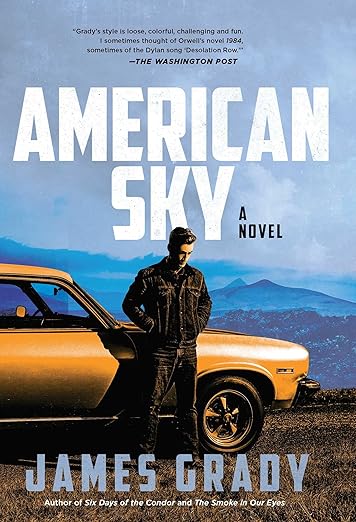
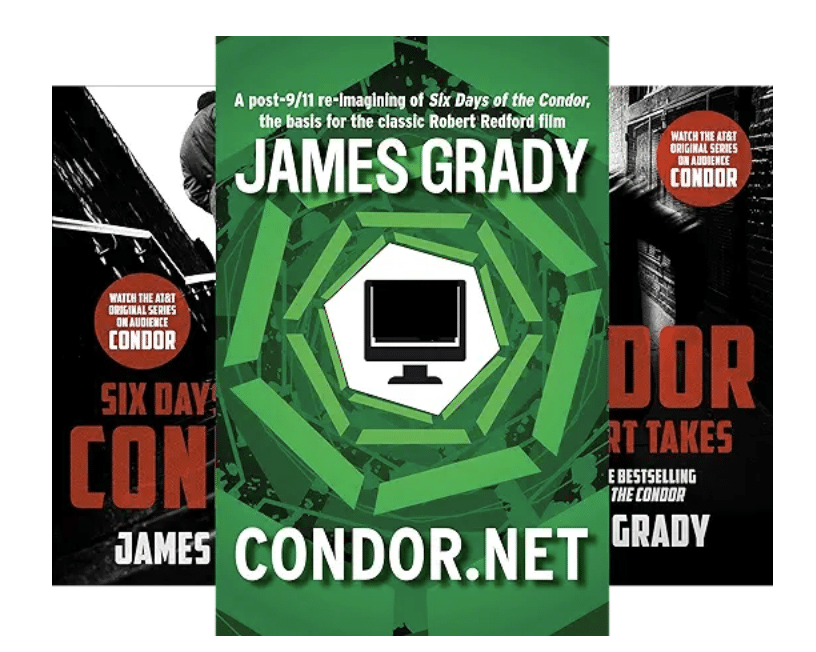
James Grady Books
Show Notes & Transcript
In This Episode
- James Grady discusses the lasting legacy of Six Days of the Condor and its adaptation into the classic Robert Redford film Three Days of the Condor
- The inspiration behind his new noir thriller Shadows on Sidewalks
- Writing suspense and political thrillers in rapidly changing times
- The eerie parallels between his fictional ICE raid scene and real-world headlines
- How growing up in small-town Montana shaped his fiction
- The mystery and thriller authors who influenced him, including Dashiell Hammett and Ed McBain
- Why relatable “ordinary people” make the best thriller protagonists
- James Grady’s writing process, outlining approach, and why he still writes using Microsoft Word
- Advice for aspiring thriller and suspense writers
- What keeps a thriller novel relevant across generations of readers
Transcript
Heads Up:
This transcript was generated with the help of AI and only got a quick once-over from a human. So if you spot a typo or something that doesn’t make sense… let’s just blame the robots. 🤖
[00:00:02.200] – Alan Petersen
You are listening to Meet the Thriller Author, the podcast where I interview writers of thriller, mystery, and suspense books. I’m your host, Alan Petersen, a writer and fan of the genre myself. Coming up is episode number 237 with James Grady, best known for his espionage and thriller novels, most notably the 1973 bestseller Six Days of the Condor, later adapted into the classic 1975 film Three Days of the Condor, starring Robert Redford and Faye Dunaway. James has been called one of the essential crime and thriller writers of his generation, blending political intrigue, suspense, noir, and sharp social commentary throughout a career spanning decades. His latest novel, Shadows on Sidewalks, is a gritty and timely thriller set in Montana involving murder, conspiracy, dangerous secrets, and the collision between personal lives and political tensions. In this episode, we talk about his remarkable writing career, the enduring legacy of Condor, the inspiration behind Shadows on Sidewalks, how real-world events sometimes echo fiction, the writers who influenced him, his writing process, and advice for aspiring thriller authors. But before we get started, if you enjoy the podcast, I’d really appreciate it if you could rate and review Meet the Thriller Author on Apple Podcasts, Spotify, or whichever podcast app you’re listening on.
[00:01:22.950] – Alan Petersen
It really helps more thriller readers and writers discover the show. You can also find show notes, transcripts, and the full archive of episodes over at thrillerauthors.com. And if you would like to check out my own thriller novels and link to all my books and all my social media and all that good stuff, visit thrillingreads.com. Okay, here is my interview with James Grady.
[00:01:47.130] – Alan Petersen
Hi everybody, this is Alan Petersen with Meet the Thriller Author, and I’m excited to be welcoming the legendary bestselling author James Grady. He’s the author of Six Days of the Condor, which of course became the classic film Three Days of the Condor starring Robert Redford and Faye Dunaway. He has a brand new thriller novel coming out called Shadows on Sidewalks. So very excited to talk to James about his incredible career and his new book that’s coming out. Welcome to the podcast, Jim.
[00:02:13.600] – James Grady
Thanks for having me, Alan. I really appreciate this, and thanks to everyone out there who’s listening to us. You know, we, we enjoy being able to talk about this, this great feeling we get being working in thrillers.
[00:02:29.050] – Alan Petersen
Yes. Yeah, my favorite, my favorite subject matter. So this is always fun for me, especially to meet the all the great authors out there. It’s just, it’s a lot of fun.
[00:02:37.160] – James Grady
We like to meet You too.
[00:02:38.300] – Alan Petersen
So, oh, thank you. Before we get going here, I was kind of amazed. I was doing the research before talking to you and I didn’t realize this, but you sold 6 Days of the Condor at just 24 years old. And by the time the movie came out, you were what, like 26 or something?
[00:02:52.790] – James Grady
Or 25?
[00:02:54.170] – Alan Petersen
[00:02:56.340] – James Grady
Were you—
[00:02:56.880] – Alan Petersen
was that— did it freak you out? Were you chill?
[00:02:59.870] – James Grady
It was— I had to work really hard to just keep being my small town Montana kid that I was, you know, I— wait a minute, I’m talking to Robert Redford. Wait a minute, I’m in New York. I mean, it just— it— Max von Sydow is bringing me a piece of his birthday cake. I mean, that, that— I knew it would be really easy to destroy the great luck I had. And so I just burrowed in. I kept a fellowship I had for the U.S. Senate, and I tried not to let really myself or anybody focus on, oh my God, this is— I was like a movie that happened. You know, the small-town kid who gets to be the creator of a major movie, that’s a movie in and of itself. And I didn’t want to turn that into a tragedy.
[00:03:58.980] – Alan Petersen
So you continued. So it was a while before you started doing writing full-time, or were you still working as a journalist for a while?
[00:04:06.000] – James Grady
Well, I, when I finished the fellowship, I was, you know, I, I, I, Condor was still about to come out and I had one book come out under a pseudonym, which annoyed me, but you know, I didn’t know enough in 1974 and ’75 to say no to what I thought were bad editorial ideas. And I’m sitting in my apartment literally just days after leaving the fellowship and I get a phone call. From one of my University of Montana buddies who says, you know, Jim, you know, I’m working for Jack Anderson’s column, which at that time was in— this is hard to believe— 1,000 daily newspapers. Wow. Imagining America with 1,000 newspapers of any kind is hard today. But he said, look, I, All the interns that we have now don’t know what to do after they pick up the phone and say, hello, could you come in and just kind of be my backup? Because everybody else is all out across the globe reporting. And I thought, sure, I’ll go in for a couple, 3 months. And I ended up staying there 4 years because getting to be a muckraker was, I thought, one of the second biggest pieces of luck I had because We all need to know as much about the truth as we can.
[00:05:33.840] – James Grady
And I got to help reveal some of that.
[00:05:37.130] – Alan Petersen
Yeah, you were— that was like in the ’70s. That was like the midst of Watergate, all that, uh, time era.
[00:05:43.810] – James Grady
It was to be in— I, I, I, I was still on the fellowship in the last days of Watergate, but you literally— I stepped out in the hall and I could literally see rumors going down the hall. Some piece— that senator’s aide would walk across to another Senate aide from another senator. They would talk, then he would go. And it was, it was like astonishing. So yeah, I, I might be one of the luckiest authors you, you, you get to interview here.
[00:06:15.800] – Alan Petersen
Yeah. Was that something when you were doing that job, were you thinking like, oh, this would be a great fiction book, or you just focused on what you were doing?
[00:06:23.580] – James Grady
I kept thinking, how in the world could you write fiction that anyone would believe about what was going on about Watergate? I mean, the president ordering an assassination of a journalist, that, that really is not something anybody ever thought of. I mean, turns out, you know, we were lucky it got called off. But, you know, I, I knew the guys who were— I later met the guys who were going to kill my boss, Jack Anderson. Oh, they insisted that they were going to do it. But this— here’s a secret I’ll reveal to you and our listeners. I think a couple of them thought it was a terrible idea, so they kept coming up with really absurd assassination plans when all they really would have needed to do was walk up to him in a parking garage and make it look like a mugging. But no, they had all these amazing wild plans. And I think the bad guys knew there was a line they shouldn’t cross.
[00:07:27.730] – Alan Petersen
Oh yes, they were doing that to discourage it or to waste time. Yeah, it’s fascinating. Shadows on Sidewalks, I’ve been reading it, I’ve been enjoying it so much. The parallels with your own life is pretty similar because it follows James Traven, who returns to his small town in Montana, and he’s a writer. Just like you. Is that— is there a little bit of him in, in this James?
[00:07:51.740] – James Grady
Yes. And that was really when I realized I wanted to, to move thriller, thriller fiction, and which has always been great in, in non-urban settings. When I realized I wanted, I wanted to get away from the Los Angeles, New York, Washington, D.C. Fiction swirl because our readers deserve more.
[00:08:17.020] – Alan Petersen
Mm-hmm.
[00:08:18.210] – James Grady
And I thought, well, why don’t you go back to a small— oh wait, why don’t you go back to the small hometown that’s like where you grew up? And if you’re going to do that, why don’t you make a guy who’s a little bit like you? And that allowed me to reveal a number of things. And it also I have to tell you, while it’s not autobiographical, you get this kind of wonder, wondrous feeling when you walk upstairs to your tiny loft office to write Shadows on Sidewalks and you go, hey, that’s what I would have done if I’d have been in his shoes. So yeah, it’s a little bit, it’s a little bit like me, but that makes it all the more reality-based. Even though the fiction is, the thriller fiction is really wild.
[00:09:10.920] – Alan Petersen
Did you go back to your home state to do research or you did it from memory?
[00:09:17.510] – James Grady
I used to go back to my small hometown at least once a year. And when COVID hit and a couple other issues, including the costs of getting on an airplane these days, when they became important, I haven’t gone back like I normally would have and like I kind of want to. But, you know, there’s this— I had a great teacher named Richard Hugo, who’s a very famous poet, ran the Yale University Young Poets Society from Montana, which I never understood how he did that. But he one day said, you know, there’s certain places, certain geographies that have a strong gravitas that if you’re from them, they’re never going to leave you. And he went around this seminar and got kids to say, oh yeah, I’m from New York.
[00:10:19.690] – Alan Petersen
Uh-huh.
[00:10:20.260] – James Grady
Da-da-da-da. And he got all the way around. I was the second to the last one. He said, And where are you from? I said, well, Shelby, Montana. And he leaned across the table. He says, you know what the fuck I’m talking about. And he’s right. My hometown has a power to it that stays with me to this day. And to be able to write a fictional version of it, I felt like I owed that to the people who raised me, to the country that let me become who I was, and to the future generations who, you know, and they may not have a good glimpse of the yesterdays of their parents and our audience today.
[00:11:07.680] – Alan Petersen
Yeah, that’s really struck with the book too, because, you know, my father grew up in a small town in Minnesota. And so I remember it’s very similar when I was reading this too. It reminded me of my dad’s home state and his little small town, all the dynamics and, you know, the small town you know, at the coffee shop, at the restaurant, you know, they’re all having their breakfast there, all the old-timers. And it was great reading that.
[00:11:33.880] – James Grady
Yeah, it was. And it was great to go back and show that, you know. And while I show corruption and evil and violence, I was also able to show the amazing kindness and selflessness, not selfish efforts that people in small towns and really also I would argue in the big cities of America show their neighbors and friends and even total strangers. And I think that we in this era of, wow, exploding news every 15 minutes. And, and the fears that we all have of everything from global climate change to, you know, terrorists and, and gang activity. I think it’s really important for us to reclaim the sense of community and kinship with our neighbors that helped us get to where we are now.
[00:12:37.760] – Alan Petersen
So can you tell us a little bit then about, about the, about the plot of Shadows on Sidewalks, uh, for the listeners, and, and how you got the idea to, to write this this book?
[00:12:46.730] – James Grady
Sure. Well, I knew that I wanted to have an astonishing plot that I had never seen in any mystery, in any thriller, or really, frankly, in, in any of the— what do they call them— mainstream literature, like Steinbeck, who’s one of my heroes. So I came up with a plot where our hero, James Traven, is given a choice. He can either have an affair with the rich man’s wife, or he can leave her to the mercies of her husband, who might just murder her. And the whole reason he’s created the, the villain has created this plot is because he needs to have a very public reason to be divorced from his wife that his mother, the billionaire matriarch of the town, will buy and not cut him out of her will. So he comes up with a really, in a way, kind of simple plot to have this famous author who’s back in town for just a little while have an affair with his wife, who the two of them have never met. And our, our heroine, uh, Lana, tells— tells our heroine— tells our hero James, look, if you don’t do this, if we don’t do this, I’m going to probably be murdered.
[00:14:22.040] – James Grady
And the only person they can trust— this is one of my favorite characters I ever created— is a man named Cody who runs the local gun shop. And he’s quote, ex-Marine, quote, but he keeps getting— he keeps ghosting from the small town to go off on missions that nobody knows about and he never talks about. So that’s a little something that is me again touching that covert world of spies and espionage and thrillers that help me get to where I am today. So really, this is, you know, Shadows on Sidewalks is about the choices we all have to make. It’s, you know, an erotic noir novel. There’s a great quote that inspired this from Nobel Prize-winning winner Bob Dylan, who says, and I may get the wording slightly off, he says, sex and murder and politics is the way to go if you want to get people’s attention. And you know, he’s right. So I use, I use those, uh, that Bob Dylan quote and those parameters to create this novel set in our, our todays, really. It’s, it’s set where all of us are facing political choices and moral, social, and personal choices that we need to move forward on.
[00:15:59.650] – James Grady
We are all shadows on sidewalks, which is the, the key to the title of our book. And shadows on sidewalks is SOS, the universal sign for help me please. And I wanted that to be something that the readers could see because that way they’d know I’m writing about all of us. I’m not writing about James Traven or James Grady. I’m writing about, you know, I’m writing about you, Alan, and everybody out there who’s listening to us.
[00:16:43.880] – Alan Petersen
Yeah, that’s what makes your character so great too, because you make it really relatable. Like, I mean, like even Even in Six Days of the Condor, you know, yeah, the protagonist was a CIA guy, but it was like he was like a book nerd.
[00:16:57.860] – James Grady
No, I, you know, I was, came of age in the James Bond era. And while I loved the books and at least three-quarters of the movies, I never knew anybody who could do anything like James Bond, you know, shoot a villain from 1,000 yards away, well, driving a fast sports car and picking up, you know, Ursula Andress alongside the road, and she’d fall for him immediately. Wow. While we all aspire to that, none of us are like that. And when I created Condor, I deliberately, I said, look, I can’t let Condor do anything that I can’t do. And he in fact has to do them all not as well as my buddies and I could. And that, that brought the thriller genre back into our, our listeners’ worlds. And I was lucky that publishing and movies decided that was a good thing to do.
[00:18:12.660] – Alan Petersen
Yeah, that’s a great era with your book and Marathon Man and all those other ones that came out during that time. It’s a very— I love those books and movies.
[00:18:22.130] – James Grady
And when you look at Marathon Man, which also came— was a pretty great book, but it was again somebody who is just an ordinary striving citizen who gets in a way trapped by the conspiracies of other people around him, and then has to figure out, how the hell am I going to survive? And I love the idea that him being a runner was absolutely crucial to the plot and the character.
[00:18:58.010] – Alan Petersen
Yeah, and the main torture scene is a sadistic dentist too, which we all can relate to.
[00:19:03.940] – James Grady
Oh, oh. All of us, all of us have been in a dentist chair where suddenly what we thought was gonna be, you know, a mildly annoying renew, you know, routine appointment becomes terrifyingly painful. I just had major dental surgery and I’m flashing back now with PTSD. But yeah, Marathon Man, and it was such a brilliant villain. Oh, you know, I love— I love— we could talk about other people’s work all day long.
[00:19:38.460] – Alan Petersen
You know what’s amazing too, when I was reading the Shadows on the Sidewalks, I’m going to ask about this because there’s a key moment in the book, and, um, uh, whether— I don’t think it’s giving away anything in the plot, but it involves ICE, uh, an ICE raid in Montana. And I’m assuming you wrote this a couple years ago or a year ago before ICE was on the news, especially Minneapolis. Minneapolis. What, what’s your take on that? Like, you write about something and then all of a sudden it’s in the news. Is that kind of weird?
[00:20:06.260] – James Grady
Or that the rise of ICE and what happened in Minneapolis and, you know, hundreds of other cities across America and small towns even blew my mind because I was— I thought I had created the extreme of what might happen. I didn’t realize that what I was writing would become a new normal for too many of us. And when that started to happen, I, I remember I was supposed to talk about it with journalists like you, and I just couldn’t. I just couldn’t. I had, I had to. I can now. But wow, where we are now with law enforcement officials wearing black masks and coming through my neighborhood in vans carrying assault rifles. I mean, I spent a lot of time, uh, as an author writing with street cops and homicide cops and, you know, vice cops. And I really was so impressed by those guys and they, you know, even the ones who were crazy or wacky or, you know, really not too good at their job. They came out every day with their faces in full view to help ordinary citizens be safe. I’m afraid that we’re moving to a whole new era now.
[00:21:39.800] – Alan Petersen
And that was kind of— ask you too, like, is that something that, um, we, we see political thrillers reflection of society? Is that like something that Do we enjoy these type of books too because it’s a way for us to explore our fears before they emerge in real life, or— I don’t know, thoughts about that.
[00:21:54.970] – James Grady
I think that that’s a great question, but unfortunately, contemporary literature— life moves so fast now that if I am going to be writing about a political scandal or a political change in how we all live, it’ll probably be the distant past before I can even get the pages to my editor. You know, it’s, it’s really difficult. Uh, and I, I, I actually— George Pelecanos and I, uh, I don’t know if you know who George is. He’s a phenomenal writer. He was, between us and all your listeners, George was the heart and soul of The Wire. He was just a great— he’s a great producer and writer. And we were talking about how difficult it is for young authors today to step into the field of, you know, literature because the world around them is changing so fast. They can’t write fast enough and publish fast enough. To, to learn how, you know, we— George and I learned how by publishing. Now I, I, I really don’t know what the future of literature is going to, going to be like. And I say this with, with another thriller in the works, but, you know, it’s, it’s, it’s almost like we have to, to, to be a camera and podcaster at the same time now.
[00:23:36.870] – Alan Petersen
Mhm. Yeah.
[00:23:38.860] – James Grady
And, you know, let’s hope our readers can enjoy that.
[00:23:43.100] – Alan Petersen
Yeah. I was also wondering too, because, um, I read in your bio too that you, you, you, you were telling stories as a young, as a young boy to your mother. So you, you’ve always been kind of a storyteller. Um, did you always, did you enjoy thrillers as a, as, and suspense novels as a, as a, is that why you started to write these? How did they get—
[00:24:01.580] – James Grady
there was in the county library where I would go to get books, there was a nook that was mystery and thrillers, and I probably spent more time there than any— I, I would get in there, and when I was young, like 10, they didn’t— some of the librarians didn’t want me to go back there. Because there were books with sex in them and books with murder in them and books with— maybe this kid shouldn’t be reading them. So I had to wait, sneak in. And I remember I couldn’t reach the books on the top shelf, and one of them was The Collected Novels of Dashiell Hammett. And I couldn’t figure out what a Dashiell Hammett was. And my parents, who were nervous, uh, in, in the that era because of McCarthy’s attacks on Hammett and J. Edgar Hoover’s too. They, oh no, you’d be bored by that, you know, whatever, da da da da. So one day when I’m a teenager, I thought, hey, I can reach it, and I pull it down and I’m looking, holy shit, The Thin Man, The Maltese Falcon, these are two great movies I loved. What would the book be like?
[00:25:21.270] – James Grady
I had to check it out and hide it in my high school locker so my parents didn’t know I was reading.
[00:25:29.430] – Alan Petersen
Oh, wow. Like a dirty book or something, huh? Oh, yeah.
[00:25:32.160] – James Grady
But I read Donald Westlake and Ed McBain and Christie and Nero Wolfe. And it just goes on and on. And I would— I would thrill when they would get a new book there, and I would just— I, I loved mysteries and thrillers from the day, uh, I was able to read them. And I think it’s because I could understand. We thriller writers, we want the readers to understand what we’re talking about, no matter how complex, no matter how convoluted, no matter how giant thematic it is. We’ve got to let you understand, and we’ve got to intrigue you to go to the next sentence. And wow, I love that. I knew that was what I was going to do when I grew up.
[00:26:28.430] – Alan Petersen
I want to ask you too, about like your writing process. That’s something I always ask my guests here. So do you— I’m sure you get this asked a lot. Are you an outliner? Do you like go by the seat of your pants? What’s your process like?
[00:26:41.210] – James Grady
Well, the, the thing that I realize is that every book creates its own rules on how you’re going to do it. I have written like, uh, 40-page outlines that I follow completely, uh, and I’ve started other books with like no more than a notion and a first line. And then I, I, I also have like major senses of what’s got to happen. So I have a small outline in my head, but the great moment, and I think every author that you interview will talk about, is that moment you’re up there, you’re writing this, this great plot, you know exactly where it’s going, and then the character name, in my case James Traven, goes Hey, that’s not what I would do. And the next thing you know, the characters you’re writing about take over the book, and you, you, at some point, you— it’s almost like you’re, you’re taking dictation and cleaning up them, you know, making them far more verbose than, than they would be. But it’s, it’s— no, it’s— the writing process is always decided by the book you’re writing. And I think that that’s something that anyone who’s an aspiring author in our listeners now should embrace because that relieves them of, you know, the 40 books about how to write a novel that go boom, boom, boom, boom.
[00:28:21.170] – James Grady
Well, no. Let your book come out of you. And let it take over. And that’s what I do. I tend to work in the mornings because, you know, by the time afternoon, the grocery list is bigger. My daughter has called with an issue. My son stopped by. Wait, was that a car wreck in the street below me? You know, you— so I try to get up early, get through the papers as quickly as I can. And my light breakfast. Some often mornings I would do, I still do a walk and/or tai chi, which I’ve been doing now for shit, almost 5 decades.
[00:29:06.770] – Alan Petersen
Oh, wow. So way before it got really popular.
[00:29:09.920] – James Grady
Oh yeah. And I got, my first instructor was a CIA, an analyst who’d been taught by the the Chinese in Taiwan. Oh, wow. I, I have, I have a great lineage, as they say. But it’s like that moment when I, I turn on my, my computer and I fall into it, and I’m never quite sure where I’m going to end up. But there’s— and here’s another trick, and I learned this from both Elmore Leonard and I, and I think Hemingway talked about this too. You always end with a sentence that you know the— what the next one is going to be, so that when you, you, you get up and you start writing again, you already kind of know where you’re going to start. And that’s— that, that relieves a lot of pressure and gets you going faster.
[00:30:12.110] – Alan Petersen
Yeah, that’s great advice. Yeah, because you’re not sitting like staring or wondering what to go next. You’re like actually going to probably chopping at the bits to get back to it.
[00:30:19.040] – James Grady
Exactly, exactly. And that’s great for the readers.
[00:30:22.060] – Alan Petersen
Mhm.
[00:30:23.200] – James Grady
Yeah, it’s just, uh, it’s a great process.
[00:30:27.200] – Alan Petersen
And the— and just that curiosity, what do you use to write? Is this just like Word or something else, or—
[00:30:32.020] – James Grady
I, I’m still on Word. Yeah. You know, uh, I, I know there are probably advanced programs for writing, but Why? I mean, I, I grew up, I grew up having to use a manual typewriter where you’d have to click, do every line. And now, um, Word makes that so much easier. And I, I think if you focus too much on the technology of what you’re doing, what you’re really doing is moving away from your task or your objective here because you’re, oh, the technology wants me to do this or that, you know, or— and I’m not— no, I want the technology to put me in the driver’s seat, and then I don’t care how old my car is.
[00:31:28.190] – Alan Petersen
Yeah. I was kind of curious too, because you sustain a writing career across really now multiple generations of readers. So what do you think has been your longevity in this, in this genre, which, you know, it’s a tough business and you’ve been at it for, what, almost 50 years now?
[00:31:45.260] – James Grady
Wow. Yeah, I, I think that what me— that keeps writers like me and Jeff Deaver and Stephen King going is that we don’t do the same book over and over and over. Uh, we And okay, now only speak for myself. I want to write a book about something that my readers today care about, and I want to give them characters who they might look across the cafe and see when they’re picking up their, their, their coffee cup of coffee, um, it it, you know, you, you, you want to keep your life going and not get stuck on the past. And you certainly don’t want to copycat anybody or yourself. You know, I could probably write 3 different versions of Six Days of the Condor. Why would I want to do that? And why would any of my readers want to read that? I mean, yeah, I could argue it’d be thrilling, but no, let’s give them something new and interesting to take forward into their daily lives today.
[00:33:13.690] – Alan Petersen
And that’s one of the questions that I always ask my guests before I let them go, is because I do have aspiring writers that listen to this podcast, uh, any advice for somebody who’s thinking about writing one of these books?
[00:33:25.970] – James Grady
Start now. That’s, that’s, you know, I, it’s, I, I’ve, I’ve gone to writers conferences or been asked to come and be on panels, and I know people in the audience, they’re, they’re, they’re coming to get answers or whatever, and I, and I, and I want to, and I usually look out and I say, look, thank you for coming. Go home tomorrow morning, start your book. I don’t care if you, if you haven’t figured it all out, work on it. I mean, this is, this is like, you know, you know, you’re, you, you have to start now. You have to be true to yourself, and you have to be true to the story you want to tell, and you can Do not under any circumstances try to con your readers and not be respectful of them. But the way to learn how is to start now.
[00:34:27.180] – Alan Petersen
All right, that’s good advice. And so what are you working on next? You said you’re working on another thriller now?
[00:34:34.150] – James Grady
I figured out that one way to get over the the great problem we’ve talked about of contemporary literature changing so much. I wrote a novel set— yeah, I’m writing a novel set in April 2026. When I started it, the world was one thing. The world now has completely changed. But what I came up with, the idea was that when I finished the fiction I go back and put in the historical events that the characters were going through. So it is— so while it’s set in the second week of April of 2026, last week, mm-hmm, I started it in February. And then just we got to the second week of April and I could never have imagined that world 2 months ago. And now I, I’ve created a, or I’m, I’m still about 3/4 of the way through it and, and have quarter more to go, but I’ve created a plot and a world that the readers will remember. And it’s like I’m reading, I’m writing about their yesterday. In a way that helps them look at their today and maybe their tomorrow. And I think I figured out this, this technique, but we’ll see, you know.
[00:36:11.260] – James Grady
It’s, it’s— I, and I’m calling it the promised land. Oh, is where we all, you know, we, we grew up hoping that we’re believing that we’re in the promised land and that it’s going to get better. So Let’s hope I can pull it off and come back when the book comes out to you.
[00:36:30.080] – Alan Petersen
Yeah, yes, absolutely. I’d love to have, for you to be back for that one. So yeah, Shadows on Sidewalks, such a great book. And the reviews have been amazing. I’ve been reading some of your reviews.
[00:36:41.780] – James Grady
Wow. It’s like—
[00:36:44.270] – Alan Petersen
I mean, you must be used to that though.
[00:36:46.360] – James Grady
Well, but these have been really great. And it’s like, I remember, when the Publishers Weekly and the Library Journal reviews— I, I, I’m looking at my computer screen and I said, okay, I’m done for the day. You got to stop at a high. I went and told my wife, here’s the review, but I’m done for the day. Maybe we’ll go out and have dinner instead of, you know, cooking something in, in the kitchen. But it was I was so lucky and they, they got it. That meant so much to me that, that readers will be able to get it. And what more could any author ask?
[00:37:31.670] – Alan Petersen
Yeah, absolutely. All right, uh, Jim, thank you so much for, uh, being on the podcast. I really, uh, I really appreciate it. I really enjoy talking with you.
[00:37:39.300] – James Grady
Thank you, and thanks to everyone out there listening. I hope you have a, a great day today and an even better tomorrow.
[00:37:51.070] – Voice Over
Thanks for listening to Meet the Thriller Author, hosted by Alan Petersen. If you enjoyed this episode, be sure to subscribe and leave a review on your favorite podcast platform. It helps other thriller fans discover the show. You can find all past episodes, show notes, and author interviews at thrillerauthors.com, including conversations with icons like Dean Koontz, Freida McFadden, and Lee Child. And if you If you’re looking for your next gripping read, check out Alan’s own psychological thrillers and crime fiction novels at thrillingreads.com/books. Until next time, stay safe, keep reading, and keep the thrills coming! [MUSIC] [MUSIC]