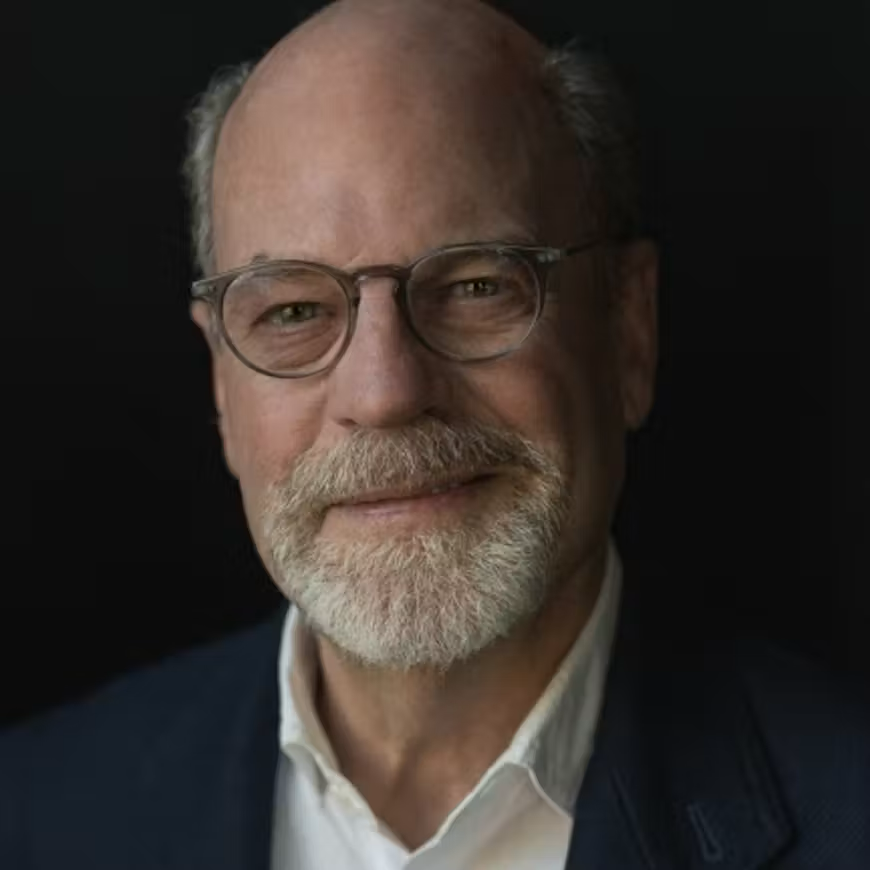
Kevin Wade Interview: One Good Eye, Blue Bloods, and the Jeep Mullane Series
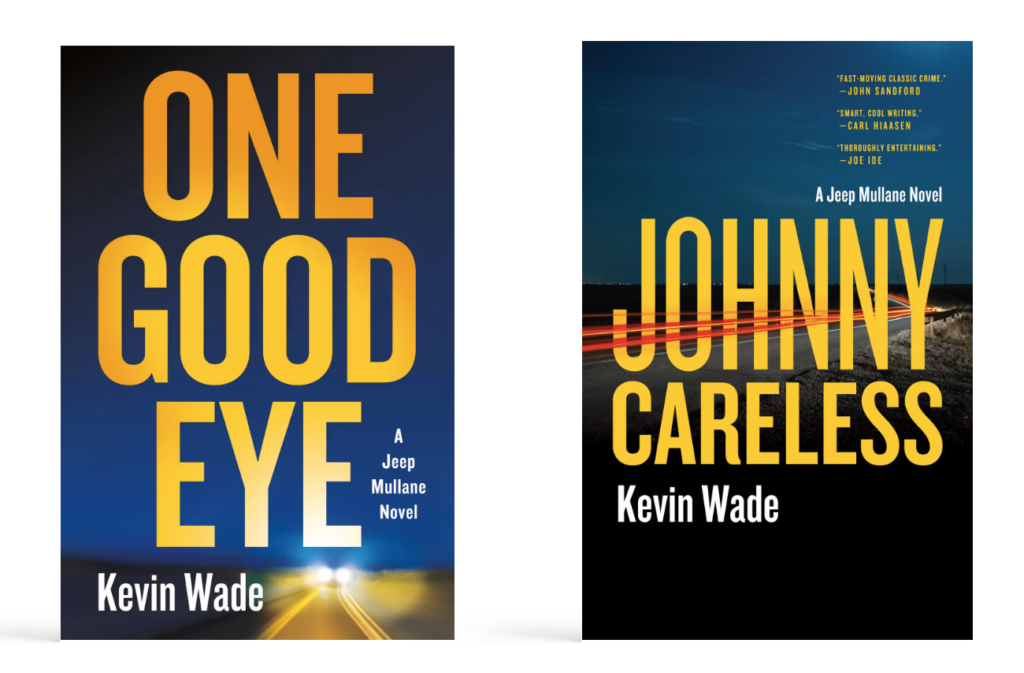
In this episode of the Meet the Thriller Author podcast, I sit down with bestselling author, screenwriter, and television producer Kevin Wade to discuss his latest crime novel, One Good Eye, the second installment in his Jeep Mullane series.
Kevin’s career spans theater, film, television, and now crime fiction. His screenwriting credits include the classic Working Girl, Meet Joe Black, Maid in Manhattan, Mr. Baseball, Junior, and True Colors. He also served as writer, executive producer, and showrunner of the long-running CBS hit Blue Bloods.
Kevin shares the inspiration behind the Jeep Mullane series and explains how One Good Eye came together. We discuss his transition from writing for film and television to writing crime novels, the differences between writing screenplays and fiction, and why Long Island provides the perfect backdrop for his stories.
As always on the podcast, we also explore the craft of writing. Kevin talks about his writing routine, the tools he uses, his approach to outlining and revising, and offers practical advice for aspiring mystery and thriller writers. We also discuss how his years in Hollywood influenced his storytelling and what readers can expect next from Jeep Mullane.
If you’re a fan of crime fiction, police procedurals, Blue Bloods, or simply enjoy hearing how successful authors create unforgettable stories, this episode is for you.
Don’t miss this Kevin Wade interview on the Meet the Thriller Author podcast.
Connect with Kevin Wade
Latest Book
Jeep Mullane Series
Show Notes & Podcast Transcript
Episode Summary:
- Kevin Wade discusses his new crime novel, One Good Eye, the second book in the Jeep Mullane series.
- How 14 years working on Blue Bloods and nearly 1,000 crime storylines helped inspire Kevin to write crime fiction.
- Why Kevin chose the North Shore of Long Island as the setting for the Jeep Mullane novels—and how writers including John D. MacDonald, Dennis Lehane, Raymond Chandler, and Michael Connelly influenced that decision.
- How the 2023 Writers Guild strike gave Kevin the opportunity to finally pursue his longtime ambition of writing a novel.
- The surprising differences Kevin discovered between writing screenplays and writing a 70,000-word novel.
- How Kevin draws on experienced law-enforcement sources to keep his police procedurals authentic while still telling an entertaining story.
- Why Matt Damon comes to mind when Kevin imagines an actor who could portray Jeep Mullane.
- Kevin’s approach to outlining—and why writers including Stephen King, Elmore Leonard, and Lee Child influenced him to leave room for his characters and story to surprise him.
- The writing software Kevin carried over from his Hollywood career: Final Draft, which he discovered also includes a novel template.
- Kevin’s disciplined writing routine and why he treats writing like a regular job.
- His advice for aspiring writers: every story may have been told before, but your individual voice and perspective are what can make it original.
- Kevin talks about promoting One Good Eye, including an appearance with Blue Bloods star Bridget Moynahan at New York’s Mysterious Bookshop.
Transcript
Click here for transcript
This transcript was generated with the help of AI and only got a quick once-over from a human. So if you spot a typo or something that doesn’t make sense… let’s just blame the robots. 🤖
[00:00:01.140] – Alan Petersen
You’re listening to Meet the Thriller Author, the podcast where I interview writers of mysteries and thrillers. I’m your host, Alan Petersen, a longtime fan of the genre and the author of 20 thriller and mystery books and counting. This is episode 242 featuring Kevin Wade, the acclaimed screenwriter behind movies like Working Girl and longtime writer, executive producer, and showrunner of Blue Bloods. Kevin is now bringing his storytelling talents to crime fiction with his Jeep Mullane series and his latest novel, One Good Eye. Before we get to the interview, please take a moment to rate and review the podcast on your favorite podcast app. It really does help other mystery and thriller fans discover the show. For show notes, past episodes, to check out my own thrillers, head on over to thrillingreads.com. All right, let’s get into my conversation with Kevin Wade. Hey everyone, this is Alan Petersen with Meet the Thriller Author, and on this episode of the podcast, I’m excited to welcome Kevin Wade. Kevin’s career spans theater, film, television, and now crime fiction. His stage credits include Key Exchange, Mr. and Mrs., and Cruise Control. His screenwriting credits include the classic Working Girl, True Colors, Mr. Baseball, a lot of great films.
[00:01:13.630] – Alan Petersen
And on television, Kevin starred as— served as the writer, showrunner, and executive producer. Tom Selleck starred in that one.
[00:01:21.200] – Kevin Wade
Luckily, Kevin didn’t star in it. Yes.
[00:01:24.540] – Alan Petersen
Of the hit CBS drama Blue Bloods. And now he’s bringing his storytelling expertise to crime fiction. With the Jeep Mullane series. His latest novel, Good Earth, which is fantastic— I just finished it this morning— , features a Brooklyn detective turned Long Island investigator. So really excited to talk with Kevin. Welcome.
[00:01:44.690] – Kevin Wade
Thank you, Alan. Nice to be here. I have to just say one thing: the novel is called One Good Eye, not The Good Earth. The Pearl S. Buck novel The Good Earth is a wonderful book. I cannot take credit for it, so I just want to— so your listeners know, Wade Woke Up.
[00:02:03.050] – Alan Petersen
All right, that’s a little embarrassing. I’m gonna have to cut that out. I don’t know.
[00:02:05.750] – Kevin Wade
Well, we’ll see.
[00:02:07.780] – Alan Petersen
That is a good book. I read that a long time ago. This one I read recently, so thank you. Sorry about that. but anyway, congratulations on, on One Good Eye. Can you tell a little bit of listeners about this? How did— what’s this about without giving too much of the plot away?
[00:02:24.730] – Kevin Wade
Sure. It’s about Jeep Mullane, who was the hero of the first novel Johnny Careless as well, to which this is sequel to, is the local police chief in a small collection of hamlets on the North Shore of Long Island. And he grew up down the block from a young woman named Jenny Racine. And this book, like in the former one, is told in the present and in the past. So we watch their relationship from when they’re 15 to present day when they’re both hovering around 40. At any rate, she in the present is the victim of a blackmail scheme which Jeep finds out about when she’s beaten up in her own home, and she does not want him to investigate. So it’s really— the plot concerns the local police chief going very much off the grid and against the wishes of the victim to find out who’s after his old friend and why.
[00:03:29.010] – Alan Petersen
So, you know, I read the— when I was reading your bio before doing this I read that the idea for Working Girl came after you were in New York City and you noticed career women walking the streets with sneakers while carrying their high heels in their hands. Yeah, that sparked that classic film. So I’m kind of curious, what sparked Jeep Mullane the series and, and the first two books in that series?
[00:03:50.820] – Kevin Wade
Two things. One is spending 14 years working at Blue Bloods, the CBS police slash family show. And all the crime stories. We did almost 300 episodes with 3 stories per episode. So that’s almost 1,000 crime stories that I was involved with over those 14 years. It seemed natural, having learned what a great story engine crime and policing and detective work is. The second thing was when I decided to write a novel, I thought that I should maybe write where I know instead of what I know. And some of my favorite authors over all these years, John D. MacDonald, Denis Lehanne, Raymond Chandler, and Michael Connelly, were all writing about the tribes and the customs of the cities or the areas where their protagonist was plying his trade. So that seemed to me like a pretty cool thing to do. And the North Shore of Long Island is— was pretty much untouched except for a novel by Nelson DeMille called The Gold Coast, a wonderful book, and the greatest crime thriller ever written about the North Shore, Fitzgerald’s The Great Gatsby, which had all of the upstairs-downstairs socioeconomic cauldron going. 100 years ago that seemed to me, having lived here for 25 years, was much the same today.
[00:05:25.530] – Alan Petersen
Yeah, it really seems like that, like the Long Island is a, like a main character of the, of the book.
[00:05:31.230] – Kevin Wade
Yeah. Yes.
[00:05:32.100] – Alan Petersen
And I, I, that’s what I’m asking that too. so you mentioned, you know, your, your, your incredible career in stage, television, film, and you decided to write a novel. I was kind of wondering what Was that something that you— another area that you wanted to tackle, or how’d that come about?
[00:05:49.770] – Kevin Wade
I’d always wanted to. I’d always, enjoyed— I was a precocious pain-in-the-ass reader when I was a kid, trying to tackle stuff that I had no business tackling. I grew up enough to start reading stuff that I could readily understand and enjoy, and a lot of that was the crime fiction that first came off my dad’s bookshelf. Alistair MacLean, Ian Fleming, John D. MacDonald. And then I was just, I kind of loved it. The second reason was, frankly, I wrote the first book just at the dawn of the 2023 Writers Guild strike, and I was looking at months ahead of me, I felt, with nothing to do but plenty of discipline in terms of writing on and writing all the time because of working on the TV show. So I just went off and started doing it.
[00:06:45.380] – Alan Petersen
Oh, that’s good. That’s fascinating. And so with your background, I’m imagining working on television, you always hear about the writing writers’ room and all that stuff. And right, it takes— it’s a huge crew to bring these shows to life. And now here you are writing this book on your— by these books by yourself. Was that a big shock and a big difference? Did you enjoy it?
[00:07:04.460] – Kevin Wade
Or There’s 3 questions in there and they’re all good, so I’ll answer all of them. It was a big shock in terms of the amount of words, candidly, was the first thing that struck me. I guess I’m a little OCD, but if any— if your listeners, and I know you have seen a teleplay or a screenplay, it’s basically colns of dialogue with a couple of slug lines and acres of white space. And you sit down to write a book, a novel, and it’s nothing but words. 70,000 words is kind of the minim for a novel. So there was that. And the other big change was, frankly, everything I’d written before was written not to be read by— not to be consed as the end product, but simply— not so simply, but as a blueprint for that crew you just described, directors and cinematographers and most especially actors, to come together and bring to life. So writing without actors was— I was so used to their beauty, their charisma, their natural magnetic presence. And I thought, all I have is words in 12-point Times New Roman to bring all of that alive. So that was a big pivot.
[00:08:26.230] – Alan Petersen
Yeah. And I don’t know if it’s because subconsciously because of your background, but this book, reading it, it was very visual. Is that something that just from your background on you? Just, it’s just the way it came out that it’s just a very visual book?
[00:08:38.600] – Kevin Wade
I’ve always said I wasn’t copying, but I was very aware of what do I like to read? How do the pages go? I like some hor. I like a description of the meal, succinct, not a paragraph. I just like feeling the smell, the color, the heat or the cold. Everything that’s tactile, I enjoy when people write it and I feel like I’m immersed in wherever the protagonist is.
[00:09:12.650] – Alan Petersen
And so I was also— the police procedurals are such a fine line because, you know, we’re trying to entertain, but there’s some realism that needs to be maintained. What’s that balance for you? And do you do a lot of research on that and being a police chief in a small town in Long Island?
[00:09:29.710] – Kevin Wade
I did some— I did a lot of research on that. I got to know a local police chief here who was very open. His name is Kenny Lack, and he’s the chief of police of the Brookville PD here. And access to him, what he did, what his men and women were up to on a daily basis. And for 14 years working at Blue Bloods, we had a guy, an ex-NYPD, very decorated detective named Jim Nusiforo. And I had a longstanding give and take with Jim where I would I’d call him up or I’d see him and I’d pitch a thing. And he would say, “That could never happen. But in reality…” And then give me the version where it could possibly happen with all the details built in. And he was an enormous resource at that TV show and for both these novels. So it was sort of like trying it out as an amateur civilian. And the expert would say, here’s, you know, in reality, here’s how that would go.
[00:10:30.790] – Alan Petersen
I was curious to know, did you, when you were writing these books, since you worked on, you know, in the films and TV, were you visualizing an actor for Jeep Mullane?
[00:10:42.240] – Kevin Wade
No, I actually wasn’t, though. Friends have asked me since then, and I would say Matt Damon or a slightly younger— I mean, listen, Jeep Mullane is pegged as being 39 and 40 in the two books. But, but the, the kind of wry side-eye energy that Matt Damon brings to a lot of his stuff, I just find him a very appealing actor. And I, I wish that there was a situation where I could work with him on this.
[00:11:12.040] – Alan Petersen
Yeah, it’d be fantastic. I’m curious about your writing process now, too, because you mentioned this was your first novels. Do you— are you like— do you outline these or do you have the idea and you just start? Writing it as you go along? Kind of curious about your writing process.
[00:11:27.910] – Kevin Wade
I came from kind of a tradition of outlining, as many writers do, with index cards on a corkboard. And it was always very useful in screenplays and teleplays because they’re very, very specific forms. The architecture and the rules are almost like a sonnet or a haiku. A novel felt to me a little broader, like the canvas was a little more open. So I, in both instances, I outlined some scenes and plot points for, say, the first 50 pages. And I’d read up on this and my bettors, or at least some of them, Elmore Leonard, Stephen King, any nber of people said, well, I don’t want to outline because Lee Child said very nicely, he said, then I know the story. There’s no surprises for me. So there’s going to be fewer surprises in the writing. And I thought that seemed to make sense, that if I had characters that I believed in, perhaps they would, as I wrote them, reveal something that would make— if it surprised me, it’s certainly going to surprise the reader.
[00:12:39.790] – Alan Petersen
And what are the— I always ask this of my guests because I always like to know, what are the tools that you use? Do you use— do you You use like Microsoft Word or some other program?
[00:12:49.020] – Kevin Wade
Or— I have a— let’s see, I’m talking to you on a 15-inch MacBook Pro on a stand so my neck doesn’t crack. And I have for years and years used Final Draft because it’s— most screenwriters I know use it. And, and then it has a teleplay template that even goes network by network or whatever. And then when I dug down a little bit, it had a novel, template. So I’m used to it and it’s a great piece of it’s on about his, it’s 28th iteration. I think it’s been around for a while.
[00:13:21.900] – Alan Petersen
Yeah. Yeah. That software yeah, it’s, it’s, it’s like probably the number one software for screenwriters. I didn’t realize it had a novel template.
[00:13:29.380] – Kevin Wade
Yeah. It’s got, you drop down the menu and it goes novel, you know, then you look for like good novel. It doesn’t have that. It just, that’s novel.
[00:13:37.960] – Alan Petersen
Yeah. And then the blank page.
[00:13:39.840] – Kevin Wade
Yes. Yeah.
[00:13:41.980] – Alan Petersen
So kind of curious now what’s, what do you, what’s What’s working on next? I mean, are there more Jeep Mullane novels coming?
[00:13:49.970] – Kevin Wade
Well, I think if there’s another Jeep Mullane novel, this one comes out Tuesday, August 11th, momentarily. And in the real world, if there’s going to be a third one, it will depend on if the second one sell enough books. So I certainly hope so. But it’s a factor of the marketplace, really.
[00:14:09.980] – Alan Petersen
Yeah. The business side of show business.
[00:14:12.550] – Kevin Wade
Yes, it encroaches sometimes. But I’ve been writing since I was 25, and I enjoy it. Unlike perhaps some people, I don’t— it’s the old Dorothy Parker thing. I hate having to write, but I love having written. I kind of enjoy having to write, but I love writing, having written. So I’m sure I’ll do something else. And there’s so much I’d love to write another novel, but The amount of good stuff on all the streaming services is just astonishing to me. And it seems to me they’re opening up new stores or expanding every day and they need stuff on their shelves. So I’m actively looking for something to do there.
[00:15:01.420] – Alan Petersen
Yeah, that’s been amazing. And you have such a long career in Hollywood. So is that amazing to you? Like before, it used to be, you know, our options are so limited. And now with Netflix and Amazon and Apple, it’s just kind of crazy. It’s like a little overwhelming.
[00:15:19.970] – Kevin Wade
Well, it’s, it’s, it’s the way the world has moved. But as the movie business, as in movies made for your local Cineplex, have shrunk, obviously the movies and the TV and the shows that are made for your home screen have expanded exponentially. And it seems to me that it’s a really good thing. And for writers, it’s kind of a slower expanding explosion, but akin to what happened for directors with the advent of MTV way back in the day. All of a sudden, budding young directors got to make a 3-minute movie. So no barrier to entry, really. And all of a sudden they had something to show.
[00:16:02.150] – Alan Petersen
Hmm. Yeah. And I was also wondering, too, with the process now, Do you like the writing process? So you, do you try to write every day? Do you have a schedule? Do you write from the same place?
[00:16:18.520] – Kevin Wade
I have a, I have an office at home, a little office that’s a converted bay of a detached garage. And yes, I go to work at 9:30. I take a break for lunch. I kick off or get off at about 4 or 4:30. And ever since I’ve been doing this, I thought, I mean, I don’t wear a suit and tie to work, but I’ve tried to, I try to treat it like a a real job, because for me, luckily, it has been. It’s how I’ve made my living. So if it’s a deadline or whatever it is, I, I respect it and try to— excuse me— hold up my end.
[00:16:54.170] – Alan Petersen
And before I let you go, I always ask my guests also, because I do have aspiring writers that listen to this podcast, any advice for someone who’s listening and is thinking about writing a book or maybe a screenplay? Or—
[00:17:05.170] – Kevin Wade
I think the only piece of advice— there’s two pieces of advice. First of all, just in, in pragmatic terms, it’s really daunting. If you get out of college or you’re just in a city, it seems— it can seem like every other person you meet is writing either a novel or a screenplay. Most of them are not ever going to be seen. If you’re any good, it will rise up. The cream does rise to the top. The other thing that I think is hopefully useful, every story has been told. I’ve never written an original story in my life. But it became— if it was original at all, it’s because it came through my voice and my perspective. And everybody has an individual voice and perspective. And so pick whatever story you want because it’s not going to feel— if you do it right and are true to it, it’s going to feel different because it came through you.
[00:18:04.530] – Alan Petersen
Yeah, that’s good advice. It reminds me of the movie The Odyssey. Now, you know, that’s one of the oldest stories ever. And yes, Christopher Nolan turned it into something different.
[00:18:13.680] – Kevin Wade
And yes, and I was trying to, you know, there’s— I forget the rest of them, but one of the stories that, you know, I— it’s one of the screenwriting books or the courses or whatever, but one of the, one of the eternal stories is the bluebird of happiness is in your own backyard. That’s, that’s— it’s The Wizard of Oz. It’s a bunch of stuff. And I saw The Odyssey last week and I thought, the bluebird of happiness is, you know, he gets home, he sees the wife, he sails away at the end.
[00:18:43.070] – Alan Petersen
There it is. Yeah, yeah, yeah, yeah. That’s fantastic. Just kind of curious to know, I saw you in the information from your publishers, you’re going on a book tour. Can you tell us a little bit about that?
[00:18:56.120] – Kevin Wade
Well, it’s a tour is a grand way to put it. I’m doing a couple of local bookstores here, a remote thing with the Poison Pen in Arizona. And I’m thrilled to be doing an appearance with my friend Bridget Moynihan at the Mysterious Bookshop in New York, which is for crime and mystery writers, is kind of like playing Carnegie Hall. So thrilled about that. And a few other things are coming together. So it’s very retail. The book business I’ve found is way more retail than I thought it would be. So So in that sense, it’s a blessing to be able to go out and speak to some folks who read your book. You know, especially in television, you never get the chance, really rarely, to meet the people who watch the show. You can go to the movies and hang around the lobby and sort of say, like, I’m the writer. How did you— you know, but authors, you don’t meet except for these kinds of events. So that’s great fun.
[00:20:05.060] – Alan Petersen
And so for people who want to find more about you, about these the bookstores you’re going to be in and stuff like that. Where can they find you online?
[00:20:12.590] – Kevin Wade
@KevinWade, Instagram @KevinWade, and I’m posting the, the stuff with the links to— I, I, most of the RSVPs are in the form of ordering a book, getting there, picking up the book you paid for, and I sign it and we meet and chat and stuff.
[00:20:29.590] – Alan Petersen
Yeah, yeah, that, the, the bookstore in New York City, is on my list next time I go out there. It’s— I’ve never been there, but I’ve heard such amazing things about that It’s great.
[00:20:38.980] – Kevin Wade
It’s beautiful. And it’s in a great neighborhood. But it is the oldest, best bookstore devoted to this stuff. And Otto Penzler, the owner and founder, has this mysterious press. I mean, they, they, they soup to nuts, they do it. Sometimes they find it and publish it. And then in the end, they put it on their shelves.
[00:20:58.210] – Alan Petersen
Yeah, he’s amazing. I had him on the podcast a few years ago. It was very fascinating talking to Otto.
[00:21:02.460] – Kevin Wade
I bet. Yeah.
[00:21:04.390] – Alan Petersen
All right, Kevin. Well, thank you so much. August 11th, One Good Eye comes out. And like I said, I highly recommend it. , it’s a great mystery action-packed and fast-moving, which is my cup of tea. So I really loved it.
[00:21:18.240] – Kevin Wade
Yeah, thank you, Alan. Thanks so much for having me on with you. I appreciate it.
[00:21:26.810] – Alan Petersen
Thanks for listening to Meet the Thriller Author. I hope you enjoyed the conversation. If you did, please take a moment to follow the podcast and leave a rating or review. It really does help other thriller readers find the show. You can find all the past episodes at ThrillerAuthors.com. And if you’d like to check out my own psychological thrillers and crime novels, head over to ThrillingReads.com. Again, thank you for listening. Until next time, keep reading, and I’ll see you on the next episode.