
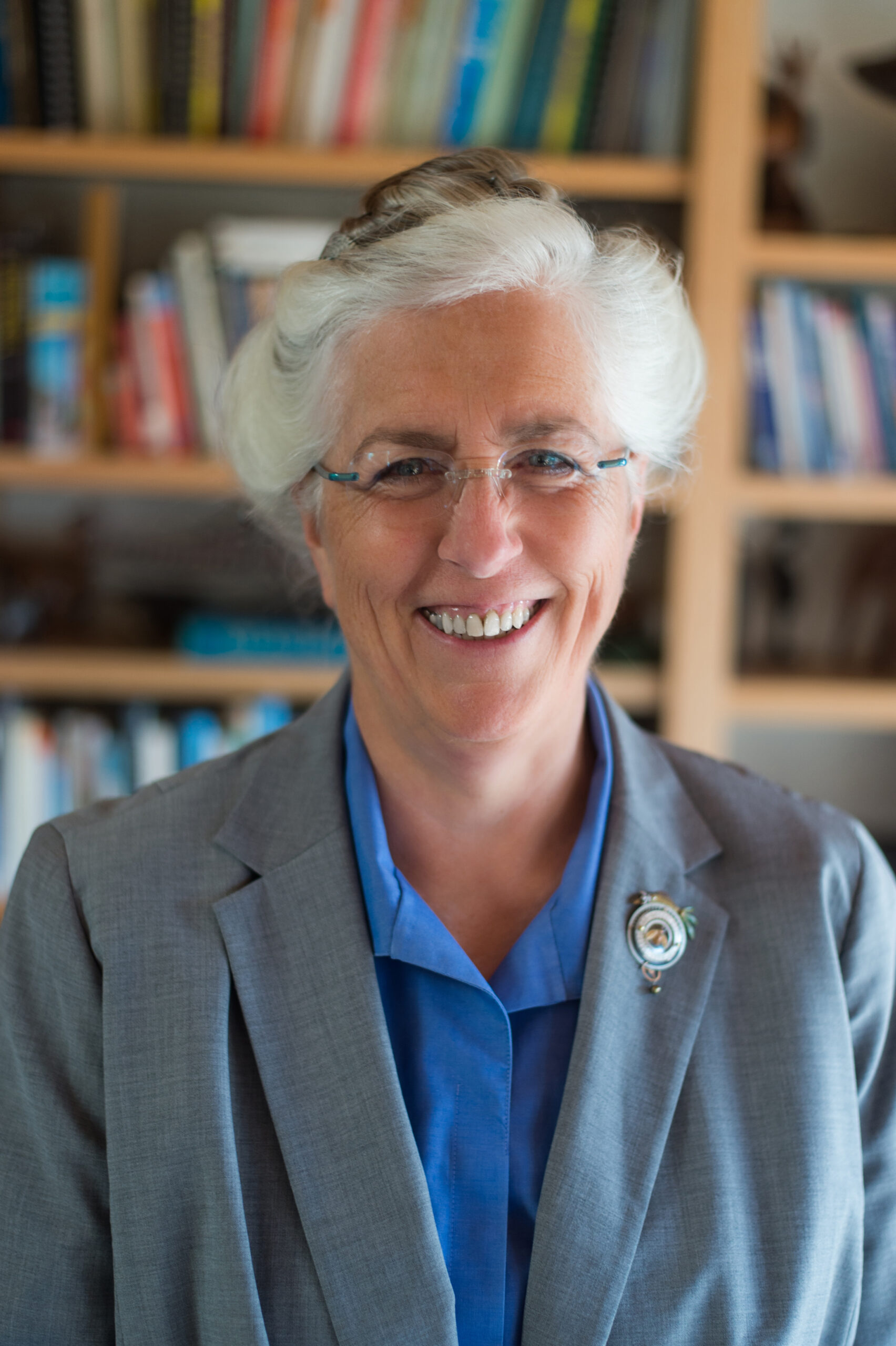
In this episode of Meet the Thriller Author, I talk with New York Times bestselling author Laurie R. King about her latest mystery, Those Who Are Gone, her remarkable writing career, and the process behind her novels.
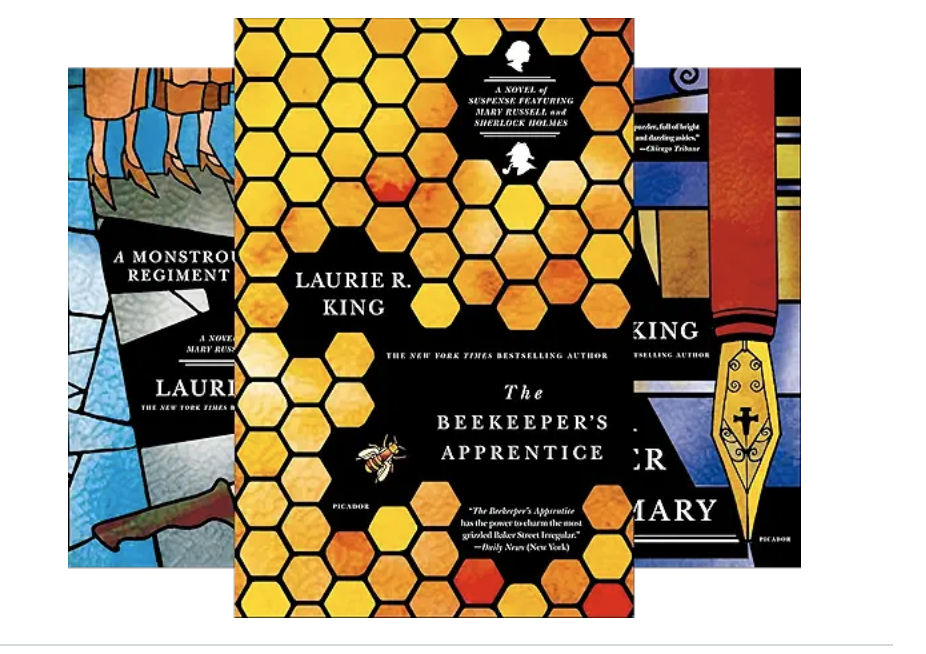
Laurie R. King is best known for her acclaimed Mary Russell and Sherlock Holmes series, which began with The Beekeeper’s Apprentice. She is also the author of the Kate Martinelli mysteries, the Stuyvesant and Grey series, numerous standalone novels, and Back to the Garden, which introduced San Francisco homicide inspector Raquel Laing.
In Those Who Are Gone, Raquel returns for an investigation involving murder, cold cases, family history, and long-buried secrets. Laurie explains why she decided to reveal more of Raquel’s mysterious past in this novel and how the character’s relationship with her adoptive sister, Dee, became central to the story. We also discuss the real-world use of DNA and genealogy in solving cold cases.
During this wide-ranging Laurie R. King interview, we explore how her different fictional worlds occasionally overlap—including the return of Al Hawkin from the Kate Martinelli books—and why those connections can create unexpected complications when Hollywood becomes interested.
Laurie also shares the story behind the creation of Mary Russell, the early reaction from devoted Sherlock Holmes fans, and how she eventually earned recognition from the Baker Street Irregulars.
Aspiring writers will especially enjoy our discussion of Laurie’s writing process. She talks about writing organically rather than outlining, using Microsoft Word, producing short first drafts that grow during revision, and keeping research questions moving without interrupting her momentum.
With more than three decades of published Laurie R. King books to her name, she offers valuable advice that remains refreshingly simple: put something on the page. Once the words exist, you can make them better.
Listen to the complete conversation below.
Connect with Laurie R. King
Latest Book
Laurie R. King Books
Show Notes
Sumary
- Laurie R. King’s journey from aspiring writer to New York Times bestselling author
- The inspiration behind Those Who Are Gone and detective Raquel Laing
- Using cold cases, DNA, and family ancestry to build a mystery
- Connecting Raquel’s world with the Kate Martinelli series through Al Hawkin
- Creating Mary Russell and writing within the Sherlock Holmes universe
- Laurie’s “organic” approach to plotting mysteries
- Her writing routine, revision process, and preferred software
- Laurie’s essential advice for aspiring mystery and thriller writers
Transcript
Click for full transcript
This transcript was generated with the help of AI and only got a quick once-over from a human. So if you spot a typo or something that doesn’t make sense… let’s just blame the robots. 🤖
[00:00:05.080] – Alan Petersen
You are listening to Meet the Thriller Author, the podcast where I interview mystery, thriller, and suspense authors. I’m your host, Alan Petersen, a longtime fan of the genre and an author myself of crime and psychological thrillers. In this episode, number 244, you’ll meet New York Times bestselling author Laurie R. King, best known for her acclaimed Mary Russell and Sherlock Holmes series. Her latest novel, Those Who Are Gone, brings back San Francisco homicide inspector Raquel Laing in a gripping mystery involving murder, cold cases, and long-buried secrets. Before we get to the interview, please visit thrillingreads.com for the show notes, transcript, and access to past episodes. While you’re there, you can also join my mailing list and check out my own thrillers. And if you enjoy the podcast, please take a moment to rate and review Meet the Thriller Author on your favorite podcast app. It really helps other mystery and thriller fans discover the show. All right, here is my conversation with Laurie R. King.
[00:01:10.740] – Alan Petersen
Hey, everybody. This is Alan Petersen with Meet the Thriller Author. And today, I’m thrilled to welcome New York Times bestselling author Laurie R. King, best known for her acclaimed Mary Russell and Sherlock Holmes series. Her latest novel, Those Who Are Gone, brings back San Francisco homicide inspector Raquel Laing in a gripping story involving murder, cold cases, and secrets from the past. Laurie, welcome to the podcast.
[00:01:37.950] – Laurie R. King
Thank you. Good morning, Alan.
[00:01:40.070] – Alan Petersen
Did I pronounce Raquel’s last name right?
[00:01:42.650] – Laurie R. King
You got it.
[00:01:43.450] – Alan Petersen
Good. ‘Cause that’s what was in my head when I was reading it, so I’m glad I was right.
[00:01:46.350] – Laurie R. King
It’s a problem when a lot of people pronounce her Rachel, and I always have to say like a K, you know?
[00:01:52.550] – Alan Petersen
All right, great. Glad I got that one right. So before we dive into Those Who Are Gone and your other books and your career, can you tell us a little bit about yourself, your background, and your journey as a writer?
[00:02:02.880] – Laurie R. King
My journey as a writer.
[00:02:05.190] – Alan Petersen
You know those questions.
[00:02:06.570] – Laurie R. King
That makes it sound like it’s so, you know, like you have a map and it tells you where you’re going. And, you know, on my journey, I set off and my, my, my Google Maps tells me where to go. So, , I kind of, I kind of entered into this whole thing, um, back in the ’80s. I was, a young, youngish mom of 2. And my, my kids had gone off. My second child had just gone off to kindergarten. So he was 3 mornings a week, he was gone. And so I sat down and I started writing and I basically have not stopped since then. So I was very fortunate in that I was of the era that, um, I could find an, an actual agent who represented me and I could find a traditional publisher who In the early days, we were told, no, your job is just to write the books. We sell them.
[00:03:05.950] – Alan Petersen
Oh, wow.
[00:03:06.980] – Laurie R. King
Which ain’t the case now, I tell you. And I, as I said, I was extremely fortunate because the first books, the first book that I sold was a Kate Martinelli story. And it went on to win the Edgar Award and the Creasey Award in England. And then the next year was the introduction to Russell and Holmes. And that series has been going on. Oh, I’m working on number 20 now.
[00:03:35.650] – Alan Petersen
Oh, wow.
[00:03:36.000] – Laurie R. King
So number 20 will be out in about a year, 2027, maybe early 2028, kind of depending. It’s, , whatever. But the early, my, my earliest writing was the Russell and Holmes, but the first one, as I said, the first one I sold was Kate Martinelli. And Kate Martinelli is a homicide cop in San Francisco in the police department, who’s partnered with an older male detective named Al Hawkin. Well, I, the last of those that I published was in, I think, 2004, 2005. I can’t remember. Anyway, it’s 20 years ago when I was thinking about doing a, a local, a more local book, shall we say. In the early COVID years, because most of the Russell and Holmes involve traveling for research, and we didn’t travel an awful lot during those COVID years. It was, it was pretty tricky to do research outside the area. And I thought, well, what do I, what do I know? What, maybe this is the time to start a new series. And I, I thought about doing another Kate Martinelli, but then I thought, Kate. Kate’s about as old as I am. And, and I think at the time there was still compulsory retirement in the San Francisco Police Department.
[00:05:05.720] – Laurie R. King
So I would’ve had to sort of make her into a PI and various reasons in conversations with my editor. And, and I thought rather than try and restart a series which had basically gone on the shelf for 20 years. Well, I did a novella in the middle, but, um, why don’t I use the same kind of setup that is the San Francisco Police Department? And I really like writing about cold cases. It’s amazing looking back at my other books, which are not specifically cold case books, How many of them deal with unsolved mysteries from the past. I think that that’s an interesting thing to write about, and it gives you an extra dimension in your story. So I had always planned on writing this new series as a cold case focused thing. And I realized that Al Hawkin would still be around and working part-time. Because a lot of retired cops work part-time for cold cases. And I thought, well, maybe we could partner him with a new, you know, basically a new, a new version of Kate Martinelli. I mean, they’re not, they’re not at all the same people. You sort of add 30 years to what I was writing then and what I am writing now.
[00:06:35.910] – Laurie R. King
It fit well. So I wrote the first of the Raquel Laing books. A few years ago, as I said, during COVID and it was published. And that one is, you can see it behind me, um, Back to the Garden. And Back to the Garden is set partly in San Francisco, partly contemporary, partly down the peninsula from San Francisco, a place called, it then in, in my book, it’s called the Gardner Estate, but people who know the San Francisco Bay Area will know it as Filoli.
[00:07:08.410] – Alan Petersen
Mm-hmm.
[00:07:09.630] – Laurie R. King
So, and I, I made Filoli a, um, a different place, obviously, and made it a commune in the ’70s. So that my cold case takes place in the ’70s and my contemporary case. And I found it really interesting to write because you’re dealing with 2 sets of people, 2 different timelines. focused around something that happened, you know, 40 years ago. And yet the interesting thing about cold case books is when they ventured outside the 40 years ago or 100 years ago or whenever your cold case is set and, and have an element that is contemporary. So that’s, that’s what I was playing with in, in Back to the Garden. And that’s what I play with in the new book too. It’s, it’s a cold case and yet it is contemporary as well. So.
[00:08:14.150] – Alan Petersen
And that was mostly set in San Francisco. Those Who Are Gone.
[00:08:17.750] – Laurie R. King
. Those Who Are Gone, like, like Back to the Garden is, um, she’s a San Francisco Police Department homicide cop and, and she works with Al Hawkin a lot in the first book and is still working with him now. So at some point she may meet Kate Martinelli, but I’m not sure when.
[00:08:40.940] – Alan Petersen
And how does that feel for you? So you’ve had this long-running book series that you’ve been working on and then this new one. Do you approach it differently? Or, I mean, I love that you connected the 2 universes with Hawkin, but how did that play out for you? Is that just sort of like Like puzzle pieces?
[00:08:59.160] – Laurie R. King
I, , . I don’t really tie in the Martinelli books terribly much. I mean, Al is the only character that, that ties in. For one thing, anyone who has a Hollywood agent, they start screaming if you have 2 series that overlap, because if they’re trying to sell one series and you have characters that are in both, It, they, it makes them crazy because, I mean, it used to be easier to do that. Now it’s very, very difficult. But, um, I, I, I told, ended up telling my Hollywood agent about this one that she could, she could specify that Al Hawkin in the Raquel Laing books has to be given a different name. If they, if they make a movie or a series out of it, He can just be called Andy Horowitz or something. And so, so, because he’s a character, I really wanted him to overlap. I loved him in the, in the earlier books. Um, and I love the dynamic of an older guy and a younger woman detective. And they make them—
[00:10:13.940] – Alan Petersen
[00:10:14.810] – Laurie R. King
It’s, it’s unusual to write about just friendship. in a partnership, isn’t it? When you, when you start out a series and you have a man and a woman who are both sort of meeting, you always are wondering if they’re going to get together at some point.
[00:10:32.070] – Alan Petersen
Mm-hmm.
[00:10:33.180] – Laurie R. King
And I, I, what I enjoyed about the Martinelli stories is making it clear that they weren’t. I mean, she’s lesbian. She’s not interested in him. And similarly with Raquel Laing. I mean, Raquel Laing has her life and Al has his, but they’re good friends. So that’s, that’s one of the interesting things to write about that I find. But, you know, I’ve, I’ve been doing different books all my career.
[00:10:58.060] – Alan Petersen
Mm-hmm.
[00:10:58.600] – Laurie R. King
I, I have, as I said, 20 of the Russell and Holmes books, but I’ve also done, there’s 5 of the Martinellis, there’s 2 of a, a series I started thinking about and, and then again, it made it difficult to travel so that That series is now just a duology, I think, of Stuyvesant & Grey set in the ’20s. I’ve also got a number of standalones and I really enjoy alternating books. It makes me crazy to write the same characters year in, year out. Some writers have no problem. They just are happy to write Kinsey Millhone or Jack Reacher their entire career. That’s all they need to do. They can do everything they want to with those characters and that setup. I find I get antsy if I write the same characters too many years in a row. It makes me crazy. It’s kind of like a family reunion that never stops.
[00:11:57.330] – Alan Petersen
You know, and we were talking about Hollywood before, your agent, but this series with Raquel kind of reminds me of Michael Connelly with Bosch and Renee Ballard. And, you know, they’re on those streaming— I think it’s on Amazon or whatever. They both have their own series now, so you never know.
[00:12:15.910] – Laurie R. King
. , and that, but it is very, he started mixing his characters early on before it came, became a real consideration. But I’m sure that his contracts are very complicated.
[00:12:30.990] – Alan Petersen
I can imagine.
[00:12:31.930] – Alan Petersen
[00:12:32.890] – Laurie R. King
We should all have that problem, right?
[00:12:34.500] – Alan Petersen
Exactly. I mean, Michael Connelly has a slightly different set of problems than most other authors. So I’m gonna ask you about, um, so Raquel, when you started thinking about that character, um, what’s your process like then? Before, you know, when you were, when she was still on the drawing board, can you tell us a little bit about that?
[00:12:55.930] – Laurie R. King
I, , it’s, it’s always difficult to sort of retrace the steps because I’m not a, I’m not an outliner. Oh, okay. Um, with certain exceptions, but I often just have a vague, vague idea of where somebody is going. And then I’m a big believer in the rewrite because my first drafts are just dreadful. I don’t. I get, don’t give my first drafts to anyone except my editor. And she only gets to see it because she needs proof that I’m actually doing things. So, um, but I, I got to the end of the first draft of Raquel Laing, Back to the Garden, and realized that because of the way the book is structured, it’s a thriller. It’s a Cold case suspense. It’s got not a lot of meandering like you get in a cozy novel where you have a lot of backstory and you have a lot of subplots. This, this one is structured necessarily because you’ve got this very complicated, um, as I said, 2, 2 time frames. You’ve got a number of people you have to You have to reflect then and now when you’re writing the chapters. So there was a lot of mechanics involved in putting the story together, which is fine because my first drafts are basically me proving to myself that if I have this complicated Rube Goldberg machine and I turn this dial and this gear and that thing and this thing, then that drops down and then, and then it ends here.
[00:14:40.310] – Laurie R. King
And so, yay, it’s fine. And then I can go and make a novel out of that plot. So when I sat down to do the rewrite of Back to the Garden, I had intended to put in a lot more of Raquel Laing’s backstory. Because when you first meet her, she’s, she uses a cane. She’s obviously been injured by, on the job, by a case that went bad. And I had intended to put in a lot of that stuff. Her relationship with her sister, who she lives with, um, you know, all, all those sorts of things that in order to have a fully developed character, you need to see. And it was so odd because whenever I started writing something that was one of those areas, I would, I would get a page or two in and I would just think, you know, this just isn’t the place for it here. And I would, I would sort of put it aside and think, I’ll go back to it when I decide what’s happening later. And I got to the end of the rewrite. The And realized that she didn’t want to have her backstory explained, which felt very odd to me until I realized that her, I, I don’t seem able to get away from the character of Sherlock Holmes, right?
[00:16:18.520] – Laurie R. King
I, I, I write this series that’s been going on for more than 35 years, and I, you know, I mean, I kind of I kind of think and breathe Sherlock Holmes and, and Mary Russell, who’s sort of built around him. But I realized that Arthur Conan Doyle doesn’t let us know anything about Sherlock Holmes. You don’t, you know, vaguely that he comes from a sort of vaguely upper middle class, lower upper class family of, and his grandmother was the sister of a famous French artist, and he has a brother, and that’s a Pretty much all you know about him. So I decided, well, that’s what this book is. It’s about this enigma of a person that has these jobs and these relationships, and you drop hints along the way of what she’s feeling, what she’s doing, what the people around her are doing, but you never really get a very clear sense of Raquel herself. Of why she’s injured and what she comes from. And she makes a reference in there to the woman she meets during the case that, well, I think the woman asks if all of her family are police because it’s quite often, you know, somebody joins the police because their family.
[00:17:47.750] – Laurie R. King
And Raquel makes a comment that, no, it’s probably the opposite—that she comes from a criminal family. And that’s not explained. It’s just dropped in there and you don’t know anything about it. So I thought, this is, this is right for this book. But the second book, I thought, well, I’ll make it more about Raquel and her sister Dee, because Dee is a, is an online security expert, i.e., hacker. And she, um, she and Raquel have worked together on cases that they probably shouldn’t have. So I thought, well, this is, this is where this story is beginning, is cold case involving Raquel and she drags her sister into it. And so I thought, well, I’ll tell a little bit more about it. It turned out this book was entirely about Raquel. So, you know, everything about Raquel by the end of it, which is, you know, kind of a backward way of doing a series. Is you tell the story on the first one and then you tell the character on the second. And again, it makes your Hollywood agents crazy because they, they keep saying, well, she’s a really cool character and you’ll find out about it next time.
[00:19:01.810] – Laurie R. King
But it was really interesting to build a cold case that Raquel could be involved with. She’s, when you first open the story of Those Who Are Gone, she’s working an active homicide. She’s an active homicide investigator because it takes place. Before Back to the Garden. It’s 7 or 8 months before. And it’s the, so that the whole first section of the book is the case that leads up to Back to the Garden. And then it’s a continuation in the contemporary period of now of what’s happening. And so you have this element of a cold case that’s not terribly cold because it’s just right then, and a cold case that comes up that’s truly cold. And her sister and she working together even when they shouldn’t. And I had so much fun doing it because I really got to explore the character and her relationships in a way that that worked and that in the last book would’ve just gotten in the way. So.
[00:20:15.870] – Alan Petersen
, I noticed that in the book too, ’cause that’s kind of a big part of the— it’s like running alongside the murder investigation is Dee’s investigation into their ancestry and all that. So, I was kind of wondering how that came to be. So, it’s kind of interesting that you explained that. And what was it with the ancestry stuff? ‘Cause I know we’ve all done that probably. I know I have. Google has my DNA, which is kind of frightening, but— How did that bake into the story?
[00:20:47.460] – Laurie R. King
I think that a lot of people have some experience with either sending their own DNA in or reading about somebody who has. One of the interesting things over the last few years has been the number of cases that are solved by a family member in all innocence, putting their DNA into one of the companies that works with law enforcement. Some of them have drawn back and said, no, we’re not going to do that unless you have an active warrant, which is tough to get without evidence to start with. But the number of people who are discovered because they you know, their cousin or their daughter or something happens to have, happens to have entered that in and it leads the police to their DNA. And, and so I, I think that the whole DNA thing is really an interesting, um, an interesting way of tying in cold cases because so many cold cases are being solved through DNA.
[00:21:58.140] – Alan Petersen
, it was like Golden State Killer, right? That’s how they got him. .
[00:22:03.030] – Laurie R. King
. Which was being solved. I worked with the guy, the San Francisco detective who was doing cold cases. I, I worked with him on Back to the Garden while he was in the process of breaking the Joseph D’Angelo case. So there’s a number of elements in Raquel’s case That oddly echo the D’Angelo case, although it wasn’t until after I had finished writing it that it broke. So it was just, it just happened to, um, without, you know, without going into plot details, no spoilers here.
[00:22:47.460] – Alan Petersen
o spoilers, please.
[00:22:48.980] – Laurie R. King
So, um, but , I mean, it was interesting how my plot and the real life thing. I’m, I’m sure he got all the ideas from me, right?
[00:22:57.060] – Alan Petersen
Of course. Yes.
[00:22:58.120] – Laurie R. King
[00:22:58.610] – Alan Petersen
I’m always fascinated too with the Bay Area because There’s a lot of famous serial killer cases here.
[00:23:05.320] – Laurie R. King
It is so weird. I mean, I live in Santa Cruz, which is such a laid back town. And, and, and I was looking when I was doing the research, because of course I lived through the ’70s, but it was oddly difficult to remember when things had happened. And so I was doing this research and I was thinking, that was, and that was the same time as, and all of them here. So we had 3 serial killers. Working in Santa Cruz at the same time, which happened to be at a time when I used to stick my thumb out on the freeway and hitchhike over Highway 17. And, you know, that’s what we did, right? But, um, but , I mean, it was so weird to think of these, these serial killers all hanging around Santa Cruz, which I don’t know why.
[00:23:56.320] – Alan Petersen
, it’s kind of weird. Something I wanted to ask you too, now going back to some of your other work, ’cause I’m always fascinated. So you mentioned that you’ve done a lot of— you’ve lived a lot in the Shakespeare— in the Sherlock Holmes world, not Shakespeare, Sherlock Holmes world. How did that come about and what is it like to be— I mean, that’s such an iconic, of course, character. I mean, was it freaky the first time you tried to play in that world?
[00:24:24.320] – Laurie R. King
Well, you have to remember that when I started, I started writing Beekeeper’s Apprentice, what became Beekeeper’s Apprentice, in 1987. And of course, we didn’t have internet. It, in the early days when I was first publishing, we had online forums that were starting up. But I lived out in the sticks and for us to get online, you had to take your phone and put it onto a modem and you get this, the warble sound, which nobody recognizes under the age of 30, but you know, you get the warble sound for the two to talk to each other. But of course it was never very efficient and you could not download anything at all. You just, but there were these forums. So when I first started publishing the Sherlock Holmes stories, apparently the, the devout Sherlockians erupted in horror at someone who would pair the great detective up with a, with a girl, an American girl. And they were just appalled at this and I don’t know if they thought I was going to be writing kids’ books or whether I was in the early stages of a series of Sherlockian erotica. I, I, I don’t know.
[00:25:55.660] – Laurie R. King
But apparently there would be these flame wars that would erupt around each new book in the early ’90s. But because I was not online, I was completely oblivious. And because when I started writing, I had never been to, I’d never even been to a crime writing conference. The first 2 conferences I went to were both in, in England, and I knew no one. And so I was almost completely unaware that there was an active Sherlockian world. I mean, I knew that there were, there were a lot of devout Sherlockians because there’s commentaries in the bookstores and libraries. So I knew people were writing about Sherlock Holmes and, but that anyone would, would read the books and care about them was a foreign concept to me until I actually met Sherlockians and said, oh , sorry about that.
[00:27:03.440] – Alan Petersen
They take it serious, huh?
[00:27:05.620] – Laurie R. King
But I think that over the, over the next few years, it became obvious that I’d done my homework. I, I had, I had read the stories thoroughly. I read all the major commentaries. I knew what I was talking about and that I had a great deal of respect, not only for the Sherlock Holmes character, but for Conan Doyle himself. And The work that he did shaping this character so that when I created a character who basically is Sherlock Holmes as a young female 20th century feminist person, I could make use of all of the Sherlockian stuff out there. But because I started it after he had retired and after Conan Doyle was finished writing him. I, you know, after 1914, Holmes was, was mine. I think that when I had proved that I was respectful, they began to listen to me and take me seriously, more seriously. I mean, a lot of them don’t take me seriously, but that’s fine. And in fact, I was then, in the early aughts, I was invited to give a formal lecture to the Baker Street Irregulars annual meeting.
[00:28:28.550] – Alan Petersen
Oh, wow.
[00:28:29.430] – Laurie R. King
So I gave a, a formal academic footnoted paper on Watson’s war wound. The definitive, the definitive explanation of how Dr. Watson’s war wound was in one story in his shoulder and in one story in his leg. So if you want to know, you have to read Laurie R. King’s, learned paper on Watson’s war wound. And then the following year, they invited me for the dinner and, and named me, um, you know, a Baker Street irregular. So they’ve accepted me to their, predominantly manly hearts.
[00:29:13.070] – Alan Petersen
That’s great.
[00:29:13.540] – Alan Petersen
[00:29:13.720] – Alan Petersen
That speaks a lot about the books, the staying true to the character and the, the world. That’s awesome.
[00:29:19.800] – Laurie R. King
Yes. And they’re lovely people. They, you know, they have, they have great senses of humor.
[00:29:25.430] – Alan Petersen
So now I know, before I let you go, I have to ask you, because I always ask my guests now for the writing process, and because I’m very snoopy. How do you write your books? Do you use Word? What’s your process of writing them?
[00:29:38.350] – Laurie R. King
I basically use Word: double-spaced, Times New Roman, 12-point. I mean, it’s the basic format for any submission. In fact, I find it I find it difficult to edit something that’s not in that. So if somebody sends me something to read and edit, I usually translate it into, because it’s, by after all this time, it’s just invisible to me. So, as I said, some of the books that I do are very, I, I regard myself not as a pantser, is the, is the term some people use, by the seat of your pants, but I call it organic.
[00:30:17.320] – Alan Petersen
[00:30:17.790] – Laurie R. King
And, it’s more like there’s, there’s a seed that you plant and depending on how you treat it, it goes in certain directions. Some places in all of the books need a certain amount of organization. So I’ll have a, like a chronology that this needs to happen and this, this person learns that and then this person goes there. And so to try and keep, especially as I get further into the book, because the plot needs to Tighten up. Some books really need to be that way from the beginning. And Those Who Are Gone was one of the rare books that I had an almost complete— I don’t know if an actual outliner would call it an outline, but I had a sequence of events of how things need to develop on the different Storylines. Because as you know, there’s this one storyline of this murder that she is given as a case in the early part, and that branches out in different directions. And then you have this other case that comes in that’s related to Dee’s research. So all of the timing had to be very snugly fitted together. So, so that Those Who Are Gone, actually, I spent a lot of time working out the, the, the plot development.
[00:31:48.180] – Laurie R. King
A lot of the stuff I didn’t, so that the character development, I knew what I needed someone to, to be, but I didn’t know what they needed to look like or sound like.
[00:31:59.450] – Alan Petersen
So, how do you write that?
[00:31:59.860] – Laurie R. King
But it was an interesting experience to write something so very different. And, and I’m now, enjoying going back to, to, to Russell and Holmes where I just, I just write because I have a vague idea of where it’s going and then I’ll come across a book and read that and think, oh, it’s exactly what I needed. And so off I go.
[00:32:18.070] – Alan Petersen
And what’s your, do you like usually, do you, um, do you have like set hours that you write every day? Do you write from the same spot?
[00:32:24.690] – Laurie R. King
I tend to write, in the mornings. Um, I have a study which in, in one direction is this stuff and then I have a a kind of daybed that has an external monitor that I plug into and write on. And then the other side is during COVID my sister teaches exercise classes. And so the other side is the Zoom room for all of her weights and her exercise things that she uses. So I have a rather schizophrenic study here. But , I usually work in my study. Mornings, usually my brain is fresher in the Mm-hmm. Sometimes I’ll work in the afternoon, sort of depends on how tight my deadline is. I, as I said, I tend to write a first draft all the way through knowing that it’s bad. I don’t tend to do a lot of editing for it. I will make notes of what I don’t know. I’ll have an ongoing doc of stuff I need to find out, but it’s not worth stopping what I’m doing to get in touch with my cop friends and say, what kind of gun does she have? Because that’s on my list of things to find out.
[00:33:37.580] – Laurie R. King
And so I’ll keep, I’ll keep this ongoing list of stuff I don’t know so that I, when I finish the first draft, it’s usually very, very small. I write very short, tight first drafts. Some people write enormous, cumbersome first drafts and end up cutting everything to make their final draft. And I’m the opposite. My, my first drafts are probably 60,000 words and my final drafts are Around 90 to 100, depending on the book.
[00:34:05.460] – Alan Petersen
Oh.
[00:34:05.780] – Laurie R. King
So, but it’s the machinery of the plot needs to be there. And that’s basically what I, what I’m doing with it. Um, and that takes me, depending on the book, maybe 3 months, 3 or 4 months. And then I try and let it go cold for at least 2 or 3 weeks while my editor’s reading it. And so, When I come back to it, my eyes are looking at it fresh. The rewrite often takes longer than the first draft did because it’s a lot of back and forth and it’s a lot of feeling how it’s working. I mean, there’s a lot of balance involved in getting a novel out of a first draft when you write like I do, that you need to know something, but where do you need to know it? You need to have character development, but is it going to be in the way if I put it here? So all that kind of stuff takes a lot of back and forth. And then that goes off to my editor. She gives me her reaction. I do a final draft. It goes off to the copy editor, and there’s another flurry of changes.
[00:35:12.420] – Laurie R. King
Each time the changes get smaller and smaller. And the final stage, which is I’m at with an anthology that’s coming out in the spring called Mary Russell’s Ghost and Other Stories. I’m now at the stage where I’m, it’s the proof so that it’s the final, final copy that needs to go through and be corrected to make sure that, you know, there’s not some weird echo. So I read it aloud and you, you don’t want the weird echo in the books and you want to make sure that no words have gotten dropped and that kind of stuff. So. And then when I finish the proofs, I never have to read it again—ever.
[00:35:52.030] – Alan Petersen
Oh . , , .
[00:35:54.330] – Laurie R. King
[00:35:54.390] – Alan Petersen
It’s like probably, yes, you know, directors who don’t like, or actors who don’t like to watch the movies they’re in ’cause they start critiquing themselves. I can imagine that too. You know, like, oh, I shouldn’t have done that. I should have done this.
[00:36:03.950] – Laurie R. King
. Crazy. Invariably when I open a hardback, the first thing I’ll see is some goof and I’ll think, oh God.
[00:36:12.230] – Alan Petersen
. So, are you gonna go back? I know you say you’re writing on the, one of your different series is, Um, are you gonna go back to writing for Raquel soon, or what’s next for the—
[00:36:23.130] – Laurie R. King
, I’m hoping to alternate them for a while. Um, I’ve, as I said, I’m, I’ve got this anthology coming out, which is partly Russell and Holmes stories and partly, um, other contemporary. There’s not a Raquel Laing story in it, but there’s one story where, um, the, the character has a conversation with Kate Martinelli.
[00:36:46.160] – Alan Petersen
Okay.
[00:36:46.610] – Laurie R. King
But just on the phone. And so it’s this sort of balance between things. And it also has a— my background is theology before I came into writing mysteries. And so it has a midrash of a biblical story that I wrote in there, which I’m not sure what people will make of. It’s going to be— it’ll be interesting to hear the reaction to that one. But that’s, as I said, out in February. The next Russell and Holmes will be out either next fall or early the following year. And I’m hoping that there’ll be Raquel Laing 3, because I’m already making notes on that sometime in 2028 or ’29. So.
[00:37:29.880] – Alan Petersen
All right. That sounds great. And so, before I let you go, I always ask my guests, because I have aspiring writers that listen to this, any advice that you have someone who’s listening to this and, is, is wanting to write a thriller or mystery?
[00:37:42.700] – Laurie R. King
I think that the way that I do it, I started doing it in the ’80s and I still do it now, is you just gotta write.
[00:37:51.380] – Alan Petersen
Mm-hmm.
[00:37:51.910] – Laurie R. King
Um, it, it, whatever you write is gonna be awful. You don’t have to show it to anyone. It can all change. Um, but it allows you to put something on a page that you can think about. Some people do that with their outline stage, but as I said, I I don’t, I don’t do outlines and my brain doesn’t work that way. So if you have stuff on a page, you can make it better. And if you just put it off until you know what you want to do, you’re not going to have anything to make better at all. So just put it down knowing that it’s going to be awful. And, and you look forward to a pleasant surprise when there’s bits of it that actually work. Awesome.
[00:38:33.910] – Alan Petersen
. The fun, the fun part. So where can the, where can listeners find you? What’s your website?
[00:38:41.630] – Laurie R. King
My website is the creatively named laurierking.com. I have a, I have a Substack page. I have, in fact, I think there’s 2 of them now. There’s one of them for the newsletter and one of them for my mutterings, because I write all kinds of different things. If you’re listening to this early on in the life of the book, I have various events coming up in September and October. But I have an active Facebook presence that I, whenever I’m doing something, I let you know on there. And my, my, obviously my newsletter, The Buzz, lets you know stuff. So, and I, one of the things that I really love about writing mysteries is the community. There’s a mystery community that I don’t think you find in any of the other genres. Science fiction is different, um, but it’s, it’s a, a community too, but it’s different. But the mystery community is, I think we get all our aggressions out on the page. And so we’re really very friendly.
[00:39:50.190] – Alan Petersen
, there’s that too. after interviewing all these thriller and mystery writers and going to conferences, we’re all really mellow and nice because yes, I think we get it all out on the page.
[00:40:00.770] – Laurie R. King
[00:40:01.960] – Alan Petersen
[00:40:02.360] – Laurie R. King
, it’s the romance writers.
[00:40:04.880] – Alan Petersen
, that’s what scared me.
[00:40:05.920] – Laurie R. King
They’re the deadly ones.
[00:40:08.740] – Alan Petersen
All right, Laurie. Well, Those Who Are Gone is out on September 8th, I believe, right?
[00:40:14.390] – Laurie R. King
Yes.
[00:40:14.730] – Alan Petersen
September 8th. So looking forward to that. And thank you so much for being on the podcast. I really enjoyed talking to you.
[00:40:20.210] – Laurie R. King
I thank you for inviting me and hello to all your friends.
[00:40:27.980] – Alan Petersen
Thanks for listening to Meet the Thriller Author. I hope you enjoyed the conversation. If you did, please take a moment to follow the podcast and leave a rating or review. It really does help other thriller readers find the show. You can find all the past episodes at thrillerauthors.com, and if you’d like to check out my own psychological thrillers and crime novels, head over to thrillingreads.com. Again, thank you for listening. Until next time, keep reading, and I’ll see you on the next episode.