

Interview with Mark Stevens — Author of Two Truths and a Lie
In Episode 235 of the Meet the Thriller Author podcast, I had the pleasure of speaking with bestselling Mark Stevens, author of the Flynn Martin thriller series, about his latest novel, Two Truths and a Lie, releasing April 7. Stevens shares insights into his writing journey, the inspiration behind his journalist-turned-crime-fighter protagonist, and the realities of building a long career in the mystery and thriller genre.
During our conversation, Stevens reflected on how his background as a journalist influenced the creation of Flynn Martin, a television reporter drawn into dangerous investigations. He explained that the idea for the original novel in the series came to him almost instantly—what he described as a concept that “fell out of the sky”—and ultimately grew into a multi-book series after his publisher saw the potential for a trilogy.
We also discussed his writing process, which might surprise many aspiring authors. Stevens considers himself a classic “seat-of-the-pants” writer who prefers to discover the story as he writes rather than outlining every detail in advance. He emphasized the importance of daily writing habits, even if it’s just a couple of hours each morning, to keep momentum and allow the subconscious to work through story problems.
If you enjoy fast-paced thrillers, stories about investigative journalism, or practical advice on the craft of writing, this episode is packed with valuable insights from an experienced voice in the genre.
Listen to the full interview with Mark Stevens on Episode 235 of Meet the Thriller Author.
Connect with Mark Stevens
Latest Book
Mark Stevens Books
Show Notes & Transcript
Episode 235 Summary — Mark Stevens
- Mark Stevens discusses his latest thriller, Two Truths and a Lie, the second book in the Flynn Martin series, featuring a journalist targeted by a copycat killer while investigating a missing family case.
- He shares how his journalism career shaped his fiction, including the decision to make his protagonist a TV reporter facing public scrutiny and dangerous investigations.
- Stevens reveals his “seat-of-the-pants” writing process, explaining why he doesn’t outline and prefers to discover the story as he writes each day.
- He talks about the importance of writing communities, crediting organizations like Mystery Writers of America and Rocky Mountain Fiction Writers for helping advance his career and connect him with other authors.
- Aspiring writers will appreciate his key advice: keep writing, find the process that works for you, and remember there’s no single path to success in publishing.
Transcript
Heads Up:
This transcript was generated with the help of AI and only got a quick once-over from a human. So if you spot a typo or something that doesn’t make sense… let’s just blame the robots. 🤖
[00:00:04.780] – Alan Petersen
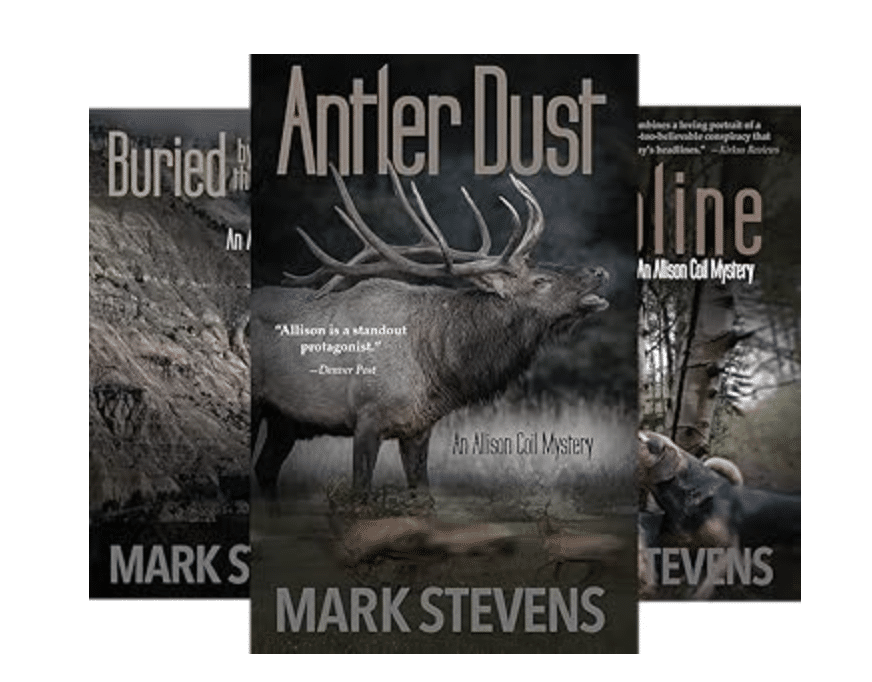
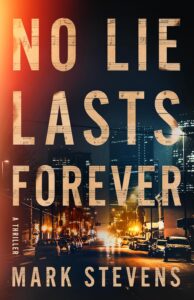
You’re listening to Meet the Thriller Author, the podcast where I interview writers of mysteries, thrillers, and suspense books. I’m your host, Alan Petersen, a fan and a writer of the genre myself, and you’re listening to episode number 235, featuring my interview with Mark Stevens. Mark Stevens is the author of the Flynn Martin thriller series, including No Lie Lasts Forever, and his latest novel, Two Truths and a Lie, which releases April 7th, is the second book in that series. He’s also the author of the acclaimed Alison Coyle mystery series, several of which have been finalists for the Colorado Book Award, with Trapline taking home the win. In addition to his novels, Mark’s short fiction has appeared in Ellery Queen Mystery Magazine, Mystery Tribune, and the anthology Denver Noir, which won the Colorado Book Award for best anthology. He was also one of the co-editors of Four Corners Voices, another award-winning anthology. Mark has been named Rocky Mountain Fiction Writers, Writer of the Year twice, served as president of the Rocky Mountain chapter of Mystery Writers of America, and for 10 years hosted a podcast for Rocky Mountain Fiction Writers. Today he joined me to talk about his new thriller, writing suspenseful stories, and what it takes to build a long career in the mystery and thriller genre.
[00:01:19.900] – Alan Petersen
Before we get to the interview, please take a moment to rate and review this podcast on Apple, Spotify, or wherever you listen to the podcasts, and visit thrillerauthors.com for show notes, transcripts, archives, and a lot more. And please do check out my own thrillers and all my social media links to connect with me over at thrillingreads.com. All right, here is my interview with Mark Stevens. Hey everyone, this is Alan Peterson with Meet the Thriller Author. Today I’m joined by bestselling thriller writer Mark Stevens, author of the Flynn Martin series and the brand new novel Two Truths and a Lie, which will be released on April 7th. Mark, welcome to the podcast.
[00:01:59.580] – Mark Stevens
Alan, thanks a million for having me on.
[00:02:01.120] – Alan Petersen
Yeah, yeah, thank you. And so, uh, so tell us a little bit about yourself, about your writing journey. How do you get started writing thrillers? Can you walk us through that?
[00:02:08.640] – Mark Stevens
Sure. I mean, just in a nutshell real quick, um, the main thing you need to know about me is I’m the son of two librarians, which means I grew up in a pretty cool world of books and knowledgeable parents who cared about learning and really had an open mind about just pretty much everything. They were really people who believed in learning, which is a wonderful thing in my view. Although I had two brothers, I was the one I think who really got the reading and writing bug. I also knew I always wanted to be a reporter. So I spent really, I mean, all through high school, I worked on my high school paper. In college, I worked on my college paper, was editor of my college paper, and started right in as a journalist a couple of days after graduating from college. Just at that point, I really wasn’t thinking about writing, but, you know, fiction anyway, mostly just writing nonfiction and my journalism stuff. And it come around about the early 1980s, and a friend handed me a couple of mystery novels. And ever read kind of general mainstream fiction, I hadn’t really dipped into genre stuff like science fiction or mysteries, crime fiction.
[00:03:16.770] – Mark Stevens
And my eyes were opened. My brain was on fire realizing how great the writing was in crime fiction. Kind of in the back of my head said, “Hmm, this is interesting. I wonder if I could pull something together.” And that was in like 1983. It took me about 23 years to get published, but I never stopped working at it. And I just love the crime fiction genre.
[00:03:37.950] – Alan Petersen
What was those early books? What were those early influences in that genre?
[00:03:41.620] – Mark Stevens
Oh, the big ones were Patricia Highsmith. I tore through everything and her short stories. I loved her deep psychological portraits of just regular people with, uh, big trouble on their mind and no way, no way to figure out how to get out of their predicaments. Her predicaments are just fantastic. Also got turned on to James M. Cain, ripped through his stuff. Elmore Leonard, especially the early, early Elmore Leonard crime novels in Miami and Detroit. And then the other one I really took to was Ross Macdonald. Uh, so I’d say those were the four that really got me going, but I’ve been a nonstop reader of the genre ever since I At least I try.
[00:04:19.710] – Alan Petersen
Yeah, so with your reporting background, is that like why you— like your character, like Flynn Martin, she’s a reporter. Is that— are you drawing from your experience with that? Is that why you chose that profession for her?
[00:04:30.280] – Mark Stevens
Well, I did spend a lot of years— of the 20 years as a journalist, I spent 13 years in print and about 6, a little over 6, in television as a producer, not on air. So there’s sort of, I guess, a hybrid blend amalgamation of all the different reporters I’ve met. It had to be a TV reporter in the case of Flynn Martin because the opening scene in No Lie Lasts Forever depends on her making a mistake on live television. And that kind of mistake would just never happen in print. That heavy-duty, you know, spotlight with you’re on air, it’s live, that kind of thing just wouldn’t happen in print. And it needed to happen that way for the plot to work. So I drew on a couple of, I would say, hard-driving, very thoughtful, smart reporters, television reporters I worked with. During my 6 years in television for that element of the story.
[00:05:24.970] – Alan Petersen
Yeah, I thought that was a great twist that you had in that book too. Like you mentioned, the mistake that happened on air. And I remember, you know, I think that’s kind of popular now. Like even on YouTube, you see like bloopers, reporter bloopers. We all get a kick out of that. And then I remember a few years ago, there was a couple— this was terrible, although obviously a couple reporters were killed on air. So that’s always so fascinating. Is that what kind of got you thinking about doing that when you first started writing that book?
[00:05:49.830] – Mark Stevens
Yeah, I mean, so the whole concept for No No Lie Lasts Forever, which by the way I thought was a standalone before it sold to my editor who said instantly it’ll be a 3-book series, no more, no less. But she demanded through my agent that it become a trilogy. I thought I was over and done with. And the, the concept of that standalone as it first came to me happened a long time ago. It hap— the whole concept for No Lie came to me in 2005. 4, and it sat in my drawer and hung around, went to its first editor just a couple of years ago. But, uh, the whole thing really— and I don’t believe in this sort of, uh, thing happening, I’m not a mystical woo-woo kind of person— but the whole concept of No Lie really fell out of the sky in about 10 seconds to me. I wasn’t even trying to dream up a story, it just fell into my lap, and I had this sense of a retired serial killer, and then I had a disgraced television journalist, and I just had this story of mutual redemption. Of course, there were 800,000 questions to answer about what the guts of the story would hold, but the concept of it really fell out of the sky.
[00:07:05.410] – Mark Stevens
So I had no choice but to pursue that idea when it came to me. And so I can’t say I was overly methodical in planning that book. It just was one of those things that I pursued that, um, that little mystical thought that came into my head, and it turned out fairly well.
[00:07:26.030] – Alan Petersen
And so how was that written? So obviously, The Two Truths and a Lie is a sequel, is the second book in that series. And you mentioned you wrote— you thought you were writing a standalone with the first book. From writing the first book, how did this one come to be? Like, you got the idea right out of the blue, luckily. Was that the same for this one?
[00:07:44.110] – Mark Stevens
Not at all. It’s probably the opposite. It is the exact opposite in terms of just saying, okay, I’ve got a problem on my hands here. I had to go back into No Lie. Thank goodness she requested the trilogy before we were well into developmental edits on No Lie, because I could go in and just plant a few seeds, crack the egg a little bit, and just create a little leakage so that there was a few things set up for the second book. And the second book was much more even though I don’t outline, it was much more of a planned sort of approach to thinking out what kinds of questions do I need to resolve, especially with the— well, I don’t think it’s giving too much away that the bad guy in book 1 is captured and sent off and packed away. He’s not packed away in the end of the first book, but we get the sense that his days are done. You know, I just had to ask myself what would be next for Flynn? What would the next monster for her look like? What kind of shape would it take? And because the other kind of thing I realized I thought I would have to do is because in No Lie she’s kind of an exile, she’s, she’s out on hiatus, she’s put off air by her station and asked to sit on the sidelines, so to speak, while they sort out the public relations impact of what she— the mistake she made on air.
[00:09:08.420] – Mark Stevens
She doesn’t really do a whole lot of reporting in book 1, and I wanted to switch that around in book 2 and really let her see her report and get involved in the story. So once I knew that I would have to give her something to work on while the next monster came at her, that sort of just led to her getting involved in a massive crime story, the disappearance of a whole family from their home. And that drives one whole section of the plot as we move into Two Truths.
[00:09:42.890] – Alan Petersen
Yeah, you mentioned that the story also involves a copycat killer that’s targeting her, a journalist. Can you tell us about that too? Like, give us a little bit of the elevator pitch for Two Truths and a Lie.
[00:09:58.360] – Mark Stevens
Yeah, just exactly that. Just as she thinks she’s moved past PDQ, as he’s known in the first book, PDQ, the guy who’s been hiding in plain sight for 15 years in Denver, just as she thinks she’s moved past that is getting her life back to normal, she starts receiving messages that are very much in the same style of the encrypted messages she used to get from PDQ, and they are extremely threatening, and they arrive in, uh, very unusual ways. For instance, one is discovered in her young son’s backpack when he comes home from school. A place where— the last place she would expect to receive something like that. And that, as the warnings and messages keep arriving, the body count also starts to rise. And the bodies are also found with messages targeted right at Flynn Martin.
[00:11:01.550] – Alan Petersen
I like that in the book too, that Flynn is both a reporter and a mother. How do you— how do those dual roles for you? How do they raise the stakes for her in this book?
[00:11:10.940] – Mark Stevens
Yeah, I mean, I think both her role as mother, as a daughter, because she has a very tight relationship with her father, who was a veteran journalist in Denver for years and years. Her ex, she has a healthy relationship with her ex, Max. She has a pretty good, solid relationship with her boss Rick. So she’s got 4 strong male folks around her that give her different, you know, variety of different sounding boards when she gets into trouble. She also, in True Truth, starts to develop a relationship with a new guy, which also adds just to see the different perspectives. But I think with Wyatt, the son, because of what happened in No Lie and where it happened, there were some threats that came right inside her house She, as we start Two Truths, we realize she has moved out of that house. And I think anybody who lived in that house would also move out. And she has gone into a condo in a tower in downtown Denver, which is, she hopes, a lot more secure and impenetrable. And she is super protective of her very smart and very empathic, sensitive young boy, Wyatt. So I think just being a mother gives her an extra layer of protectiveness that we get to see.
[00:12:36.890] – Mark Stevens
And when those messages— when that one message arrives in her son’s backpack, of course, that is crossing the line.
[00:12:43.390] – Alan Petersen
Yeah, I noticed that the book touches on themes of the media and public perception and one’s reputation. I was kind of curious, were you drawing from real-world headlines or experiences with those subject matters?
[00:12:54.720] – Mark Stevens
Well, I think right now with writing about Flynn, and as I was working on No Lie just a couple of years ago, I was updating it and I was rewriting it all along from 2004 right on through. But just the media landscape has changed so dramatically in terms of not only are the media companies for the most part a lot smaller because so much classified advertising and advertising in general has moved off and away to the internet. Papers are really struggling with subscribers. People are getting their news from so many different sources now than the traditional newspapers and the network affiliate TV stations. There’s so much downsizing in the media, number one. And number two, there’s just outright antipathy for the media. In so many cases, we see it every day from the president of the United States chewing out reporters and calling them fakes and things like that, and trying to embarrass reporters in doing their job. Things that, you know, I’ve covered hundreds and hundreds of press conferences as a reporter. Never, never saw anything like what’s being done today with public dressing down or attempts to dress down reporters for their character, what organizations they work for.
[00:14:12.220] – Mark Stevens
So I wanted to get into that issue around just how the environment has changed and how harder— I mean, it’s hard enough to be a journalist and trying to get it right, to go, you know, get in your car every morning and head off to work as a reporter these days takes extra layer of toughness, I think, and determination to just keep your chin up and keep plowing ahead. So I wanted to kind of capture that changing media environment as well as try to tell an entertaining story.
[00:14:42.650] – Alan Petersen
How do you feel about that for you? Obviously, you’re, you know, writing these, these great thrillers. You must feel a little bit— I mean, obviously, I’m assuming you’re sad about what’s going on with the, with the journalism industry, but you’re probably happy you’re not in that world right now.
[00:14:57.160] – Mark Stevens
I really— I mean, I, I talk to reporters all the time still. I have tons of reporter friends, retired reporter friends. I communicate and drop emails to stories when I see things I like. I feel like I have a good, you know, I’m in touch with that world and I read about it and I care about it. And I think you’re absolutely right. I really can’t imagine some of these situations these folks are getting into. And I think it’s scary to think that, you know, our democracy depends on getting access to good information and and being, you know, having a citizenry that makes an effort to get the right information. And I think it’s easy to just lull yourself into thinking, you know, what’s going on without making a concerted effort every day. And that includes not just national but local information about what’s happening in your community. And what else is our democracy based on other than voting? And if you, if you’re not being informed as you vote, then how are you being guided? And are you giving away your individual right to understand the situation and decide what’s best for your community in this country?
[00:16:11.170] – Mark Stevens
Or are you just following kind of aimlessly along with a general political attitude that you think is something that you, you know, are just sort of fell into this hole and have not been able to climb out? And I don’t mean to be pejorative about it. I just mean, you know, we can’t be blind as we go into the ballot box each time. We’ve got to realize what these votes are about and, you know, engage in discussions. And again, going back to my parents, I mean, I just— the whole idea of having thoughtful conversations at the dinner table or on a drive to town for groceries. My folks were kind of nerdy in that way. But, you know, in an open kind of, uh, open to the world kind of thoughtfulness about understanding how things came together and what, what the government does, what it stands for, what it’s trying to do, who it’s trying to help, uh, all those kinds of things.
[00:17:09.670] – Alan Petersen
Yeah, definitely is, uh, interesting times, that’s for sure.
[00:17:13.340] – Mark Stevens
Yeah.
[00:17:14.010] – Alan Petersen
So yes, now with regards to your, to your writing process, uh, uh, I was really curious to talk with my guests about this. Uh, you mentioned before you’re not an outliner, so can you tell tell us, um, your process then when you get an idea and you’re working it out and you start to write it? How does that process work for you?
[00:17:30.910] – Mark Stevens
Yeah, it’s very, uh, seat of the pants is the, the obviously the phrase. I mean, totally in the seat of the pants crowd. I really, uh, not to disparage my outlining friends, but they’re the, they’re the devil. Um, I have no clue. I, I really think that that’s some some sort of, uh, dark magic that they are able to outline a whole book, uh, and, you know, put it on a wall from first act, second act, third act, whatever it is, and all the scenes across. Uh, that is just— I have no idea how you’d, um, come up with that. It would take me as much time to come up with that as it does to write a book. So I try to conjure the situation, conjure my characters, and start somewhere and just start writing, uh, scenes feel like they are going to work. It may not be in the end where the book starts, but just trying to capture ideas and try to have a couple of scenes at the beginning of the book that have some forward momentum to them and just kind of see where it goes from there. I have been doing it that way since I started, and I have no— there’s no way I’m going to be retrained now.
[00:18:42.760] – Mark Stevens
There’s no way. So Yeah, I spend a couple hours every morning writing. It’s my thing. It’s my, you know, my big check I’ve got to get done every day. I don’t beat myself up too badly if I miss a day, but I really try to get it in. I just know I’ll feel better. And, and the one reason I do it is just to give my subconscious or my, my standing in the shower brain or my walking brain or my driving in the car brain some problem to kind of work on about what’s next. So I’m I’m always kind of ready to go the next morning in terms of not sitting down to think but sitting down to write.
[00:19:23.530] – Alan Petersen
I want to ask you too, because I’m kind of curious about this, because I’ve talked to other writers who are seat-of-the-pants writers, but then their publisher was forcing them to be— to come up with an outline. And you’re with Thomas and Mercer, which is one of my favorite thriller publishers out there. Did you get any pushback on that? Did they try to make you into an outliner?
[00:19:41.360] – Mark Stevens
No.
[00:19:42.020] – Alan Petersen
Oh wow, that’s awesome.
[00:19:43.160] – Mark Stevens
Yeah, yeah. I— nobody has asked for an outline. I have a couple of friends with Thomas and Mercer, and one just started with them. And in pitching them a second book, they asked her for an outline. And I just, uh, I think I changed my email and all my phone numbers at that point so that they couldn’t contact me and ask for the same in case I had another idea for them. Uh, I don’t— that to me, I mean, it would take me months and months to come up with a workable outline to describe a project I might be ready to work on. Um, so, so far so good. I’ve had I’ve had one good meeting with my editor at a mystery writers conference in New Orleans last October, I think it was, and we just sat down and I roughed out some ideas for her and she seemed interested in those future ideas too. So I was glad the verbal kind of, you know, 2-minute description was enough for her.
[00:20:35.600] – Alan Petersen
That’s great. And I’m kind of curious too, like, what do you— when you start writing your books, what do you use? Do you use Word or something else?
[00:20:44.350] – Mark Stevens
Yeah, I use Word now. I was for years and years, probably 20, I wrote by hand and then I would put the second draft on a computer. But now with a great agent and tighter deadlines, I’ve had to just skip that step and move right to Word. I’m just straight Word. And, you know, none of those— I have the idea of those fancy programs that keep track of things and flag different sections. And always look super colorful, but I’m just not— my, my head just doesn’t work that way.
[00:21:16.910] – Alan Petersen
What’s the hardest part then of writing a thriller for you? Um, can you tell us a little about that? Like, there’s so much stuff involved, you know, keep us entertained and all that, and— but how does that work for you?
[00:21:29.160] – Mark Stevens
Yeah, I mean, it’s just— I think the hardest part is kind of drawing that, that line. I know this is going to be even hard to describe line, but that line between grounded characters where the reader can really get a sense that the character has his or her feet on the ground and lives in a real world, and yet you’re, you’re, you’re making them face monsters that might be a stretch, that the characters that might be a little bit out there, and you want to throw predicament after predicament at your main character And you want to make that seem plausible is probably one word, but just something that keeps the reader from throwing the book across the room and makes them feel like this is something that they could also potentially encounter, or just borrows enough from real-life troubles out there that it does feel real. And so that’s my challenge. I, I guess I worry that I tend to not be as dark as I could be in terms of those monsters. And that’s where I kind of beat myself up a little bit, just in terms of pushing myself to, you know, realize that readers want to be challenged and they don’t mind a little bit of darkness.
[00:22:53.430] – Mark Stevens
And I can always dial it back in future drafts, but I just really need to— for me, I love those books where you just feel the protagonist’s sense of their world, and it’s so grounded and just feels like it’s moving beat by beat through a real world and not just skipping stone.
[00:23:15.930] – Alan Petersen
Yeah, I really like— yeah, I like your style of writing too. It’s like fast-paced, nice short chapters. I love that type. It just keeps you going. You’re like, Well, let me— one more, one more.
[00:23:27.360] – Mark Stevens
Well, thanks. My editor says, you know, you write like the old line. I think it was James Patterson that she quoted, you know, can you read the chapter at a stoplight?
[00:23:39.240] – Alan Petersen
Yeah. Oh, I like that. I haven’t heard that one before. I was also— and I’m looking at the advanced reader copy that I was sent, and I love the COVID How did that feel when you first see the COVID Are you nervous? Are you excited? Do you have an idea what it’s going to look like?
[00:23:57.720] – Mark Stevens
No idea. Yeah, for, for this one, the one non-crime fiction book I wrote called The Fireballer, which, which was about a baseball pitcher, came out in 2023. A professional baseball pitcher. I put a lot of heart and soul into that book, and I actually got in. They were, they were kind enough, the folks at Lake Union, which is a kind of sister publication to Thomas and Mercer, they let me in on the choice, and there were 3 or 4 strong choices, and that was really fun to be part of. For No Lie, they sent me the COVID and I instantly loved it. For Two Truths, they sent me the COVID and I instantly loved it. And just the, you know, the team is so creative and compelling. I think the art is— and I was really wondering what they would pull out of the whole book, and I think they nailed it.
[00:24:50.210] – Alan Petersen
Yeah, yeah, it’s really sharp looking. So with regards to looking at your career, you’ve won major awards. Like I mentioned in the intro, the Rocky Mountain Fiction Writers’ Writer of the Year, you won that twice. Looking back at that, what do you think made the biggest difference in moving your career forward as it has?
[00:25:10.250] – Mark Stevens
You can, if you could draw like a chart and just take my 20-some years by myself and then plot in exactly when I started joining writing groups My career took off when I started joining Rocky Mountain Fiction Writers, Mystery Writers of America, Colorado Authors League. I started actually committing to the community, and I— it’s not just a matter of volunteering for these organizations. It’s putting yourself in the midst of writers who are in the same situation as you and really starting to take their feedback seriously, showing them your stuff, reading their stuff, and giving them feedback, and really just committing to getting better. The years I spent alone, I’ll cut myself some slack because we were raising kids and it was just sort of a— it wasn’t a hobby. I really cared and I wanted to get published, but I didn’t think I had the time to really dive into these groups. And, you know, things just took off and really started cooking along when I, when I put myself around more writers and helped them and they helped me. And that includes introductions to agents, introductions to better writers who might give me a blurb.
[00:26:25.130] – Mark Stevens
You know, if you show up at a conference out of state and people know other people and invite you out to lunch or dinner with, with folks who are clearly way up on the food chain, you know, you might suddenly find yourself in New Orleans having drinks with Sarah Paretsky, or find yourself in Reno, Nevada at a conference chating comfortably with a guy like William Kent Krueger or Craig Johnson, or, you know, folks that are just really established careers and people who seem to care about little old you. And that, that is just wild. That’s a wild phenomenon.
[00:27:01.640] – Alan Petersen
Yeah, that’s what I found too with the, the writing community of the thriller writing community, that like you said, huge names and they’re all very approachable and they want to help you out and give you advice, even though, you know, and even at your own level, you know, even though you might be competitors, it seems like everyone just wants to help everybody each other out, which I think is kind of cool.
[00:27:19.110] – Mark Stevens
Yeah, I’d say 99 out of 100 will stop and listen and help and care and, you know, reach out a hand. And yeah, there’s always going to be somebody who’s just either too busy, you know, or just that’s not their style. But I mean, 99 out of 100, you’re absolutely right. They’re so friendly.
[00:27:40.920] – Alan Petersen
And I noticed that you hosted a podcast yourself where you interviewed riders. I was wondering, did interviewing— has Did any of your other— interviewing other authors change the way you approach your own writing at all, or just do you learn from them?
[00:27:53.200] – Mark Stevens
Yeah, I mean, I, I did stop that a couple of months ago. I think it was maybe even longer ago than that now. I did 416 episodes for the Rocky Mountain Fiction Writers Podcast. Yeah. And, uh, it, you know, it was over a 10-year stretch and I was really proud of that. And yeah, I think just, again, it’s sort of just another element of being involved in your community. And the one thing I would take away from all those interviews and conversations is there’s no one way. The end product is a good book, a good story, a good style, a good, you know, atmosphere, character, dialog, everything. But there’s no one way to get there. Everybody’s got a different approach. Everybody’s got a different reason why they’re writing. Yeah. You know, and everybody believes in their stories. So badly. It’s such a great thing that we feel like we have a story to tell and we can get it out there. And I just, I loved seeing folks really stick to it and keep at it. I would, out of the 416, I’m sure I had, you know, probably 20 or 30 of those interviews were double or 3 times.
[00:29:03.910] – Mark Stevens
I’d repeat them over their careers and interview them before they were published and after they were published and into their 3rd or 4th book. And it’s just terrific to see their their talents take off and just through hard work and dedication, putting their seat, their butt in the chair and going at it.
[00:29:21.030] – Alan Petersen
You’re working on the third book? Yep. Is that what you’re working on now?
[00:29:26.250] – Mark Stevens
Coming down the home stretch. Yes, indeed. I hope. Yep. Last I heard, it comes out in 2027.
[00:29:31.840] – Alan Petersen
Oh, okay. Nice.
[00:29:34.420] – Mark Stevens
So that’s the first time ever that we have three back to back to back, but we’ll We’ll see if that holds. You know, I’m not— I’ve been around long enough to know that you don’t— until it happens, you know, you’re better off just, just, uh, keep keeping your head down and keep writing.
[00:29:50.900] – Alan Petersen
Yeah, that’s about all we can do at our end.
[00:29:54.170] – Mark Stevens
Yes. Yeah.
[00:29:54.910] – Alan Petersen
Um, so I was wondering, before I let you go, I always ask my guests, uh, because I have aspiring writers that listen to the podcast, one piece of advice that you could— that you wish someone had given you when you were starting out that you could give to our listeners.
[00:30:07.880] – Mark Stevens
Yeah, I mean, the, the overriding advice you hear all the time is write and keep writing. And it sounds so cliché, but it is— there’s so much power in it. And that is just finding your voice. And, you know, the counterpart of that that I always try to pass along is not all advice is for you. Including that idea of write all the time and keep writing. There are people who just spot write, who write a few months a year. I don’t know. But there’s so much advice out there. There’s, you know, every class, there’s classes and workshops and online Zooms and podcasts that tell you how to write and these kinds of interviews, which are wonderful. And I still consume them to this day and listen to podcasts with up-and-coming writers or about writing. And it’s fascinating the different things that people care about and really kind of stress about how to go about your career. And they are firm believers in that, in those pieces of advice. And writer to writer, I would just say pick and choose what’s for you. It’s— there’s no one way to get it done.
[00:31:26.710] – Alan Petersen
Yeah, that’s good advice. Yeah, it avoids getting overwhelmed as well too. I like that.
[00:31:32.170] – Mark Stevens
Yeah. Yeah.
[00:31:32.840] – Alan Petersen
All right, Mark. So, uh, with, uh, where could listeners find you online? Are you— do you have a website? Are you on social media?
[00:31:38.590] – Mark Stevens
Yes, um, I’m on— my website is writermarkstevens. Facebook is writermarkstevens. Um, I’m on Instagram at mark54stevens, and I actually, uh, still love X/Twitter, writerstevens. And, uh, TikTok, Mark54Stevens.
[00:31:58.580] – Alan Petersen
All right, Mark, well, thank you so much. Uh, Two Truths and a Lie comes out April 7th, so by the time you’re listening to this, uh, it’s out there. Go get it. All right, Mark, thanks for coming on the podcast. Nice talking to you.
[00:32:09.720] – Mark Stevens
Yeah, thanks for the great conversation. I really appreciate it.
[00:32:16.590] – Announcer
Thanks for listening to Meet the Thriller Author, hosted by Alan Petersen. If you enjoyed this episode, be sure to subscribe and leave a review on your favorite podcast platform. It helps other thriller fans discover the show. You can find all past episodes, show notes, and author interviews at ThrillerAuthors.com, including conversations with icons like Dean Koontz, Freida McFadden, and Lee Child. And if you’re looking for your next gripping read, check out Alan’s own psychological thrillers and crime fiction novels at ThrillingReads.com/books Until next time, stay safe, keep reading, and keep the thrills coming.