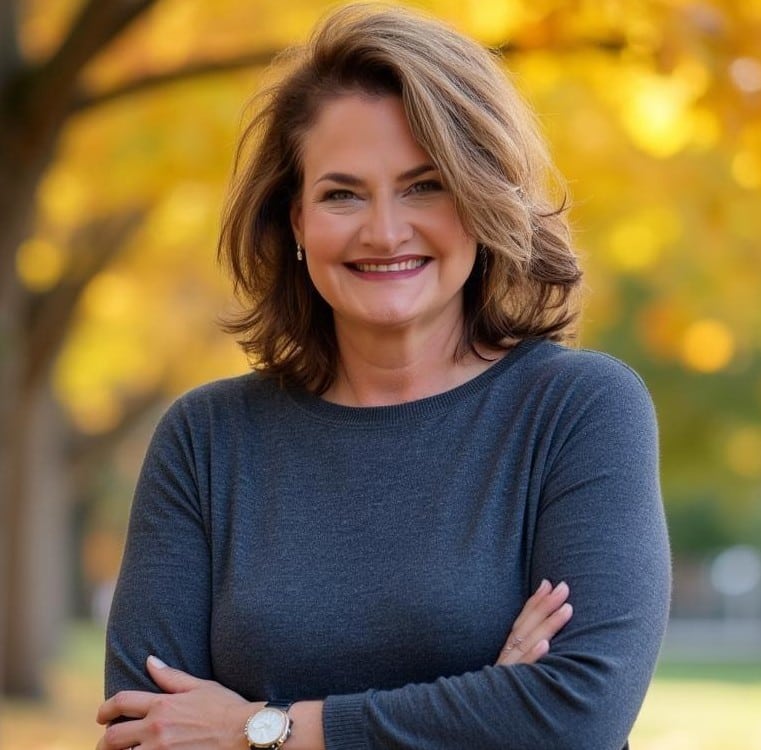
In this episode of Meet the Thriller Author, I had the incredible honor of interviewing Mary Stone, one of the most successful and captivating indie thriller authors writing today. If you’re searching for Mary Stone insights, background, writing process, or career journey—this episode delivers it all.
I first met Mary Stone at the 2025 Author Nation Conference in Las Vegas, and the moment was unforgettable. During the thriller author panel, Mary stood up to ask a question, and the entire room—panelists included—suddenly realized it was THE Mary Stone. The energy shifted instantly. Her appearance caused a genuine buzz among the authors and readers in the room (myself included). That moment ultimately led her to being invited onto the conference’s closing keynote panel, which turned out to be one of the most moving sessions I’ve ever experienced at any writing conference.
Mary’s story is as compelling as the thrillers she creates. Living in the beautiful Blue Ridge Mountains of East Tennessee, she’s journeyed from struggling to support her family after losing her job, and ultimately to a successful author and publisher. Her deep understanding of human nature—shaped by childhood fears of shadowy figures and the realization that real-world villains often hide in plain sight—infuses her gripping crime thrillers and the unforgettable heroines who anchor them.
Over the years, Mary has grown from a solo writer into the head of her own publishing house, expanding her reach and influence in the thriller world. Her books, which often feature serial killers, FBI agents, and courageous female protagonists, have earned her a massive and loyal readership.
This conversation was also a milestone: this is Mary Stone’s first-ever podcast interview. It was truly an honor to sit down with her and explore her journey, her writing philosophy, and her evolution as an author and publisher.
If you’re a fan of Mary Stone, a writer looking for inspiration, or a reader who loves strong heroines and heart-pounding suspense, you won’t want to miss this episode.
Connect with Mary Stone
Mary Stone Latest Book
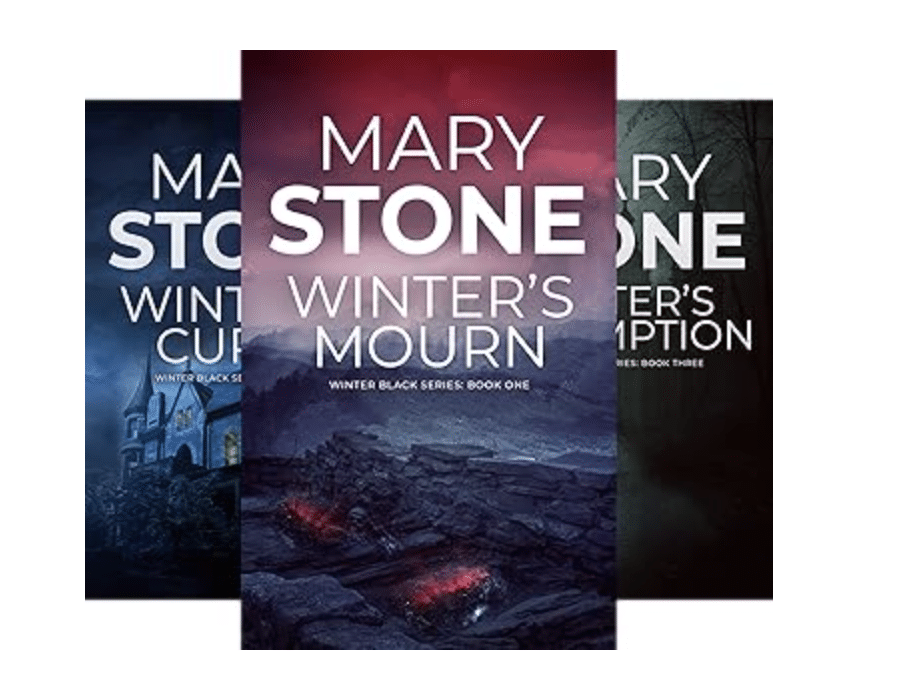
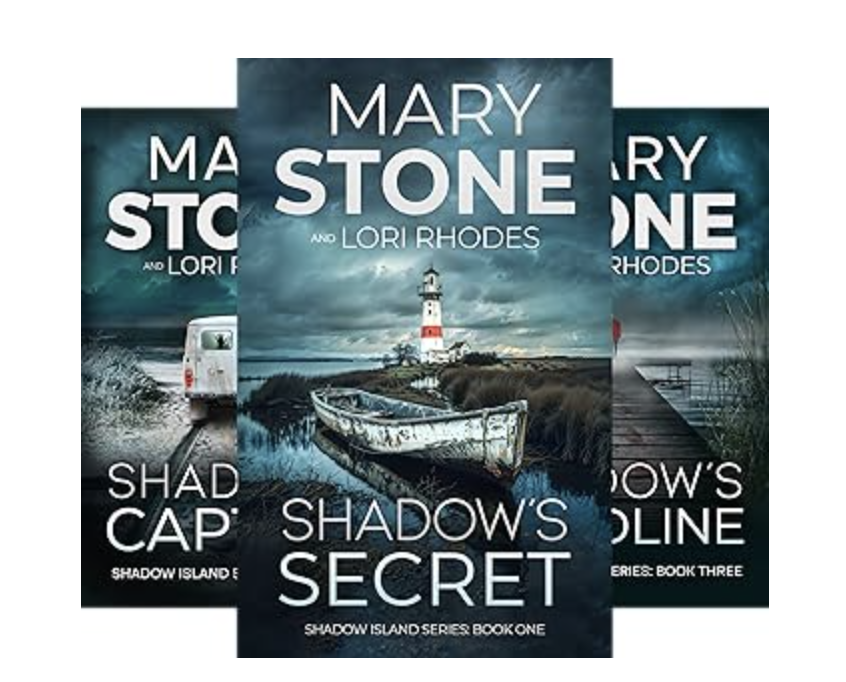
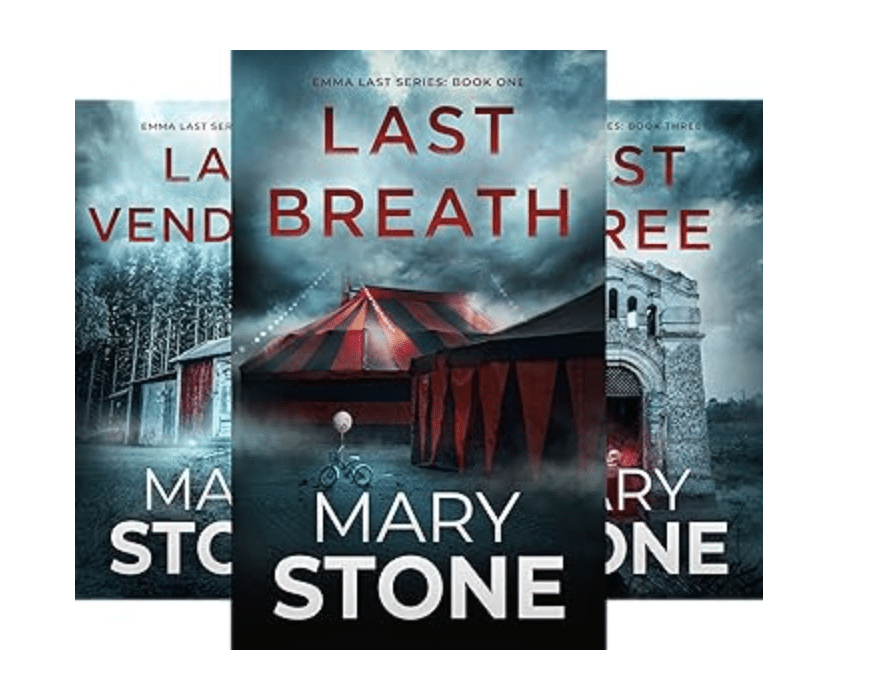
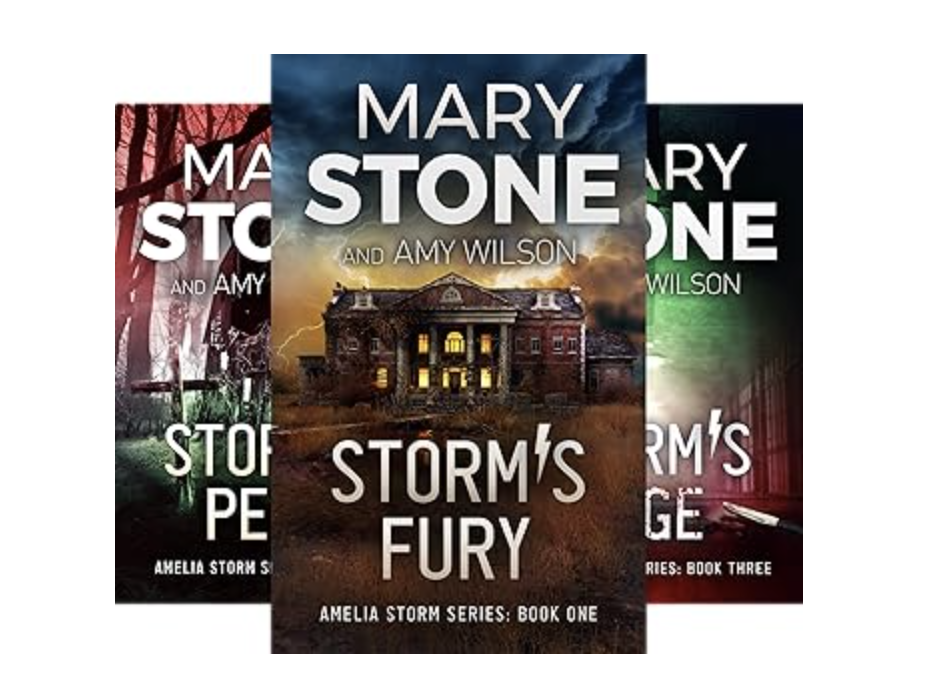
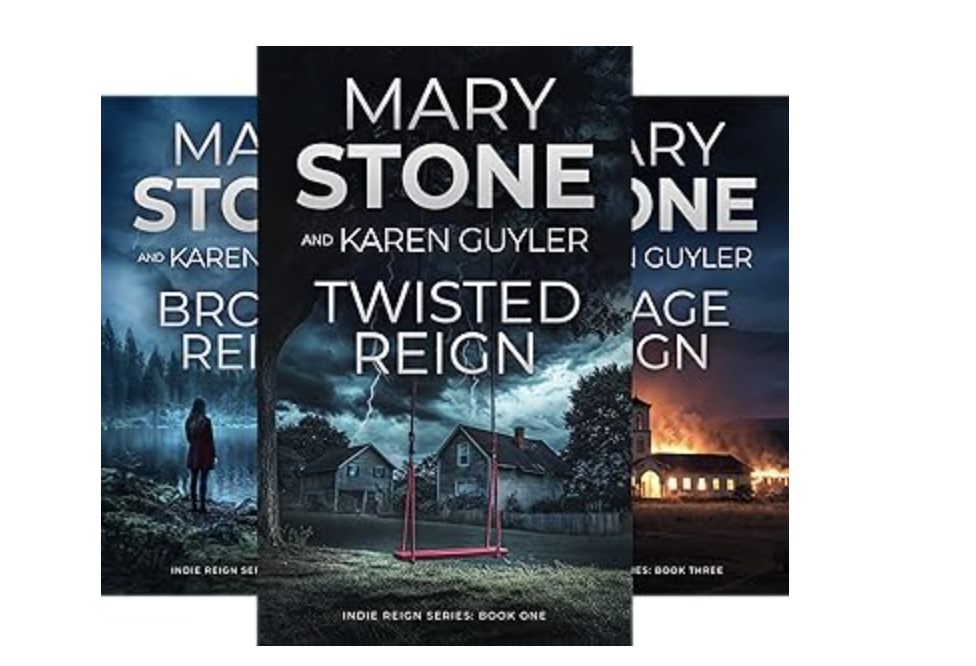
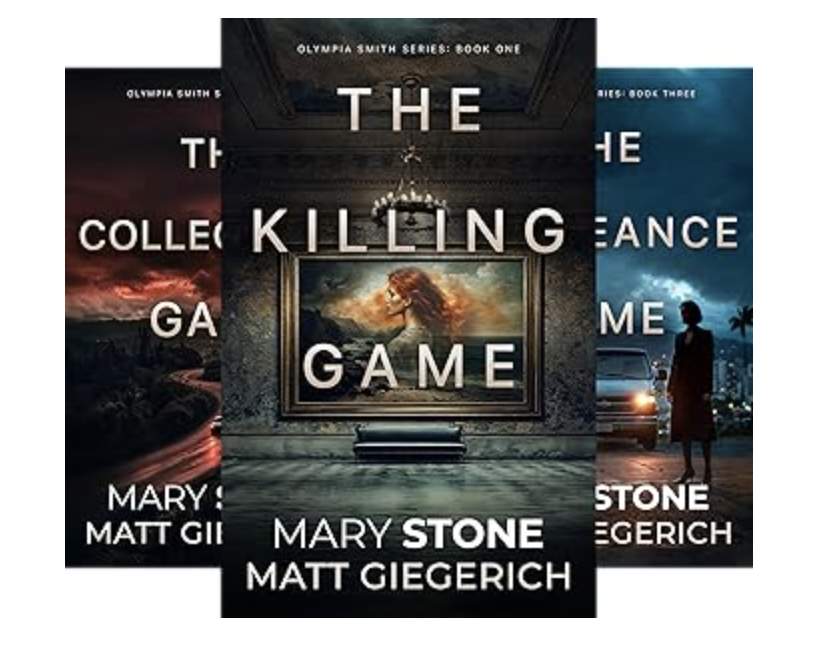
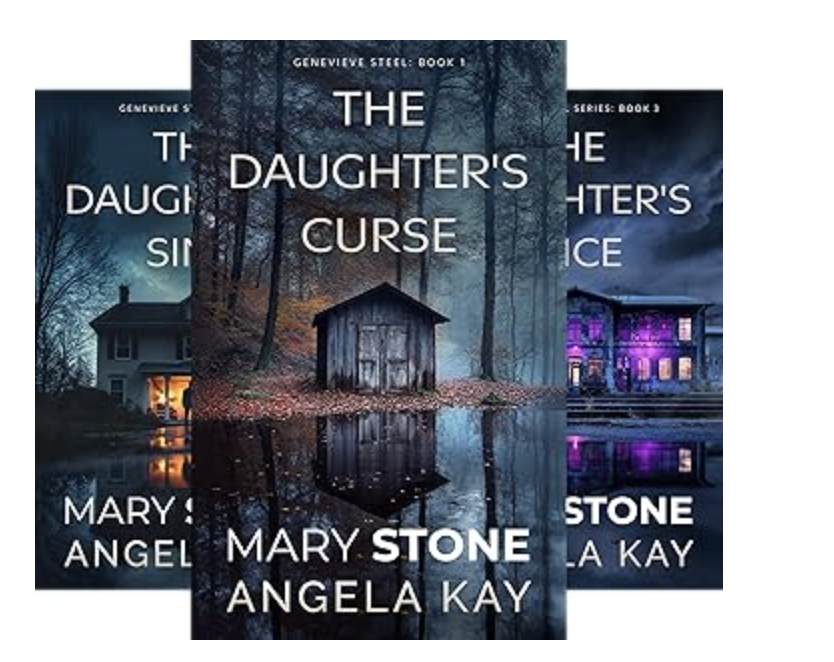
Mary Stone Books
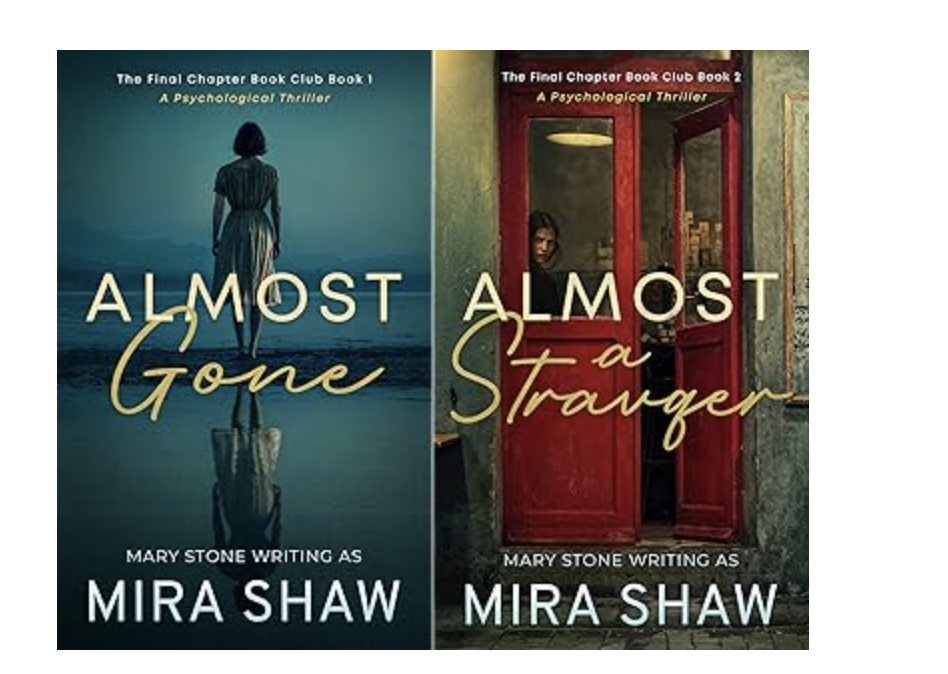
Psychological Thrillers Writing as Mira Shaw
Show Notes & Transcript
Summary
- Mary Stone fell into writing after losing her healthcare marketing job in 2008, starting as a freelance editor (including romance) before publishing her own work; her first Mary Stone thriller, Winter’s Mourn, launched in 2019 with a small three-person team.
- Early romance success dried up after Amazon changes; partnering with an aspiring publisher helped her pivot to crime/thriller fiction and build momentum.
- She’s authored 12 thriller series (e.g., Winter Black), many long-running, which—unexpectedly—are all concluding around the same time, creating a “reset” moment.
- Embracing the reset, she’s developing five new series, exploring an “Avengers-style” FBI unit crossover, and writing psychological thrillers under the pen name Mira Shaw.
- Her first author conference (Author Nation) turned pivotal: after asking a question at a panel, she was recognized by attendees, then invited same-day to step in onstage when James Patterson couldn’t appear, delivering an emotional, inspiring session.
- Stone shared a formative “quarter-finding” story about scraping together $10 for her son during hard times—now a mindset she applies to problem-solving in publishing and life.
- Writing process: she uses Word and OneDrive; begins with a detailed series outline (character arcs, recurring villains, book-by-book summaries) before drafting book 1; only starts once she’s “in love” with the protagonist and knows her deeply.
- She can draft ~80,000 words in about two weeks; decides whether to extend beyond nine books based on reader read-through and reception; has built a collaborative model with co-writers and editors via Mary Stone Publishing.
- Under Mira Shaw, she’s released two books so far, appreciating the “messier,” less-tidy endings of psychological thrillers compared to case-closed crime fiction.
- Advice to aspiring writers: ask “What’s the worst that can happen?” then push the button and publish.
Video Interview with Mary Stone
Transcript
Heads Up:
This transcript was generated with the help of AI and only got a quick once-over from a human. So if you spot a typo or something that doesn’t make sense… let’s just blame the robots. 🤖
[00:00:03.280] – Alan Petersen
You are listening to Meet the Thriller Author, the podcast where I interview writers of mystery, thrillers, and suspense books. I’m your host, Alan Petersen, a writer and fan of the genre. This is episode 229, and today I’m thrilled to welcome best-selling author, Mary Stone. This conversation is extra special because this is Mary’s first ever podcast interview, which made it an absolute honor to have her on the show. Before we get to the interview, just a quick reminder that my latest psychological thriller, The Good Mother, is now available for pre-order on Amazon and will be released later this month. You can check it out at thrillingrease. Com/mother. All right, here is my interview with the amazing Mary Stone. Hey, everybody. This is Alan with Meet the Thriller author. And today on the podcast, I’m joined by best-selling thriller writer, Mary Stone. I first saw her speaking at Author Nation a couple of weeks ago in Las Vegas, where she delivered one of the most powerful moments of the conference. We’ll get that a little bit here. She’s now launching several new series and writing Psychological Thrillers as Mira Shaw, and this is her first podcast appearance, so I’m honored. Mary Stone, welcome to the podcast.
[00:01:11.820] – Mary Stone
Thank you so much. I’m actually really thrilled to be here. It was a very cool experience as to how I came to be here, and I’m very, very grateful.
[00:01:22.020] – Alan Petersen
Author nation was so incredible. We’re definitely going to get into that. But first, for listeners who might be meeting you for the first time, Can you share a little bit about your background and what first drew you to writing readers?
[00:01:33.680] – Mary Stone
Well, I wish that I had one of those stories where I was a little girl and I always dreamed of writing books. I went through all this training in school and my dream was fulfilled. I wish that that was my story, but I honestly never knew that I could write a book until about 15 years ago, honestly. I went to school for marketing, and I was in health care marketing. So I was the marketing and PR director for a hospital for about 15 years. And my little hospital got gobbled up by the big hospital, and poof, the marketing department went away. And that happened in 2008 when what else happened? The recession. And there were no jobs, there were nothing. And I was overqualified for everything, and I couldn’t have a job. And I had a mortgage to pay and three boys to feed. And I was freaking out because I had lost my job. There was nothing out there. So I tried MLMs. I tried being a health coach, a life coach. Everything that I could think of online that I could start doing just to bring in a dollar. And on Facebook, actually, I met a romance writer.
[00:03:00.000] – Mary Stone
Who was needing an editor. And she asked me if I could edit. And I’m like, well, I edit my own newsletter for the hospital in my own press releases. But yes, absolutely. I can edit your book. Give it to me. I’m the best editor you’ll ever see. I mean, because I was pretty desperate. And I loved romance. I was fine. I thought I would give it my all. And so I started editing for Then I started editing for other people, and I was an editor. That was what I was doing. And then I started editing for crime fiction and things like that. And I’ve always loved crime fiction. I’ve always loved suspense. It’s really the thriller suspense part of it. That’s what I read when I was a little girl and a teenager. So I always was drawn. Even if I was editing or even started writing some romance, I would go back to reading the suspense, the thrillers type things, because it’s always where my heart has been. When I was editing romance, I wonder if I could write one of these because I’m rewriting these people’s books, so maybe I can write a romance, too.
[00:04:13.000] – Mary Stone
So I tried it. I started publishing, and there’s a really big difference between writing a book and selling a book. I was still editing, and I was still writing and trying, but my writing started picking up in the romance genre. And And I was actually making several thousand dollars a month. And I’m thinking, I’ve done it. Between that and the editing, I’ve done it. And then Amazon changed the way they paid authors. And it was just like the faucet went off. So there I was in the rock bottom again. But in that same writers group, I met a young guy who had a dream of being a publisher. And he was like, Well, do you want to write books? And I’ll sell books. And I’m like, sure. Why not? And we decided to do readers together. And it was him and me and a proofreader. And we launched Winter’s Mourn, which was my very first Mary Stone book in 2019. And so it’s not one of those dream come true. I always had this thing. I had to fight, and I had to fight my brain. I had to fight my fears, my I’m stupid and I can’t do this.
[00:05:43.500] – Mary Stone
I had to fight all of those things and really be desperate, to be honest, to be so desperate to feed my children, to be able to keep a roof over their head, that I was willing to break through the fear of people reading my internal thoughts, people judging what I say, and just let it go. Just let it go. So that’s my very backward back story.
[00:06:16.260] – Alan Petersen
Yeah, that’s great, too, because I think that’s a lot of problem with a lot of writers is they don’t think about the business side of things, whereas for you, you had to because we all need money.
[00:06:29.080] – Mary Stone
You need money, yeah. It’s a hard business to tap into.
[00:06:35.480] – Alan Petersen
Yeah, absolutely. I was curious, too, because I started reading your books and you were so prolific. That’s the focus that you had was trying to get those books out, trying to get them in front of readers. You had a pretty good… It was small, but you already had a team from the beginning, which I think is important, too, for thriller writers. Do you think that’s an important perspective to have?
[00:06:57.920] – Mary Stone
I think so. I I know that not everyone’s going to be lucky enough or blessed enough or whatever enough to just happen to meet some 20 something year old who’s like, I’ve got a dream, too. I know, but that’s what writer groups are for. That’s what author nations for. That’s what so much is for is we start putting ourselves out there and we start trusting people and we get very discerning in who we trust. And find someone who is the opposite of If you can write a good book and you know someone who can help you with some other things and you trade roles, there’s lots of ways in which you can share responsibilities to do something like what.
[00:07:45.130] – Alan Petersen
I think it’s great, too, because I was reading your bio in preparation for this. You mentioned that growing up with a mix of childhood fears and fascination with real-life villains. When I read your books, I really see that in there. So I was curious about that. How did those How did your early experiences shape the stories that you’re writing today?
[00:08:04.740] – Mary Stone
A lot. Actually, I grew up in a house where really strange things happened, and I’ll just leave it there. Things I couldn’t explain things that were very scary. I also grew up in the Appalachian mountain region. If you have heard anything about the Appalachians and some of the lore with the Appalachians, so strange things happened here. So it happened in the house, it happened in the woods, it happened at the barn, all the things that could be scary and strange were happening. So real-life danger wasn’t theoretical for me growing up. And it might, again, I think I do everything backwards. So this probably is going to sound really backwards, too. But I had such a mix of both fear and fascination for what’s going going on? Why is this happening? That was wired into me at a very young age. But for some reason, instead of trying to avoid anything scary, I dove right in, almost in a way to face it or to understand it better. I don’t know. I think our fears lie so much in what the unknown is. Once you see the monster, it’s like, okay, Duke’s up, I can fight you or die or whatever.
[00:09:28.560] – Mary Stone
It’s like, okay, I can deal with it, but it’s that unknown. So I wanted to know all the unknowns. I wanted to know how these other people and other characters and movies and books fought their fears so that maybe I could borrow some of their courage and be able to do that, too. So I would consume Stephen King and Dean Coons and Tom Clancy and, of course, Mary Higgens-Clarke, just as fast as my dyslexic brain would let me absorb of them. And so that’s where it started, just a really spooky house in a spooky region. And me, instead of being afraid of it, needing to know how to face it. I did it through books and movies.
[00:10:18.460] – Alan Petersen
Yeah, I think that’s incredible, too, because you mentioned that you have so many series out there and so many books now after several years of doing this. You mentioned that all of your series or most of your series ended at the same time? Can you tell us about that? Did you envision that or is that just a nitro progression? Can you tell us a little bit about that?
[00:10:39.440] – Mary Stone
I wish I was some planner who was able to foresee six years down the road that through my hard efforts and work and dedication, things would just culminate the way I think they’re going to culminate. I wish I was that person. I am not. I could I’m not smart enough for that. And there’s no way that I could have planned for all these… There’s 12 different series. Winter launched in April of 2019. She’s 27 books. I’ve got 12 series. Some of them are 15 books, some of them are 20 books. One’s got 20 books. They have nine books. So they’re all different length. And then Sky, Stryker, and Journey, Ruso, they released last year with nine books. So you tell me how the math could possibly work for all of them, all of them, to conclude right around the exact same time.
[00:11:46.440] – Alan Petersen
Yeah, you’re probably like, Oh, I have all these books. I’m putting all these books. There’s no way. I wasn’t even thinking in your head that that could happen.
[00:11:55.000] – Mary Stone
No, no. Actually, Marion, actually, she I mentioned the proofreader. It was the guy, me, and the proofreader. She’s now my production director. She came to me. She does a Gantt chart every week to make sure that we’re staying on track with all the different releases because we have so much going on. She was like, I think we got a problem.
[00:12:23.980] – Alan Petersen
Red flag, Ward.
[00:12:25.060] – Mary Stone
It could possibly be. She told me, and I’m like, No. No, that can’t possibly be true, but it was true. It was very true.
[00:12:35.700] – Alan Petersen
Wow. I’m sure you’re already planning these, but did that put a little urgency now because you’re now developing five new series. Can you tell us a little bit about that, leading up to that, and then also about these new series that you’re working on, how that feels starting a new series?
[00:12:51.570] – Mary Stone
It’s really exciting because it almost feels like that happened. We already know, we’ve already discussed that having all of those closed at the same time is not mathematically legitimate. So it feels like the universe almost just hit a reset button on what I was supposed to be doing. And one of those things that I truly, truly believe this, and I don’t know what anyone’s religious beliefs are, but whether it’s God, the universe, Mother Nature, your left big toe, whatever that that you believe in, I truly believe that that was a reset button for me because I also had these five other protagonist stories in my heart, and I really, really wanted to start working on them. I really, really wanted to get them out into the world. But I was so busy with those 12 that I never knew how to find the time to do that. And then also I knew that I wanted to go into psychological thrillers. Who has time for that? I knew I wouldn’t have time for that. And then for years now, at least three years, I’ve had this idea that I wanted to join protagonists together and create some Avenger FBI unit.
[00:14:22.180] – Mary Stone
. Yeah. They’re going to be like, they’re going to take on the world, not just America. I I had all these thoughts, but I never could do that because all my protagonists were really busy over in their series doing their own things. So with this reset button, those new five theories got to get birth and see life. I got to start a whole new genre with Mirashaw and Psychological Thrillers, and I’m currently working on creating some really cool things based on some of those thoughts that I’ve had for a really long time.
[00:15:07.400] – Alan Petersen
That’s really cool. That’s exciting. As a fan of your books, just the idea that you might be bringing the new characters, the old characters into a a full unit or something. That’s very exciting. Can’t wait to see what you come up with that.
[00:15:18.740] – Mary Stone
I know. I’m really excited about it. I would love to tease more about it, but honestly, it’s still coming together. I know that I want to create three more a new series. How do I choose who’s going to do this? How do I choose what’s going to be this? How am I going to choose what’s going to be that? That’s where I’m still deciding on, but I’ll be sure to let everybody know as soon as… Because I’ll be too excited to not let everybody know as soon as it happens.
[00:15:46.660] – Alan Petersen
You have to come back on the podcast and let us know.
[00:15:48.840] – Mary Stone
Oh, yeah. I love to do that.
[00:15:52.080] – Alan Petersen
Wow. That’s really incredible. I really love how you look at things, too, because instead of freaking out about your series are all ending, you see opportunities. Oh, now I can work on this. And I’ve been able to do that. Because this business is so crazy and things change so quickly that you really have to have that nimble attitude, I think, in order to survive in this crazy business.
[00:16:14.180] – Mary Stone
Yeah. I shared this from the stage of author nation. Despiration can really fuel a lot of stuff. And one of my rock bottom moments as a mother was when my middle son came up to me and he needed $10, and I didn’t have $10 to get it. They didn’t know this, of course. My house was getting ready to be repossessed. I had no money in the bank, and my kid needs $10. So I made a game. I was like, Okay, let’s find all the quarters we can possibly find in this house. So we looked for the car, we looked for the couch, we looked under the beds, we looked everywhere. And I created a glass bowl on the table. And so every time it chinked with a new quarter, we’d be like, Yay, we got a new quarter. We would just dance and celebrate, and then we’d go Find another quarter, and then we’d celebrate and find another quarter. And during that whole time, I’m dying. I’m dying because I don’t have $10 to give my kids. And so that was the hardest and best lesson for me because I found $10. He had his $10 that he needed, and then I was able to find another $10, and then I was able to find another $10.
[00:17:49.760] – Mary Stone
I eventually came to learn that I’m a really good quarter finder. If it comes down to it and things look really rocky, I can find that I know that I can find that quarter. That was the mindset that I had when it was like, Oh, my gosh, what are we going to do? It was like, Okay, where are my quarters? Where are my quarters? What do I need to do? That’s how I live life now is knowing that I can find a quarter if I need a quarter.
[00:18:20.880] – Alan Petersen
Yeah, I was at the… At Author Nation, when you were on the panel on the big keynote finale panel, you’re up there on stage last minute. For listeners who don’t know the story, can you tell us a little bit about how you ended up there and then how emotional it got? Because that was something that was very touching. People were crying. Can you tell us a little bit about that and your feelings through it and of you being up there and trying to help these people. It was just a really touching moment.
[00:18:51.860] – Mary Stone
I’m still pretty much in awe two weeks later, three weeks later of how it even happened because I’d never… Even though I’ve been writing books for this long, I’ve never been to an author conference before. But my editing director, Jimmy, she was going. She goes to a lot of different conferences, so she was going, and I’m thinking, I work virtually, so I’ve never physically met her. I’m thinking, this could be a good opportunity for me to go. And I get to meet her in the flash, and we get to talk and things. And I get to go to this really, really big 1,200 person author nation. And there’s going to be so much I can learn and do better because I’m not trained in any of this. I just write where my heart takes me to write. I have had no training. So I’m thinking maybe it’s time. Now that I learn something. So I go. And the first three days were exactly what I expected. I had my name on my badge and everything, and I’m introducing myself to people. And it’s Mary Stone. Nothing. Absolutely nothing. Nobody knew me. Nobody knew any of the books.
[00:20:09.420] – Mary Stone
And I didn’t expect anything different. I’m like, Yeah, I’m just me writing books and coming here to this conference. And then on day four, there’s a thriller panel, the panel that you were there. And I was so excited because I’m like, This is where my people are. And I had a question. I had a question I wanted answered. And so even though I’m terrified of public speaking, I was going to get up and ask my question. So the panels opened up for questions, and I get in a very long line. And by the time I finally get to the front of the line, I’m like, Hi, I’m Mary Stone. The room changed. There were gas, there there were whispers, there were rustlings, there were, Did she say Mary Stone? I’m like, Just ask your question. Just ask your question. And from that moment forward, Everything changed because you were there.
[00:21:18.680] – Alan Petersen
I was one of the ones gasping.
[00:21:23.800] – Mary Stone
That’s so crazy. Sorry. It’s crazy to me. So They’re like, Oh, you should be up here answering our questions. I’m like, What? I’m like, turning around. I’m being pranked. This is all there can be. I am being pranked. I have been set up. But they were asking me questions, and then I got the prepared to be swarmed. And then I was swarmed afterwards, and I was shocked, so in shock. And then right after that, I get a call from Joe Soleris, the owner of author nation. And he says, You don’t know me. You owe me nothing. But I’ve got to ask you to keep a really big secret, and I need to ask a really big favor. And I’m like, Okay. So he tells me that James Patterson was sick and was not able to come and be the keynote speaker at four o’clock that same day. And I’m a good secret keeper. I’m like, Lock down tight. So then the favor was, would I, me, me, me, go up on stage in front of 1,200 people and do a Q&A that James was well enough to do a 30-minute question-answer on Zoom, and then I would follow him and answer questions from the stage.
[00:22:59.440] – Mary Stone
And And because I was freaking out so bad, I don’t know if you could tell that even when I was asking my little question in the room, I was shaking. I’m shaking now just thinking about it because I’m so afraid of speaking in front of people. And he said that he would have a couple of other guys sit up there with me in that way. They could also answer questions. So it wouldn’t just be like me. I’m like, Okay, be brave, be brave, be brave. Yes, I’ll do this. Because there had to be a reason it happened that way.
[00:23:33.100] – Alan Petersen
Yeah, it’s like the course again.
[00:23:35.040] – Mary Stone
Who am I to get in the way of that reason? So up I went, and it was very surreal. Yes, I was stepping out into the public-facing side of being an author, into the writing world, I guess, but it felt more like a giant shove. And since then, I I’ve been asked to be on people’s podcast. So this is my very first podcast. I’ve been asked to go to New Zealand, to Ireland, to be in mastermind groups, and all of these really cool things that have opened up to me as the business side of Mary Stone that I didn’t even know what was possible. But what got me the most was I knew that I I’ve did really strong female characters who faced their greatest fears and made a difference in people’s lives. I knew that my characters did that. What I didn’t realize is that I’m also a strong female character who can face her fears and make a difference in people’s lives, too.
[00:24:51.980] – Alan Petersen
Yeah, I think that’s why those characters are so strong, because they’re coming from you, from what you’ve experienced. Most of us couldn’t do that. You can live that. Sorry.
[00:25:05.160] – Mary Stone
It was such a difference maker for me because my Marketing Manager, she has been begging me for years to take pictures and do videos and to put it out there. But in my head, I was like, Why would anyone want to be part of my boring little life? What value would they have in seeing me me create in their life? My characters are so much better than me. They’re more interested in me. So I just didn’t do it or didn’t do it very much. So I just kept my head down, kept my fingers on a keyboard, and just kept working. But then those women they came up to the mic and they cried, and they laughed, and they looked so hopeful that maybe they, too, could find quarters and feed their children and be brave enough to push the button to send their works out into the world. That I realized that, yeah, maybe the world needs me, too. Maybe not just my kid.
[00:26:14.300] – Alan Petersen
Yeah, I think that’s so important, too, and so wonderful, too, because it’s so inspirational. In this business, it’s tough. It’s rough. You get criticized a lot. It’s hard to get seen. To have a success story like yours, I think it just really resonates. I think that’s why you saw those reactions that I’ve never seen at any conference. It was awesome to be there. So thank you. Thank you for doing that because I can’t imagine at the last minute to be up there. So that was very brave of you. So thank you.
[00:26:44.320] – Mary Stone
You had Yeah, it was so unexpected, and it was so wildly needed. And I’m so very glad that I listened to that internal voice that said, Just do it.
[00:27:02.400] – Alan Petersen
And now, so we’ve been talking for the writers that are in author nation and stuff, and I know I have a lot of inspiring writers that listen to this podcast. So I wanted to touch a little bit now about your writing process. Just out of curiosity, so what do you write on? Do you use Word? Do you use another software? What are the tools that you use?
[00:27:24.400] – Mary Stone
I am boring. I use Word. I’ve tried other softwares, and they look so incredibly cool. And maybe if I had someone sit down with me and walk me through doing it, I could do it. But I use Word. I use Word, and I use OneDrive. When I create my shared series outline, I share it on OneDrive so that everyone on that book team or that series team, whether it be one of my co-writers or whether it be one of the editors, we could all have access Access to that series outline, the same thing with the book outlines. So between Word and OneDrive, that’s how tech I am, people.
[00:28:10.240] – Alan Petersen
It works incredibly well.
[00:28:13.460] – Mary Stone
Yes, it’s doing okay so far.
[00:28:17.100] – Alan Petersen
And so you mentioned the outline, and that was something you spoke with that was very important for you. Can you tell us a little bit about that? I love James Patterson’s masterclass on outlining. Is that something Is that the strategy that you follow?
[00:28:32.760] – Mary Stone
I watched his master class last year for the first time. And honestly, I was so glad because there is a lot of similarities. And it made me feel really happy to know that I was on the right path of this genius man who’s created this empire by himself. It’s just amazing. So I felt really good. So a lot of what we both do are similar. He does a book, and I think he calls it… He basically writes the whole book in summary form. I think it’s how he says it, which is how I write my outlines to. He has his character arcs, his twists, his pacing, his beats, the villain actions, the payoff, and all the good stuff. And mine are like that, too. I don’t remember him talking about a series outline, though. So where I feel like I differ a little bit is everything for me starts with the series outline. So for Winter, I had this character in my heart, and I knew what I wanted her backstory to be. I have her, I have her co-working workers, I have her family, I have the series wide villains. Anyone who’s going to show up in more than one book across the series will be in this series outline.
[00:29:57.080] – Mary Stone
I try to picture the whole thing and how it’s going to flow over the course of her character arc, her relationship arcs, and the series arc itself. And then I decide what the summary is going to be for each of the nine books of that series. So I have an idea of what the crime is going to be, have an idea of who the villain is going to be, an idea of how her arc is going to move forward. So that’s the series outline. And I don’t think that he’s mentioned that before. To me, it’s so important.
[00:30:35.880] – Alan Petersen
Yeah, I’ve never heard him mention that either. So yeah, I think that’s an… And I never heard that either doing the series outline, but it makes a lot of sense because Series is what’s most popular on the business side, but readers love the series, so it’s an important component.
[00:30:53.440] – Mary Stone
Yeah, I love the series because I have a lot to say. When you put so much heart into a character, I find it difficult to wrap everything that that character needs to do and be and how she goes from this part of her life to this part of her life in one book. So for me, having a series, I get to throw all kinds of challenges at her, book after book after book, and she gets to grow or fall call or witness horrible things or do horrible things through the course of nine books versus an 80,000-word book. And that’s the reason I love the series so much. And I think that’s why a lot of readers do, too, because you get this really wonderful character, and you get to see her deal with so much over the life of that series. And to me, it just makes it so much more interesting.
[00:32:01.260] – Alan Petersen
So you don’t start writing the first book until you have the nine-outline series done and complete, then you start writing the first book?
[00:32:09.460] – Mary Stone
And I do not conclude the series outline until I’m absolutely in love, absolutely in love with my protagonist. When I am so in love with her that she feels like she’s my very best friend. And I know her as well as I know my best friend. I know if she likes to… I mean, I know basic things like, does she like to get pedicures or manicures? And why? Some women love it because maybe they were too poor growing up, and now it’s a luxury, or they’re just trying to care for themselves for a moment in a life that’s chaos. Some women do not want to be touched. So it’s not just, Oh, what paint color does she paint her nails? It’s why, why, why, why? It’s always digging deeper deeper into how she feels about everything in her life. So I know what book she likes to read and why. I know what she sees in the mirror when she looks in the mirror. I know what she thinks other people see when they look at her. Everything that you know about your very, very best friend in the world, I want to know about her.
[00:33:21.660] – Mary Stone
And once I feel like I know that, I can say, Okay, series outline is done. And then we move to book one.
[00:33:30.780] – Alan Petersen
Oh, yeah. I think that explains a lot, too, because you write very fast, and that’s something that I’ve always been trying to improve myself. But it seems like by the time you start writing the first book, you know the character and everything so well, and it probably just flies out of you.
[00:33:46.860] – Mary Stone
It really does. It really does. And I think another thing is I know her so well, I don’t want to disappoint her. I don’t want to cause her to fail. I love her so much that I want the best for her, even when I’m going to be throwing guns and knives and all kinds of horrible stuff her way. I want her to have grown and to find the things that she loves to do.
[00:34:14.680] – Alan Petersen
It’s What is the decision then? Once the nine books are out there, do you know right away, Oh, this is going to go longer?
[00:34:21.560] – Mary Stone
Pretty much. Usually by book four or five, we know if readers are really, really the read-through rate is really high, it’s like, Okay, we want to expand that, or if we don’t want to expand that. And there’s been times when I simply didn’t get it right, when it was like, Oh, this is going to be so great. And then people didn’t love it as much as I thought they would. And I’ve gotten a little bit of a thicker skin and going, Okay, this just wasn’t right for them right now. Instead of being like, Oh, my heart, I’m going to die, and stuff like that. So being able to cut it quicker than not has been helpful.
[00:35:09.960] – Alan Petersen
Yeah, well, the ratings and the reviews on your books are incredible. I mean, you have books with like 6, 4, 5, 7,000 ratings with 4. 8 or something, which is crazy in this business. It definitely resonates with the readers. So that must be a nice feeling, too, seeing people loving your books.
[00:35:29.200] – Mary Stone
It really It really does. It means so much to me. Can I share a little story?
[00:35:36.660] – Alan Petersen
Yeah, absolutely.
[00:35:38.640] – Mary Stone
This was another one of those universe checks that I’ve been getting very recently that I needed to play in the world bigger as me, not just with my characters. A couple of months ago, I got an email from a reader, and she’s one of readers that would always comment on Facebook and all these things, super, super sweet. And she shared that she had been going through a two-year cancer journey. So she had been dealing with chemotherapy and radiation, and that my books had helped her get through those. But just that very week, she had gone to her doctor’s and gotten some really bad news, that she had a week, maybe two to live. And she wanted to thank me for being on that journey with her and for making a difference for her while she was going through all of this. And then she said how she she wished that she could hang on long enough for the last autumn book to publish, which was not scheduled to publish until about two weeks after she was supposed to die. And oh my gosh. I yoinked that book so fast out of proofreading, and I slapped a dedication on it for her.
[00:37:11.600] – Mary Stone
And we put the cover on it, and I sent her a message, and I sent her that book and told her, It’s not been proofread. It’s not gone through the ARC readers, but I want you to have this. And she got to read it before she died. I write FBI and detective readers where law enforcement chase bad guys who do really bad things. I do not write literary masterpieces. I do not write things that are going to change the world or you make this huge difference. But I made a difference for her.
[00:37:52.840] – Alan Petersen
I think that’s a beautiful story. And I think that’s what people People need distractions from their life. I think that’s why your books and James Patterson, all these people’s books are so popular because life’s hard. And when you want to read something, you want to escape, and that’s what you offer them.
[00:38:14.540] – Mary Stone
Yes. I agree with that. When I was a little girl and I wanted to face my fears, books became an escape for me to be able to do that. And that’s why the entertainment business at large, not just books, but movies and TV and everything is so big, is because we live in a really crappy world sometimes, and we need a distraction from that. And I’m so blessed to be able to be part of that.
[00:38:47.680] – Alan Petersen
Good to know a little segue here. You mentioned earlier, you’re starting to write psychological readers as Mirasha. So on the technical side, I wanted to ask you about that. What was the decision to To split the Mary Stone brand to Mira Shaw? Is it starting over for you, even with your experience? Can you tell us a little bit about that?
[00:39:09.600] – Mary Stone
Oh, my goodness. Yes. I love psychological thrillers. I love crime down to my bones. I love having a case to solve. I love the sleuthing of it. I love the villains because I also write villain chapters. It’s not just the villain out there, but I have usually four or five chapters in the book that’s from the villain’s first person standpoint so that the reader can understand why they’re doing what they’re doing and all of that. So I love all of that. But I also love psychological readers because there is no box. With crime fiction, you have a box which is your crime, and you have to solve it. And the whole book revolves around solving that crime. With The psychological readers, they get to be really messy. They don’t have to be contained in any certain way. They can start out really ordinary. And then the tension and the tension and the tension drives. And think about nick and Amy Dunn in The Gone Girl. Their ending is not a happy ever after ending. It’s a very messy ending. So I get to not… But in crime fiction, you need the case is solved, the heroes win.
[00:40:37.020] – Mary Stone
Having not such tidy endings was really fascinating to me. And because I’m apparently very delusional, I was like, Oh, it’s a thriller. I write these thrillers, so I can go write that thriller, too. And it’s different. It’s very different. I’ve learned a lot. I’ve written exactly two now. And Almost Gone is the first one in the final chapter Book Club series under Mirashaw. And then I just finished Natalie’s, which is Almost a Stranger, and it’ll come out in a few weeks. So I’m still really new to it, but I love it. It is so fun to have the twisties and the turnies and all of that, and then not have to have such a tidy ending all the time. It’s been really good.
[00:41:35.540] – Alan Petersen
Yeah, I think that’s why they’re so popular because it’s more real life.
[00:41:41.680] – Mary Stone
Messy.
[00:41:42.660] – Alan Petersen
Yeah, most of us aren’t FBI agents and stuff, but we all have regular people with messy lives.
[00:41:48.880] – Mary Stone
I know. It’s really, really crazy because we’re not, and I’m not. I started writing FBI agents, and I knew nothing about FBI agents, but I did a lot of research. I figured it out. I made phone calls. I studied, studied, studied. I watched everything I could possibly watch. I figured it out. I’m sure I still get a bunch wrong, but I tried my really, really hard as not to.
[00:42:17.180] – Alan Petersen
Yeah. I was going to wonder, because you’re doing a lot of work now with your own publishing house now and with co-authors. How has that process been, the collaborative? Did you enjoy that shift from all on you to now having collaborators?
[00:42:31.520] – Mary Stone
Yes, I do. I like that very much. Again, I started out with Alan and me and Marion, the proofreader. Even though I can write really fast, I can write the first draft of an 80,000-word book in about two weeks. It’s not going to be perfect, so I’ll have to go through and edit and all that stuff. But I can write it really, really fast. But still, even being able to write really, really fast limited how much we could actually do. So in came the concept of, well, what if we had some co-writers? Could we do that? And with bringing on some co-writers, we needed more editors. So we needed to be able to do that. And then we needed more support for here and more support for there. And then pretty soon, it’s like, oh, maybe we should just create this publishing company called Mary Stone Publishing and see how that goes. I mean, really, a lot of what I’ve done in my life has been, well, let’s see what happens and see if this will work. And so far it’s working okay.
[00:43:41.080] – Alan Petersen
I would say, yeah. And so, yes, That’s awesome. And then I do want to say, too, for listeners, because I saw you have a website for the publishing side and then for your books. Can you tell us where the listeners can find you? If they want to learn more about writing or Are just fans that want to get your books?
[00:44:03.780] – Mary Stone
Well, I don’t have anything out yet, but that’s another thing that I’m thinking about doing, too, is, again, I had no idea that I had anything to offer this world other than my characters until three weeks ago. But I’m thinking, I saw these women and men, I’m not just saying women, but I just relate very deeply with the women who need help, who need to understand what to do, and need the encouragement. So I’m looking at doing some of those kinds of things. And I’ll let you know if I’m able to get that off the ground. So now, I have nothing to offer on how to write a book, except for what I’ve offered here in the time we’ve been together. But for my books, basically, I’m author Mary Stone everywhere. So website, social media, all of that. And I’m author Mira, M-I-R-A, Shaw. Website, socials, all that stuff.
[00:45:10.890] – Alan Petersen
Before I let you go, then also for aspiring writers that are listening to this, what would you tell them? Just a little something to help them get that first book out there.
[00:45:25.100] – Mary Stone
I would tell them what I’ve always told my boys, what What’s the worst that can happen? You push the button, the book goes out. What’s the worst? Will the world explode? No. Will people die in a plague? No. So what’s the worst that can happen? And then what’s the best that can happen? The best that can happen is that you end up building your own publishing company, and you not only get to feed your children, that you get help a whole bunch of other people feed their children, too. And then all kinds of things in between. Maybe you don’t want to be a publisher. Maybe you just want to feed your children, and you get to do that.
[00:46:15.100] – Alan Petersen
That’s great. Well, thank you so much, Mary. I really appreciate it. I’m very honored that this is your first podcast. Thank you so much for coming on.
[00:46:21.160] – Mary Stone
Well, thank you so much for being in that room and for coming up and for inviting me here. It’s been so lovely, and you’ve made it very comfortable.
[00:46:30.000] – Outro Voice Over
Thank you. Thanks for listening to Meet the Thriller author, hosted by Alan Petersen. If you enjoyed this episode, be sure to subscribe and leave a review on your favorite podcast platform. It helps other Thriller fans discover the show. You can find all past episodes, show notes, and author interviews at thrillerauthors. Com, including conversations with icons like Dean Kuntz, Freda McFadden, and Lee Child. And if you’re looking for your next gripping read, check out Alan’s own Psychological Thrillers and Crime Fiction Novels at thrillingreads. Com/books. Until next time, stay safe, keep reading, and keep the thrills coming.