

In this episode of Meet the Thriller Author, Alan Petersen sits down with Myles Dungan, an Irish historian, broadcaster, and novelist whose career spans radio, television, academia, and now historical thriller fiction.
Myles is best known as the longtime presenter of The History Show on RTÉ Radio 1 and as Programme Director of Ireland’s Hinterland Book Festival. Over the years, he’s written extensively about Irish and American history, interviewed everyone from Dan Marino to Grace Jones (one of them far more intimidating than the other), and spent time as a Fulbright scholar at the University of California, Berkeley. Somewhere along the way, he decided to try fiction—where, as he cheerfully admits, you’re finally allowed to make things up.
That decision led to The Red Branch, a darkly witty historical thriller set in the underworld of 1880s San Francisco. Drawing on real events and organizations from Irish-American revolutionary history, the novel follows a London detective sent undercover to stop explosives being shipped from California to England—only for his mission to unravel almost immediately. The result is a fast-paced blend of espionage, political intrigue, and hard-boiled humor, infused with the grit of the Barbary Coast and the sharp voice of classic noir.
During the conversation, Myles discusses recreating 19th-century San Francisco so vividly it feels like stepping into a time machine, balancing historical fact with fiction, and why humor was essential to the novel’s voice. He also talks candidly about his writing process, why he outlines rather than improvises, the freedom of writing fiction after years of non-fiction, and what aspiring historical thriller writers should focus on—and avoid.
It’s a wide-ranging, insightful discussion about history, storytelling, and the fine line between research and imagination.
Connect with Myles Dungan
Myles Dungan Latest Book
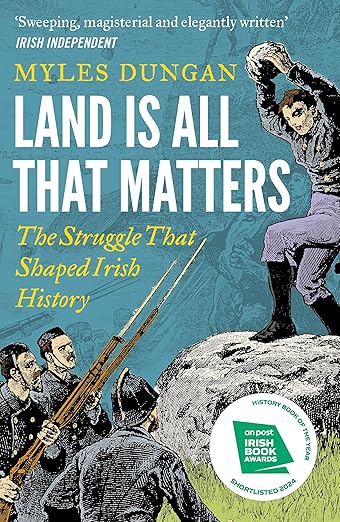
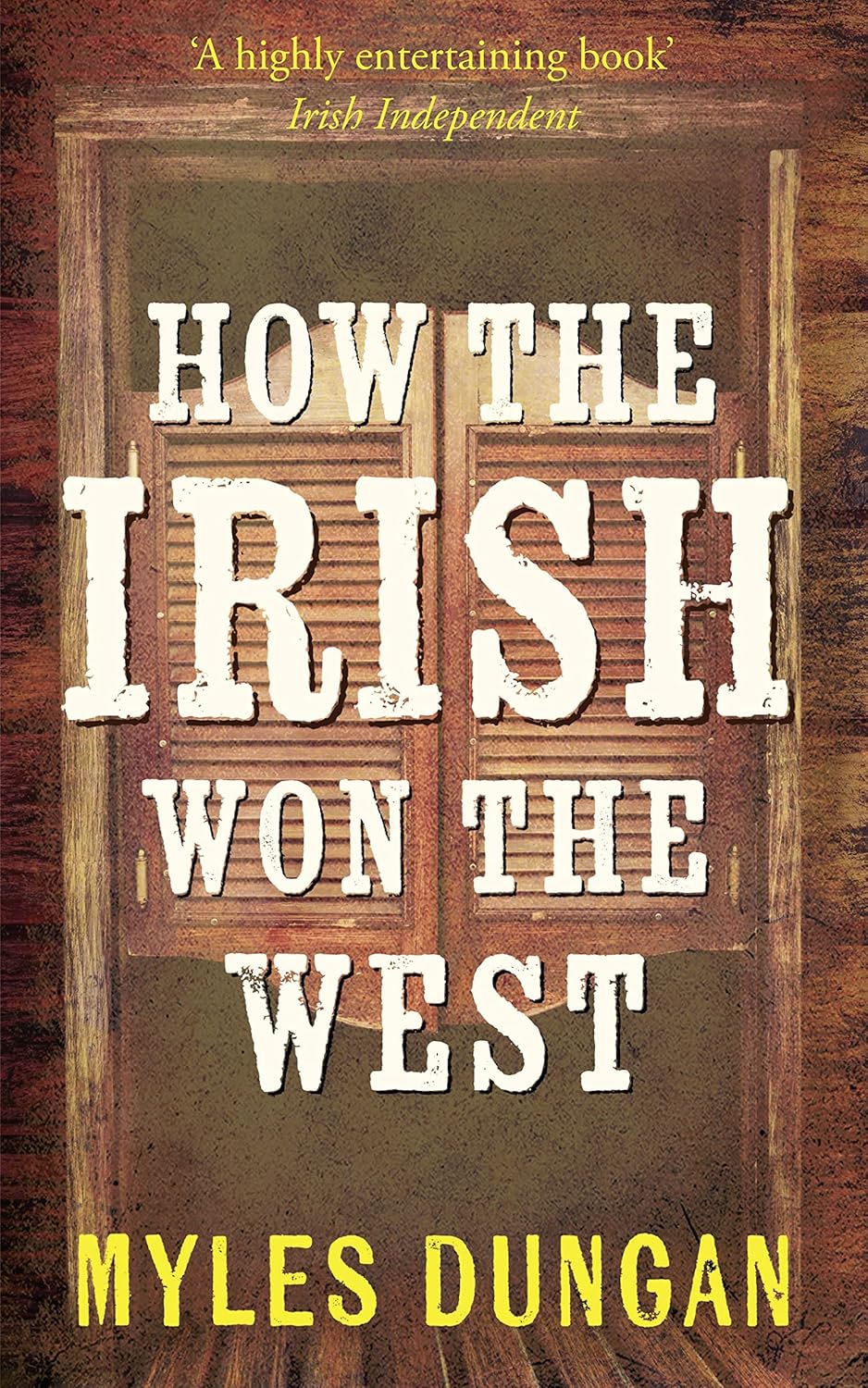
Myles Dungan Books
Show Notes & Transcript
- Myles Dungan discusses his transition from acclaimed non-fiction historian and broadcaster to writing historical fiction, explaining what drew him to the thriller form and the freedom it allows compared to academic history.
- He dives into the real historical roots behind The Red Branch, including Irish revolutionary networks in 1880s San Francisco and how Irish-American politics helped fuel unrest back in Britain and Ireland.
- Living and researching in the Bay Area helped Dungan vividly recreate 19th-century San Francisco, from the Barbary Coast to Chinatown, making the novel feel like a step back in time.
- Dungan talks about his writing process, explaining why he outlines carefully before writing, relies on traditional tools like Word, and avoids overloading fiction with excessive historical research.
- He closes with advice for aspiring historical-thriller writers: immerse yourself in research, look for the small historical “spark” that ignites a story, then let storytelling take precedence over showing off what you’ve learned.
Transcript
Heads Up:
This transcript was generated with the help of AI and only got a quick once-over from a human. So if you spot a typo or something that doesn’t make sense… let’s just blame the robots. 🤖
[00:00:05.020] – Voice Over
This is Meet the Thriller author, the podcast hosted by thriller novelist, Alan Petersen. Each episode, Alan sits down with some of the most exciting voices in mystery and suspense, best-selling legends and rising stars alike, to talk writing, process, and the art of crafting a killer story. From Dean Koontz and Walter Mosley to Freida McFadden and Lee Child, over 200 authors have joined Alan for deep, revealing conversations that every thriller fan and aspiring writer will love. You can find transcripts, show notes, and the full archive of episodes at thrillerauthors. Com. And don’t forget to check out Alan’s own heart-pounding thriller at thrillingreads. Com/books. Now, here’s the latest episode of Meet the Thriller author.
[00:00:51.740] – Alan Petersen
Quick message before we continue with episode 230. I’m excited to announce that my latest psychological thriller, The Good Mother, will be released this coming Thursday, December 18th. You can pre order it now at thrillingreads. Com/mother, and it’ll be automatically delivered to your Kindle on release day. For the next couple of days, my other thriller, The Basement, is free on Amazon as part of a Bookbub promotion. If you’re listening to this before midnight, Wednesday, December 17th, Pacific Time, be sure to grab it while it’s still free. Thank you so much for your support. Here is my interview with Myles Dungan.
[00:01:25.720] – Alan Petersen
Hey, everyone. This is Alan Petersen with Meet the Thriller author. On the podcast today, I have Myles Dungan, who is an acclaimed Irish historian and broadcaster whose work ranges from non-conviction studies of Irish political history to fiction that explores the past. His new novel, The Red Branch, takes us into the underworld of 1880s San Francisco and the Shadowing Network of Irish Revolutionary Politics. Myles, thank you for joining me.
[00:01:51.640] – Myles Dungan
Alan, thank you very much indeed for having me. Delighted to be on your podcast.
[00:01:55.300] – Alan Petersen
Yeah, thank you. Very excited to talk with you. Before we dive into the Red Branch, you share a little bit about your background, the books that you’ve written, and I’m also curious, what led you from broadcasting and historical scholarships into writing fiction?
[00:02:07.520] – Myles Dungan
Well, I’m still broadcasting. I still do that a little bit less since I started doing a lot more writing. So basically, I’ve been in broadcasting since I was in my early 20s, did a bit of what you would call high school. We call it secondary school teaching before that. Got into broadcasting, did a A lot of news and current affairs programs, did quite a bit of sport as well. I actually did it for a few years. I was the face, believe it or not, I was the face of American football on Irish TV. Oh, wow. Yeah, yeah. I did a bit of basketball, NBA basketball and stuff like that. A lot of golf, sports-wise. So on television, my career was basically about sports. On radio, my career was basically about news and current affairs. Heirs. And I stepped back a bit about 10 years ago. So what I do now is something that I’m really passionate about and have been for many, many years, which is history. So I do a program now on Sundays called The History Show. It is entirely about mostly Irish history, but that exclusively Irish history. We do a bit of American history, a bit of European history, whatever people might find interesting.
[00:03:26.630] – Myles Dungan
And also the program is podcast. And in fact, It’s weird. It’s very strange now for me over the last couple of years. I’ve been doing this. Actually, no, it’s 15 years I’ve been doing it now. And in the last three or four years, people introduce me or people talk about me as the Presenter of the History podcast. So that tells me a lot about the way broadcasting has been going in the last number of years, in that this is still a program that is transmitted on our national radio station for an hour on Sunday nights. But I suspect at this stage, Alan, most people are onto what you’re onto, which is they are listening more to certain kinds of programs on podcast than they are listening to them going out live.
[00:04:19.920] – Alan Petersen
Oh, that’s funny. Yeah, especially I wouldn’t even have any idea how to get into broadcasting. And you have all that experience and now it’s like, well, podcasting.
[00:04:28.680] – Myles Dungan
Yeah. Well, I mean, you’re in broadcasting, basically. I mean, you’re not narrowcasting. You’re certainly not broadcasting to a really small audience or your granny. So you’re in broadcasting and that’s it. And this is how, This is how modern broadcasting is. I mean, podcasting nowadays, particularly in the USA, not quite so much in our neck of the woods, but is hugely, hugely important. You can see the influence, and you can see how it has taken off in the last five years or so in a huge way.
[00:05:06.200] – Alan Petersen
With regards to your novel, too, I live in San Francisco. So of course, I was very interested when I first heard about the Red Branch. And I will say that before we get into the nitty-gritty of it, but your description of the old Barbury Coast and Chinatown and North Beach, felt like I was stepping into a time machine. So how do you approach that? Researching and recreating San Francisco in the 1880s so vividly for a novel.
[00:05:31.180] – Myles Dungan
Yeah. I mean, congratulations. I live in one of the two greatest cities in the world, Paris being the other one. If I only ever got to see this go between now and the time my life ends, I would be a perfectly happy person. I mean, I’ve lived in the Bay Area. My wife and I have lived a lot in the Bay Area over the last 15 years or so. She’s an academic. We’ve both been on Fulbrides and stuff like that. We’ve spent a year and a half years of the last 15 years in the Bay Area, in Berkeley, in actual fact, but spend a lot of time in San Francisco. And I’ve always been interested in American history, particularly interested in Irish-American history. A few years back, I wrote a book called How the Irish Won the West. They didn’t, but I just thought it was a great title, so I decided to use it anyway. And doing research for that got me interested in the history of the American West. You can’t study the history of the American West without looking at San Francisco because it was hugely important. And what I didn’t realize, and what very few people in this country realize, and I think more people in America, and certainly in California, realize this is that San Francisco was an incredibly Irish city back in the early days.
[00:06:53.840] – Myles Dungan
San Francisco, not Boston, not Philadelphia, not New York. San Francisco was the first city in America to elect an Irish-born mayor, Frank MacCoppan. So it’s a very, very Irish city. So I would have read a lot about the history of San Francisco. I’m particularly interested in the 19th century and in the late 19th century. So I gravitated in that direction and read a lot of books on the subject. And I absorbed all of that. And that was one I know the reason’s that. And just one of these weird little nuggets, one of these weird little things that makes your brain go ping, and you decide, you figure, I’ve got to do something about that. I was working on a non-fiction. Non-fiction is mainly my thing. I’ve written, I think, 15, 16 books or something like that about Irish and American history. And I was doing research on a campaign, which a lot of people don’t know run by Irish-American Nationalist, extreme Nationalist groups in the 1880s, and they were bombing London. They were basically an organization called Clana Gael, which is the family of Ireland, Irish Republicans. This is now 100 years before the IRA came on the scene.
[00:08:22.780] – Myles Dungan
They were bombing London, and Dynamite was being brought over from America. Irish-american nationalists were the bombers, and they were very successful. They bombed the House of Commons in London, they bombed the Tower of London. They bombed Scotland Yard. So it was a big deal at the time. But in researching this, I spotted a reference to a raid that was made on a house in London, and the Metropolitan Police in London system expected that there was dynamite in the house, and they were right, there was. And the dynamite was labeled, and the label was a label of the Safety Nitro Company of San Francisco. And then it had a little encomium, a little advertisement at the bottom of it advertising how wonderful the safety nitro dynamite was. So had the London police If the police not managed to find this cache of dynamite, it probably would have been used by Irish-American Republicans to blow up something else in London, who knows what, the mansion house, Tower Bridge, you name it. They wouldn’t know what exactly it was or what exactly it would have been. But that was the spark because I thought to myself, okay, I wonder the fact that they found dynamite from San Francisco, does that mean that of the other dynamite that was used and that was not found and that went boom in the middle of London, that that had also come from San Francisco.
[00:10:09.320] – Myles Dungan
So I started thinking about that and did a little bit more research, but I had already filtered in a lot of the San Francisco history of that time, and I included a lot of that. So the book is a mixture of completely completely fictional characters and also some historical characters as well.
[00:10:39.580] – Alan Petersen
Yeah, that’s something that I was really surprised about. And I learned about this before a few years ago, but I didn’t realize how intertwined the US, the Irish-Americans were with the revolutionaries in Ireland, like in England. It probably would have done as much damage if it wasn’t for the US helping out, huh?
[00:10:57.260] – Myles Dungan
Yeah, absolutely. Oh, no. I mean, that is absolutely the case. I mean, for an example, the seminal 20th century moment in Irish history was the Easter Rising of 1916, the rebellion right in the middle of World War I. The Brits considered it a stab in the back. Irish nationalists considered that they got what was coming to them. But that was largely funded from the United States, as was pretty much all significant Irish political activity, whether it be constitutional or whether it be revolutionary. It was funded by the Irish diaspora in America, the sons and daughters and grandsons and granddaughters of the million Irish who had emigrated to the United States during the famine and who were extremely bitter about a British rule in Ireland and wanted to do anything they could to bring it to an end. But I mean, Irish-American financing, but also Also Irish-American military activity. I mean, there was, for example, 1867, the Thienian Rebellion. It was a rebellion in Ireland, was not particularly successful, did not go very far, but that was dominated by Americans. I mean, you actually had hundreds of Irish-Americans who had fought in the Civil War and had got experience of using weapons in the Civil War, who came over to Ireland once the Civil War ended, and who became involved in this revolutionary movement, and who fought in that rising, fought in that rebellion.
[00:12:39.020] – Alan Petersen
Yeah, that’s fascinating. And then also, we’re reading your book, The Night of the Red Branch, which obviously features very prominently. So I was always curious when I was reading that. So were they inspired by a real organization? I’m assuming they were fictional, but how did that work in shaping that?
[00:12:55.680] – Myles Dungan
Yeah, they’re not actually fictional. They’re not? No, they did exist. In fact, if you look the cover, which is very, very red, obviously, there’s a big stick of dynamite on the front of it as well. But if you look through the mists of the red cover, you’ll see in the background, there’s a map of San Francisco, but there’s also a photograph taken in the 19th century. It looks like a shack, really. It’s not a very impressive-looking building. It’s a a large wooden shack. But over the door are the initials K-R-B. And K-R-B stands for Nights of the Red Branch. That organization that I mentioned already, Clona Guel, the Family of Ireland, which was a revolutionary organization, which was bombing London. The Nights of the Red Branch were the San Francisco chapter of Clona Guel. So these guys… Now, I mean, largely, most of it, it was mostly a a social group. They would have organized St Patrick’s Day parades. They would have organized picnics and concerts. But obviously, given the fact that there was San Francisco Dynamite found in London, they were organizing a lot more than picnics, right? So the first thing that sparked me off was the dynamite, the discovery of the Dynamite in London.
[00:14:27.000] – Myles Dungan
The second thing that sparked me off was, hey, there’s a chapter of Clana Gael in San Francisco, and if anybody is sending over dynamite from San Francisco to London, it’s these guys. So no, they did actually exist. Now, the characters in the book who are the leaders of the Nights of the Red Branch in San Francisco are entirely fictional. A couple of them are based on historical San Francisco characters. Two of them are based on a couple of very dubious sheriffs of San Francisco city and county, but they are basically fictionalized. The characters are fictionalized. The organization is very real, though.
[00:15:15.780] – Alan Petersen
And what about your character with Robert Emmet Orpin, who’s the investigator of London police officer? Was that based on real characters?
[00:15:26.620] – Myles Dungan
No, he is entirely fictional. He’s one of the three main characters who are Orpin, who is a young Irish detective, stroke, spy. He’s an undercover agent whose cover is blown on page one and who spends the next 200 and whatever it is, 260 pages improvising, basically. He’s completely fictional. Although his name, Robert Emmet, Robert Emmet Orpun, is the name of a very famous young Irish revolutionary. But that’s the only thing, even vaguely, non-fictional or factual about him. The other two main characters are also fictional. There are two narrators in the book. Orpin is one of the narrators. The other narrator is an American woman, a Californian woman, Ophelia Williams, who is a medical doctor, recently qualified. And I did check. I did do my research. And yes, she could have conceivably been a have qualified, been a female who had qualified as a medical doctor in 1883. She works for the San Francisco Police Force. She’s a medical examiner with the San Francisco Police Force. And then the other main character is a rather charismatic and over-the-top, not otherworldly, but certainly over-the-top character who is a member of the San Francisco Police, whose name is Wellington Campbell.
[00:16:58.900] – Myles Dungan
He’s a Southerner. He’s a veteran of the Civil War, and he has basically fled the South for a variety of reasons and has gone as far West as he possibly could. If he hadn’t stopped in San Francisco, I suppose he would have ended up in Hawaii, but he did stop in San Francisco. So they are the main fictional characters, but then a lot of the other characters are either factual characters, characters who did exist or are based on factual characters. But Orpun, no, Orpun is entirely fictional.
[00:17:33.200] – Alan Petersen
Yeah, I was going to ask you about that, too, because between the two main characters, when we’re reading into their memoirs, you go back between the British spelling and American spelling. How is it? Well, you lived here for a lot of years, so you’re probably more familiar with it, but was that a challenge hopping back between the two?
[00:17:50.200] – Myles Dungan
Yeah, it wasn’t. I’m familiar because as I say, I’ve lived in the States a lot, so I’m familiar with the American aversion to the letter U. I have no idea why Americans have this absolute hatred of the letter U. So when it comes to labor, when it comes to humor and words like that, the U is left out. So I’m familiar with it. I mean, it’s a strange odyssey. But what’s interesting actually is that, I mean, you tend to… So if you use a word like synthesize, You will spell it IZE. Since it’s IZE, we would spell it ISE. What I’ve discovered, however, from doing research into 19th century Irish history is that Ize The Americans are actually correct. Ize is the way it was spelt in Ireland and Britain in the 19th century. And obviously, that shifted over to the USA. Americans used that spelling and never abandoned that spelling. But for some reason, and at some stage in the 20th century, the Brits and the Irish adopted the ISE and abandoned the IZE. So sympathize, synthesize, democratize, hear their ISE, over there, their IZE. Yeah, it was a bit of a… I mean, I put it this way.
[00:19:24.200] – Myles Dungan
I was still up right on till the time I dispatched the document to the publishers. I was still discovering that, oh, my God, there’s an L-A-B-O-U-R in the Ophelia Williams sections. That should be L-A-B-O-R, that stuff. So it was tricky enough.
[00:19:44.900] – Alan Petersen
Yeah. And so I was reading the research for the book, I was reading some of the reviews, and I saw some of it that have pointed to hard-boiled and noir influences in your work, like Chandler and Hammet. So that sharp edge, witty narration. So I was wondering if you were influenced by those authors. What other fiction authors influenced you as a writer?
[00:20:05.980] – Myles Dungan
Oh, I mean, Alan, how could you not be? If you’ve read, I’m sure you had, if you’ve read Chandler, you’ve read Hammet, how could you not be influenced by them, of course, absolutely 100 %, particularly in the case of Hammond, who, I mean, a lot of his stuff is set in in San Francisco. He himself was a Pinkerton in San Francisco. I walked past on many, many times on Market Street, I’ve walked past the building where he had his offices. So, yeah, absolutely, hugely influenced by people like that. And what I love about both of them is the humor and is the first person, particularly in the case of Chandler and Marlowe, is the first person narrative. And I was determined. I wanted the book to be… I wanted it to be funny. I I didn’t want people to take it to be too serious. I mean, there are a couple of murders, there’s a lot of espionage, there’s a lot of crime and crime detection and what have you. But I thought there was still room for humor, and I thought that was better put across in first-person narration, so that if you had somebody who had a a self-deprecating sense of humor, that they could express that in every line of the narration rather than just, for example, in dialog, which is if you’re using third-person narration, to some extent, you get humor across.
[00:21:42.880] – Myles Dungan
You’re stuck with having having with good, funny, edgy dialog. Whereas if you’re using, as I do here, two first-person narrators, because theoretically, these are memoirs that these two people that have written about these events, but they’re writing them in the 1930s about stuff that happened 50 years ago when they were much younger. But yeah, I was influenced by the Chandler’s and the hammets of this world. I did want to get that dark, edgy humor into what I was writing. I hope I succeeded. And a couple of people I did get, as you said, a number of pretty well-known writers. John Banville, for example, who would be on certainly this neck of the woods, would be well known as a literary rewriter, but also has written in under the name Benjamin Black has written a number of detective novels. Liz Nugent, who is one of our best. I mean, she’s starting to become, I think, well known in America now as well. But for about the last 10 or 12 years, she’s been one of of our top crime writers. And she had a look at it for me and gave me a very nice little blurb, as did John.
[00:23:08.460] – Myles Dungan
John Boyne. Now, John would be more of a literary fiction writer than a detective fiction writer. But John is a great humorous writer. So I asked him to have a look at it, and he gave me a lovely blurb, a lovely endorsement as well.
[00:23:27.500] – Alan Petersen
Yeah. You mentioned earlier about your opening You opened it with all of it. A big bang, a death with a Skullcrusher Manon. Did you plan that? I was like, I’m curious how that came together. Yeah.
[00:23:45.930] – Myles Dungan
I mean, here’s the interesting thing, right? For me, it’s a learning process. It’s been a learning process. I co-wrote a detective novel before, years ago, and then I got into mainly writing non-fiction, well, basically, mostly history, but I still had a year to come back to it. But it’s interesting you should say that because… Excuse me. This has taken a long time to get into print. I would have written this about six or seven years ago. The original version, that wasn’t the opening. The original version was a a wrap-around bookend piece written by… There’s a journalist who makes an appearance in the book. I had this conceit that he had been handed a memoir by a much older Orpun. And so what you got was this about three pages of an explanation of who this guy was and blah, blah, blah. And I think that’s one of the reasons why it took so long to get it published, because I think a lot of editors, my agent sent editors the book. And I’m very sorry. It’s fine, but it’s not for us, etc. I’m sure you’ve been there yourself. We all have, everybody has. But it took me a while to realize that, no, let’s not forget about all of that stuff.
[00:25:28.520] – Myles Dungan
That’s all right. Who cares? Who’s interested? Nobody cares. So I then basically ditched all that, and I started with what you’re talking about, which is a fight to the death on the Embarcadero, not far from Fisherman’s Wharfe, where, as I said, Orphan has arrived in San Francisco. He’s been given a job by two spymasters in London, both of whom, by the way, are actual spymasters. They’re the real thing. And he has been sent to San Francisco, and his job is basically to stop to find out where this dynamite has been coming from and to prevent it from any more dynamite from getting from San Francisco to England. So he’s under cover, except that his cover has been blown. He has been ratted out by somebody. I won’t say who. And as I say, it all goes haywire on page one. And he is followed by two of the members of the Nights of the Red Branch who are basically intent on killing him. One of them, he has had some experience of before, a few years ago, when he was a cop in Dublin, this same guy beat him up and literally chewed his ear off, and then spat it out, and then broke his nose in the following.
[00:26:58.900] – Myles Dungan
So this is the guy you mentioned, Ollie Skullcrusher, Madden. This is his only appearance in the book, except as a bloated corpse in San Francisco Bay, subsequently. So essentially, long story short, because you find this out of the first on the first page. Orpun wins the fight because he brings a gun to a knife fight, and he kills Madden, and he seriously wounds the other guy who was attacking him, who was a real low life by the name of the name of Reilly. And that’s where it all goes haywire, because the San Francisco police arrive on the scene and he has to start explaining things. So we get into it. We get into it straight away. We’re right there on the Embarcadero. You can smell the polluted water, I hope, and you can see the blood.
[00:27:58.520] – Alan Petersen
Yeah, that’s something that That was something when I was reading it, I’m like, well, because it’s supposed to be this secret mission, and I figured that was going to be it.
[00:28:06.220] – Myles Dungan
Yeah, exactly. It’s supposed to be.
[00:28:08.510] – Alan Petersen
Yeah, I love that little jar. Like, hey, what’s going on here? It’s like Alfred Hitchcock killing Janet Lee in what the first half of Psycho.
[00:28:15.180] – Myles Dungan
Except that happens even earlier than that. I mean, he doesn’t have to have a shower. Yeah.
[00:28:22.300] – Alan Petersen
I also wanted to know, because you read a lot of non-fiction historical books, what’s the approach? I mean, is it different? I mean, I’m assuming it’s very different because you have to have your sources checked and all that. When you sit down and write a fiction book compared to a non-fiction, what’s your mindset on that?
[00:28:41.420] – Myles Dungan
There is this wonderful feeling This wonderful, soothing sense of relief, Alan, that I can… Pardon my French, but I can make shit up.
[00:28:54.980] – Alan Petersen
I can imagine.
[00:28:56.300] – Myles Dungan
Right? That I don’t have to… I know, I I came up with something, and, Oh, God, I’m going to have to double check that one. Where did I read? Oh, Jesus, what was the name of that bloody… And then I thought, it doesn’t matter. It doesn’t. Nobody cares. I can make it up. Now, I Obviously, you can’t make it up completely. You can’t have aliens descending in 1883, San Francisco, like a deus ex machina, and sorting everything out in the last chapter. But that is the big difference, right? You’re writing non-fiction, and you’re involved, you’re into a narrative or a particular narrative of some aspect of whatever it is you’re writing about. And a thought crosses your mind. And, Oh, yeah, I have to get that in. That’s right. I read that somewhere. And then you write it down, and then you think afterwards, Okay, I now have to justify what I’ve just written. Where the hell did I read that? And you then have to start going through everything, all of the notes that you’ve taken. It’s easier now than it was when I started because computers are much more searchable. But still, you’ve got to spend a lot of time trying to source something, maybe even use a quote or whatever.
[00:30:28.060] – Myles Dungan
But even if it’s a fact, not everything. I mean, obviously, you can’t have a footnote for every bloody sentence on a piece of non-fiction. But there are certain things that are non-quotes that you do have to cite, you do have to source, and you have to offer a source, and that can take a lot of time. And that’s the beauty of sitting down and writing a story that you’re completely making up is that you can make up anything you want. So it doesn’t really matter. And Particularly in the case of a couple of the Baddies, the Baddies are based, as I said, on two Irish-born sheriffs of San Francisco in the 1870s and early 1880s. But they’re based on, they’re not the actual individuals themselves. I’ve given them different names. The names are slightly similar to the names that the two sheriffs actually had. But it It means that I can make stuff up about them. I don’t have to be 100 % accurate.
[00:31:36.460] – Alan Petersen
Yeah, it must feel liberating for you.
[00:31:38.540] – Myles Dungan
Totally liberating.
[00:31:40.620] – Alan Petersen
Yeah. I’ve always been fascinated, too. Maybe just a little bit different question, but especially in the early United States history, the Irish were always, not always, but the police force was seem to be made up of Irish. Why? What happened there?
[00:31:57.760] – Myles Dungan
I mean, it was… Okay, Well, there were a few things. The Irish were particularly from about the 1850s onwards, when they have now arrived in huge numbers. I mean, we’re talking about They have arrived in hundreds of thousands rather than thousands. And obviously, in the 1850s, they faced no nothingism. They were not welcome in certain parts of of America. Interestingly, as you probably know yourself as a San Francisco, they were perfectly welcome on the West Coast. The two boat Irish made a different life for themselves. Because they were among the first to arrive. So you didn’t have… The wasps were not there in advance. The white Anglo-saxon protestons living… The lace curtain, whether you have the lace curtain Irish, I suppose, in Boston. But the point I’m making is that in the 1850s and on to some extent, well, certainly the 1850s, right? So 1840s, they start to arrive, 1850s, they’re there. You have the know nothing party. You have no Irish need apply signs. Irish can’t get certain jobs. However, they can get jobs in the army, and they can get jobs in the police force, and nothing is preventing them from getting those jobs, and also as firemen as well.
[00:33:36.940] – Myles Dungan
So these are the jobs that working class Irishmen went for. Then, subsequently, they would be working on the railroads, for example. They would have been hugely involved in building the transcontinental railroad. So this is why you get so many Irish in the army, in the American army, and you get so many Irish in the police force. And that was true of San Francisco as well. I briefly mentioned the main policeman in all of this is a guy called Isiah Lees. And he was on the San Francisco Police Force for the better part of 40 years. And he was a highly, highly respected police officer and criminal investigator, to the point where there is actually a picture of this guy in Scotland Yard. That’s how highly thought of he was. But one thing he wasn’t interested in was being chief of police. And he served as chief of police for three years, and he hated it so much. He retired as a policeman. For most of that time, his superior officer on the San Francisco Police Force was a guy called Patrick Crowley, which is about as Irish a name as you’re going to get. He wasn’t actually born in Ireland.
[00:34:57.680] – Myles Dungan
His parents were Irish. But the contrast between these two guys is fascinating because Lies was a scientific investigator. He was a scientist, and he was a CSI type of the 19th century, whereas Crobar was… Sorry, Crowley was more old school. Crowbar was his nickname. And there was a reason why Crowbar was his nickname, because that was his instrument of choice. So basically, if Crowbar wanted to get into your establishment in case you were selling drugs or in case you were… The sex trafficking was going on or any illegal activity, whatever was going on, stolen goods were being exchanged, Crowley would get in via a crowbar, and there was no point in trying to stop him. And he was very much hands-on. And that was the contrast. But I mean, Crowley was the top dog in the San Francisco Police Force for the better part of 40 years. And a lot of the members of the San Francisco Police Force, just as was the case with the New York police, the Boston police, a lot of them were Irish, either Irish-born or the sons of Irish parents.
[00:36:15.860] – Alan Petersen
Yeah, I was also curious now, when you’re writing a historical thriller like this one, like the Red Branch, do you begin with a detailed outline, or do you just go from your research and then let the story shape you as you go? What’s your writing process of these books?
[00:36:32.940] – Myles Dungan
I would not be one of those people, and I do envy them, but I would not be one of those people who, like Christopher Columbus, sets out having a rough idea that he wants to end up in India, but really hasn’t a clue where he’s going and ends up in the Bahamas. Nice place to end up, but not exactly where you’re intending to go. So no, I mean, I would be one of the people who I would have plotted fairly carefully what was going to happen. Now, you know yourself that the best laid plans of mice and men gang after clay. So you can make changes. Some of them might be subtle change, some of them might be bigger changes. As you go along, you realize, that’s not going to work, or that’s boring, or I’ve got to do something a bit more interesting here. So But I would know pretty much. I know where I was going, and I would know pretty much how I wanted to get there as well. I certainly wouldn’t be one of those people who would come up to have this wonderful germ of an idea and then just start writing, and where is it going to take me?
[00:37:50.760] – Myles Dungan
And this is very exciting. Yeah, it is very exciting. The problem is that, yourself, if you do that, you can end up down a cul-de-sac, and And what do you do? You basically have to abandon the novel. You’ve just wasted two months of your life writing something that doesn’t work. And it was probably never going to work.
[00:38:12.600] – Alan Petersen
Yeah, I’m an outliner myself, too. I would get lost. Yeah. Like Columbus. And on the practical side, I’m always curious about the tools that my guests use. Do you draft on Word or use something different?
[00:38:28.700] – Myles Dungan
Well, I was going to say I’m old school, but I suppose if I was old school, I’d be handwriting. I’d be handwriting. You’re not that old school. And giving us two in a manuenses to type out or whatever. I’m not that old school. No, I don’t use Scrivener. I don’t use any. I don’t use I certainly don’t use AI, wouldn’t be called dead using AI. I just basically use words and I just start with a blank page on page one and keep And really the only technology I use is I go page break. When I start a new chapter, it’s very straightforward. It’s very simple. It’s nothing particularly modern, no software that hasn’t been available for the last 30, 40 years.
[00:39:24.360] – Alan Petersen
I was also wondering because that Robert Emmet Orpin, it sure feels like he could have more stories to tell. Is the Red Branch a standalone? Do you see it becoming part of a series?
[00:39:35.920] – Myles Dungan
I hope not. Partly because I’ve already written the follow-up.
[00:39:41.720] – Alan Petersen
Oh, awesome.
[00:39:43.020] – Myles Dungan
Yeah, the follow-up is called the Blue Ribbon. You’ll notice there’s a certain thread going through the titles. So yeah, the Blue Ribbon. Essentially, what I do is If you write non-fiction, right? I mean, I’ve just basically about two months ago, I have sent away what will end up next year as a 200, sorry, a 250, 300-page book. And there’s this huge hiatus. Because it’s going to take a year for all of this. I mean, an editor will read it, and then a The copy editor will go through it, et cetera. So you know the process yourself. And with non-fiction, it takes even longer than it does with fiction. So you’ve got a period where you’re sitting there twiddling your thumbs. You can start a new non-conviction project, or you can just, as I did a few years back, take a bit of time. Okay, well, I’m going to do it. I’ve been telling myself, write a novel. I’m going to write I’m going to run a novel. And then surprise, surprise, I did. And then again, I had one of these periods where I was noodling around, where I was waiting to get a copy-edit back.
[00:41:14.640] – Myles Dungan
I’d get I copy-edit back. It would take me a week to go through the copy-edit of the non-fiction book I was writing. I would finish that, I would send it back. Then I’d be waiting for proofs. That could take two months or whatever. So again, you’ve got time on your hands. And so I decided to write write the follow-up. So the follow-up takes place about six months after the first book. And in the follow-up, Orpin is back in London, and he’s back in the Metropolitan Police, and he is investigating a crime in London. And Ophelia Williams, who is the other narrator, is still obviously attached to the San Francisco Police Department, and she is involved in the investigation of of another set of crimes. And do the two have anything in common? Well, maybe they do, or maybe they don’t, and maybe a publisher might be interested in finding out whether they do or whether they don’t. I might be interested in publishing the Blue Ribbon. I mean, I do see it as a potential series, but I still have to earn some a living from writing. So So I can earn between broadcasting and non-fiction, I can earn a decent living.
[00:42:35.600] – Myles Dungan
I’m not going to spend that much time unless I know that somebody is going to take on the second one. I’m not going to start writing a third one. I’m not as green as I’m cabbage-looking as we say in Ireland. There is James Joyce would have put it.
[00:42:49.620] – Alan Petersen
Right, Myles. And before I let you go, too, I always ask my guests for advice because I have a spire in writers that listen to this podcast. And so especially if someone’s out there interested in writing A historical thriller, what advice would you go about balancing the research with the storytelling, stuff like that?
[00:43:06.240] – Myles Dungan
Yeah, I mean, what I would say is do the research first, do a lot of reading, and not necessarily take notes, just do a lot of reading and you will absorb the sights, the smells, and the sounds of a period that you might be interested in writing about. They’ll creep in through your skin by, is it osmosis? I’m not quite sure if it’s osmosis, but they will start to affect your imagination. I bet you you’ll start having dreams about whatever period it is you want to write. And then also be on the lookout. This is the thing, right? Be on the lookout for the little nugget, for the little factoid that sets you off, that there’s something, oh, that’s interesting. How did that story develop? Or maybe the story didn’t develop. And maybe I can develop that story. I can develop that story using my imagination in my own way, in my own words, with my own narrative. So absorb, look out for interesting individuals that you might be able to make use of, and look out for, again, that little spark, that spark I had when I was looking at… When I was writing non-fiction, and I came across this reference to the dynamite, the San Francisco dynamite.
[00:44:39.340] – Myles Dungan
And that, okay, that puts me in the 1880s. It puts me in a city that I love It puts me in a city that I know quite a lot about. But also it puts me in a city where there were a lot of Irish people, which means I can get their accents, I can get their speech patterns, their speech mannerisms because I’m one of them, and so on and so forth. So basically, just do a lot of reading, get your nugget, and then to some extent, I would say, Alan, just jettison what you’ve got, because the worst thing you can possibly do, and this happens in non-fiction as well, but more particularly in fiction, is, Oh, my God, I’ve just spent the last six months researching this novel. So you, the reader, are going to get the benefit. The word benefit is apostrophised. You’re going to get the benefit of all my research. And so you end up writing something that is just sludge, a humongous sludge, which is not particularly interesting because what you’re doing is you’re deviating from your narrative to show off how clever you are and how much you’ve learned. So read, absorb, look for the little diamond in the mind somewhere, and then just pretty much toss it away.
[00:46:11.270] – Alan Petersen
All right. That is awesome. So where can listeners find you online? Do you have a website?
[00:46:15.330] – Myles Dungan
I do, yeah. Www. Mylesdungan, Myles with a Y, mylesdungan. Com is my website. So you’ll basically get anything I’m doing. When the mood takes me, I’m also on Substack a lot of stuff on Substack, which is the history behind the characters in the Red Branch. So the real characters, if you like doing that stuff on Substack. So I’m on Substack as well.
[00:46:44.590] – Alan Petersen
No, I have to check that out. And so the Red Branch, it’s out now. I highly recommend it. It’s a great read. Myles, thank you so much for coming on the podcast. I really enjoyed talking with you.
[00:46:53.840] – Myles Dungan
Alan, thank you very much indeed for having me. It’s been an absolute pleasure. Great questions. Thank you.
[00:47:04.140] – Voice Over
Thanks for listening to Meet the Thriller author, hosted by Alan Petersen. If you enjoyed this episode, be sure to subscribe and leave a review on your favorite podcast platform. It helps other Thriller fans discover the show. You can find all past episodes, show notes, and author interviews at thrillerauthors. Com, including conversations with icons like Dean Koontz, Frieda McFadden, and Lee Child. If you’re looking for your next gripping read, check out Alan’s own Psychological Thrillers and Crime Fiction Novels at thrillingreads. Com/books. Until next time, stay safe, keep reading, and keep the thrills coming.