
H.Y. Hanna Interview – Discussing The Taverna at the Edge of Night and Writing Atmospheric Destination Thrillers.
In episode 238 of Meet the Thriller Author, host Alan Petersen sits down with USA Today bestselling author H.Y. Hanna to talk about her latest suspense novel, The Taverna at the Edge of Night, an atmospheric psychological thriller set on the stunning Greek island of Crete.
Known for blending immersive international settings with gripping suspense, H.Y. Hanna discusses how travel and location play a major role in her storytelling. In this interview, she shares how the isolated fishing villages, cliffside tavernas, and breathtaking scenery of Greece became the perfect backdrop for a story filled with deception, danger, and buried secrets.
The novel follows Daphne, a woman who travels to Crete hoping for a relaxing reunion with her longtime best friend. Instead, she quickly becomes entangled in rumors of murder, suspicious locals, and disturbing secrets that make her question everything—including the friendship she once trusted most. Combining classic “woman in jeopardy” suspense with a modern psychological thriller edge, the book will appeal to fans of atmospheric thrillers by authors like Lucy Clarke and Tana French, while also capturing the spirit of classic travel suspense novels by Mary Stewart.
During the conversation, Hanna talks about balancing tension with emotional depth, crafting compelling female protagonists, and creating suspense through atmosphere rather than nonstop action. She also discusses her journey from graduating at University of Oxford to becoming the author of more than thirty novels across both psychological thriller and cozy mystery genres.
Listeners will also hear insights into Hanna’s writing process, her love of international settings, and why readers continue to be drawn to stories where idyllic destinations hide deadly secrets beneath the surface.
If you enjoy destination thrillers, psychological suspense, and mysteries filled with twists, secrets, and rich atmosphere, this is an episode you won’t want to miss.
Connect with H.Y. Hanna
Latest Book
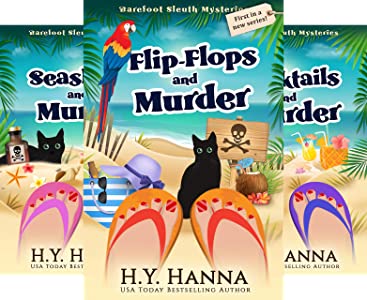
H.Y. Hanna Books
Show Notes, Transcript, & Video
Video
Background & Career
- Spent decades resisting writing due to cultural pressure to pursue “respectable” careers (doctor, lawyer, accountant, engineer).
- Discovered indie publishing in her late 30s and found financial success with cozy mysteries.
- Has written 30+ novels spanning cozy mysteries and psychological thrillers.
Genre Shift
- Transitioning from cozy mysteries to psychological destination thrillers after 10 years.
- Motivated by milestone birthdays (approaching 50) and desire to write the atmospheric suspense she loves reading.
- Influenced by Mary Stewart’s “women in jeopardy” novels set in atmospheric, dangerous locations.
The Taverna at the Edge of Night
- Debut psychological thriller set in Crete, inspired by a childhood reading experience and book research trip.
- Follows an ordinary person (Daphne) reuniting with her best friend who becomes trapped in mystery and secrets.
- First-person immersive narrative with atmospheric suspense, comparable to The White Lotus meets Daphne du Maurier.
Writing Process
- Plotter who revises as she writes, not a pantser.
- Writes chronologically in first person, averaging 1,000 words per day.
- Discovers emotional story shape around 40% through and adjusts plot accordingly.
- Uses basic outline for confidence but doesn’t follow it strictly.
Future Plans
- Taking a break from cozies to focus on destination thrillers.
- Next book set in Verona, Italy, inspired by letters written to Juliet’s balcony by lovelorn visitors.
- Plans multiple standalones, each with new setting and heroine but similar atmospheric, voice-driven reading experience.
Transcript
Heads Up:
This transcript was generated with the help of AI and only got a quick once-over from a human. So if you spot a typo or something that doesn’t make sense… let’s just blame the robots. 🤖
Full Transcript…
[00:00:03.540] – Alan Petersen
You’re listening to Meet the Thriller Author, the podcast where I interview writers of mysteries, thrillers, and suspense books. I’m your host, Alan Petersen, a writer and fan of the genre myself. Before we get started with this episode though, need to, uh, address this little, uh, public service announcement. I want to share a quick warning with, uh, listeners and authors out there. There are currently scammers sending emails, uh, pretending to be me and inviting authors onto this podcast while trying to charge them money to appear on the show. This is absolutely not me. I never charge guests to appear on Meet the Thriller Author. Most of these scam emails are coming from Gmail accounts, not from my official thrillingreads.com email address, and they use AI to create realistic-looking email messages, graphics, and images that appear legitimate. So please be very careful and double-check before corresponding. Now on to today’s guest. Coming up is episode number 238 with USA Today bestselling author H.Y. Hanna, whose latest thriller is The Tavern at the Edge of Night. Story follows Daphne as she travels to a remote fishing village on the Greek island of Crete to reunite with her best friend, only to find herself surrounded by rumors of murder, deception, and dangerous secrets.
[00:01:15.900] – Alan Petersen
H.Y. Hanna is the author of more than 30 novels spanning both psychological thrillers and cozy mysteries. After graduating from the University of Oxford, she’s lived all over the world, from Taiwan and London to Dubai and New Zealand, and now calls Perth, Australia home. In this interview, we talk about writing destination thrillers, creating atmosphere setting, balancing suspense with emotion, and a lot more. Make sure you visit ThrillerAuthors.com for show notes, transcripts, episode archives, and more. And if you enjoy the podcast, please take a moment to rate and review the show on Apple Podcasts, Spotify, or wherever you’re listening to podcasts. Okay, here’s my conversation with H.Y. Hanna. Hello everybody, welcome back to Meet the Thriller Author. On today’s episode, I am welcoming back to the podcast H.Y. Hanna, who’s best known for her cozy mystery books, but she She has now written a psychological destination thriller, which was published on May 12th called The Taverna at the Edge of Night. So I’m excited to talk to her about her new book and new genre and all that good stuff. Welcome to the podcast.
[00:02:20.710] – H.Y. Hanna
Thank you. It’s lovely to be here.
[00:02:22.820] – Alan Petersen
Let’s get a little bit about your history too. I know that you’re switching genres now, so that must be very exciting, but can you tell us a little bit about your background?
[00:02:30.400] – H.Y. Hanna
Yeah, it’s a bit of a checkered history. I suppose I feel like when you hear, you listen to many authors talk, they always say that, you know, they always knew they wanted to be a writer and they started, you know, from a very young age writing stories. And even if they do other jobs, they often, you know, they knew that writing is what they really wanted to do. And I feel like for me, it’s always been the opposite. Like, I spent most of my life trying not to be a writer and sort of fighting it every inch of the way. You know, I’m Chinese, and so if you know a bit about Asian culture, you’ll know that, you know, there are only really 4 acceptable jobs. You know, you could be a doctor, a lawyer, an accountant, an engineer, and maybe a dentist at a push. And so, you know, if you— being creative isn’t really seen as a gift, it’s really seen more like a curse. And if you say, you know, you want to be a painter or a dancer or a writer, your parents would be absolutely horrified because, because, you know, create— it’s fair enough.
[00:03:28.190] – H.Y. Hanna
I mean, creative jobs are, you know, generally they’re quite unstable and they don’t have very they have poor prospects very often. And so it’s sort of, and I suppose I was always a very, I was very sensitive to expectations as a child, you know, I was very dutiful, sort of obedient child, and I was very sensitive to what was expected of me. And so I always felt this huge pressure to conform and to do, you know, the right thing. And so I think I spent a lot of my childhood and early adulthood really just suppressing this urge, if you like, to, it was almost, it was almost like a shameful secret, you know, like this, almost like a sickness, like this compulsion to want to write. And it, And they kept leaking out everywhere, of course. I mean, you know, my classmates at school hated me because my, you know, I would always be begging the English teacher to give us an essay for homework because I just wanted any excuse to write something. But mostly, you know, I just didn’t even, you wouldn’t even consider it remotely as, even as a hobby, seems very shameful.
[00:04:23.030] – H.Y. Hanna
And so, you know, I left university and I did what I thought was the right thing, which is to get on the corporate ladder and, you know, work in an office. And I tried lots of different jobs and I think I was actually very unhappy really in all of them. But I just never really wanted to consider why, you know, it was very much like I was trying to fit a square peg into a round hole. But I just didn’t want to admit that I was a square peg. And it really took till I was about, well, I was approaching 40, really. So that’s when I started, you know, you have a milestone birthday coming up. And that’s when you start thinking all these things, this kind of thoughts like, what am I doing with my life? And, you know, am I You know, all the years are passing by and I was married by then as well. And my husband is this amazing man. He’s incredibly supportive and sort of very, very encouraging. And he really firmly believes that you should do what makes you happy. And so he kept encouraging me and saying, you should try and, you know, find a way to earn a living from writing, ’cause that’s what you really want to do.
[00:05:24.200] – H.Y. Hanna
And so, but I think, to be honest, I think what really, you know, I wouldn’t be here today if it weren’t really for the ebook revolution or the Kindle revolution, if you like, and the whole phenomenon of independent publishing, because for the first time in my, you know, I was reading and I came across these stories of indie authors who were having commercial success. And I looked at it and I thought for the first time I could envisage a possible, you know, possible viable career this way because I guess I knew enough about the traditional publishing that, you know, it’s a very, well, first of all, you know, you could be waiting a lifetime to be published. It’s unfortunately, you know, your fate is very much tied up with other people. And also even if you did get published, you know, I, I knew that most traditionally published authors just don’t earn a living from, and it’s not their day job, and it’s just an unfortunate reality. And they’re not, of course, not saying that, you know, being an indie author means that you’re guaranteed that either, but it just seemed to me to have a more, I don’t know, like a path that was a bit more in your control.
[00:06:23.530] – H.Y. Hanna
And so I threw myself into it really. That was like, I was, I just thought this could, you know, like it could work. Like I felt like I’m not afraid of hard work and I, you know, I love learning. I wasn’t afraid of what was involved, as long as I knew that there could be a chance, like, you know, I could do. And so I threw myself into it, and my first goal was very much to earn a living from my books because that for me was the most important thing. And in a way, I couldn’t justify it to myself. Like, I know it sounds really crazy because I think it’s hard to explain if you don’t come from an Asian culture, but there’s so much kind of like negative pressure about this kind of thing that you almost feel like, you know, it is almost like a very shameful thing. And so I felt like the only way I could justify it was if I could prove that being a writer was as good as if I’d done one of those proper jobs. Um, and so, so, you know, the financial side was very important to me.
[00:07:16.710] – H.Y. Hanna
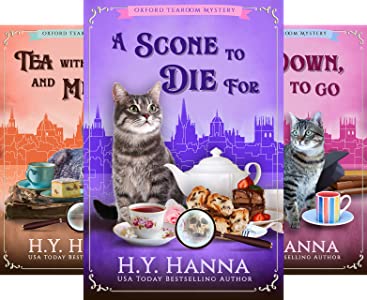
And, and I dabbled in various genres to begin with. And, you know, I wrote romance for a while because everybody said that’s what sells. And but I kept putting a dead body in all my stories. And so I, I— and after a while I started thinking, well, maybe I shouldn’t be writing romance, maybe I should actually be writing crime fiction. Because that is what I like to read personally. And then I sort of fell into writing cozy mysteries. I had this idea that was inspired by my time studying and living in Oxford, and so I, you know, started a series that was based around a tea room in Oxford. And, um, I was very lucky that the books, you know, did very well, and I, um, I just had this amazing readership. And, and I think when it happened, you know, it was, it was so— it was terrifying, really. I was, I was absolutely terrified because this was something that I’d always been told was just impossible. Like, you’d be stupid to even think about it. And then suddenly it was happening to me, and I was almost like, I just, you know, I was writing like a maniac the first few years because it was almost like something was chasing me at my heels, and I felt like any moment it was all going to just disappear because that’s what I’d always been told.
[00:08:25.200] – H.Y. Hanna
You know, I had all these voices that said, this is fake and this is a completely unreliable job, which it is, you know, to some extent. But, and I just put my head down. I was just writing and writing and writing and trying to, you know, write the next book and write the next book. And I think it was almost like one day you looked up and 10 years had passed, which was almost quite frightening in itself. And, you know, and suddenly I looked around and I was, you know, I was this established author, you know, I had like translations and audiobooks and foreign rights deals and just, you know, I’d written like 30 mystery novels and it was almost like a shock. And I realized that I sort of in a way achieved what I, you know, always thought was not possible. But at the same time, I think I was starting to feel a sense of— I mean, first of all, I was slowing down a lot, and I think partly that was burnout.
[00:09:11.300] – Alan Petersen
Just, yeah, I can imagine.
[00:09:13.070] – H.Y. Hanna
Maintain that pace because I was really, I think, working from fear more than anything. But also, I think I was probably beginning to feel like I needed a break from writing cozy mysteries after 10 years. And also, I think, again, I was approaching another milestone birthday. I was approaching 50 this time, and I, and I, again, all those thoughts start coming where you start thinking, you know, what do I really want to do with my life? And I realized that what I really wanted to do was write the kinds of stories that I really love to read. And, you know, these were the stories I read as a teenager, um, that I just— it transported me to these. And they’re, they’re stories that are, I suppose, the atmospheric psychological suspense is probably how you describe them. And they’re play— they’re stories where this— the sense— the setting is really, really important, like the sense of place, the atmosphere. And so I decided in a way, yes, I decided basically that I, you know, I’m going to take a break from the cozy mysteries for a while and just focus on writing these types of stories that I always wanted to tell.
[00:10:10.190] – H.Y. Hanna
Hmm.
[00:10:10.510] – Alan Petersen
And so who are some of the writers that you liked in that genre that inspired you as a writer?
[00:10:16.200] – H.Y. Hanna
And well, my absolute favorite author is Mary Stewart, which I’m not sure many people know of her now.
[00:10:20.620] – Alan Petersen
No, I’m not familiar with her.
[00:10:21.970] – H.Y. Hanna
So she’s dead now, but she wrote, her books were popular in the ’60s, ’70s, ’70s and ’80s. And she wrote very much what I suppose now would be called women in jeopardy. So they’re very much really atmospheric psychological suspense or suspense, classic suspense, really. And they’re set often in these beautiful but possibly deadly, you know, locations. So, you know, the South of France and Greece and on the Isle of Skye in Scotland. So there were places that I love, they’re kind of rugged, wild, untamed setting that has places have lots of atmosphere, but I love those kinds of settings. And, you know, give me a wild moor any day with fog over like a beach with tropical palms, you know, palm trees and things. And so she was very much a huge influence. And, and, and in particular, the book that— my first book, my first psychological thriller was very much inspired by one of her books I read, which was set in Crete. But so she was one, but I had— there are various— I find that most of the authors I gravitate towards always have a have a certain thing in common, which is that their writing style tends to be very lush and descriptive and full of beautiful, rich prose.
[00:11:25.920] – H.Y. Hanna
And, you know, I know sort of description, I feel like, sort of fallen out of fashion a bit in modern times. You know, we all— there’s very much a drive towards more minimalist type of writing, um, because I think we’re all, you know, we’re about people’s attention spans, and it’s like, you know, you have to try to keep the story going. Yes, exactly. Yeah, and you want to move the story along as fast as possible. And but I I don’t know, for me, I always, I love stories that have that real rich sensory detail and rich descriptions. And, you know, they really take their time to settle you into the place and, and the atmosphere is as much part of the story as what actually happens. And so yeah, some of my other authors I read, they were mostly, I was living in the UK at the time, authors like Mina Walters, who wrote psychological thrillers, or psychological suspense. I love Val McDermid as well. So she writes again, quite dark sort of psychological suspense or thrillers, but again, very, very atmospheric. Like, just, you know, you could almost taste the atmosphere when you’re reading them.
[00:12:23.810] – Alan Petersen
So tell us a little bit now, this, uh, The Taverna at the Edge of Night, can you tell us a little about that? I see that it’s set in the— in the— you already mentioned in, in, in the Greek islands there. Uh, so have you, have you visited there? Is that why you always wanted to write a story set there?
[00:12:37.090] – H.Y. Hanna
Well, I’m not— so it was initially this book I read by Mary Striep, which is called The Moonspinners, and it was set in Crete. And I read it when I was 14, and it made a huge, I mean, all her books did, but in particular, Crete. I don’t know, for some reason, Crete just really touched me, and I just love this idea of this wild and untamed and sort of rugged, you know, it’s the biggest Greek island, but unlike some of the other Greek islands like Mykonos and some of the others, which are very, I guess, almost like honeymoon Greek islands, Crete is still very much untouched. Parts of it are very wild, and it’s sort of, there’s a rugged kind of sense of beauty, and I love those kind of lands. Landscapes. And, and I just— when I read that story, I just desperately, desperately wanted to visit at 14. And I didn’t actually until when I— well, what happened was when I turned 50, um, just a couple of years ago, I— that was— I decided that was going to be my big, um, you know, treat to myself. And because I wanted to set this book there, I wanted to write a story of my own set there that would do for people what that book did for me in a way.
[00:13:38.580] – H.Y. Hanna
And so I I booked a book research trip there, really, and I went and I did, you know, I had an idea in mind, but it really was the setting because for me everything starts from the setting. Like, for a lot of authors, I think, you know, it’s often like the characters or like a what-if kind of situation, but for me, usually it’s I go somewhere and I think, oh, this place would be such a good setting for a story, and then my imagination just starts kicking in and I start, you know, thinking of a story. And because for me setting is so important, it has to be woven into the story really, so that it can’t have happened anywhere else. Um, so yes, I went to Crete and I had this amazing time just going around, sort of partly was a book pilgrimage. So I was trying to find all the places in Mary Stewart’s book, and I, I literally was there with on Google Maps, you know, trying to find— because she sets her stories in real places, she writes in such a descriptive way, you literally can almost like— it’s almost like being a book detective, you know, you can find the places.
[00:14:35.570] – H.Y. Hanna
Um, and so I went and tried to follow the path of the story and visit all the places. And while I was there, one of the places I visited was the beach that her story was set in. But the beach, there isn’t actually a village there, it’s just a beach. But there was a single taverna there, which is set up on this hill looking down. And I went and, you know, I mean, it’s not like the story, you know, it’s a very basic taverna. And the owner thought I was completely mad because I turned up with this, you know, waving my copy of this old tattered paperback and just I was gushing about this book and how I did want to visit this beach since I was 14, and I think he just thought I was a crazy tourist. But the funniest thing was his father, who’s his very elderly father, was there as well, and the father came and spoke to him. He said to me that he remembered an English author visiting. So I don’t know if it could have been her, but it was very exciting. Um, and so when I came back away from that, I, I just thought, I, you know, I had to have a taverna in my story.
[00:15:30.710] – H.Y. Hanna
And then it’s not obviously the same taverna, but it’s sort you know, my, I guess, my version of the whole thing. And that sort of sparked it from there. But really, the story is, I suppose, in a way, me trying to transport my readers to, to Crete and to what could happen there.
[00:15:44.960] – Alan Petersen
I love how it’s compared to like The White Lotus because I love that show. Is that the kind of get that feel?
[00:15:50.820] – H.Y. Hanna
Yes, yes, yes. I sort of say that, um, as a shorthand— no, people say give a shorthand— I said my book is going to be a bit, it’s a bit like The White Lotus meets, um, Daphne du Maurier, I suppose. Or, you know, Rebecca. Yeah, yeah, yeah. Yes. So it’s that very very much. It’s a first-person immersive perspective. So rather than sort of a multiple POV, which is sort of, I think, more dominant now, it’s very much an immersive first-person view, and you are with the protagonist, with her the entire way. So you experience the whole story with her. And it’s, and yes, it’s very kind of, you know, the atmosphere of the place is partly what the suspense comes from, the sort of what’s underneath all that.
[00:16:30.510] – Alan Petersen
And I’m kind of curious too, because like we talked already before, you’ve had a lot of success in with the mysteries, Did your process change though writing this type of book, or did you stick to what’s been working for all these years?
[00:16:44.480] – H.Y. Hanna
It was a bit different because with cozies, there’s quite a, I wouldn’t say a formula, but there are quite strict expectations, I suppose. And obviously that’s being pushed now. You know, there are people doing really interesting things within cozy mystery, but I think the traditional cozy and what I wrote was very much a traditional culinary cozy, you know, set in a tea room and there was very much British baking was my, kind of thing. It’s— there are expectations, you know, that they expect sort of obviously the pet, you know, the cat, the nosy old— I’ve got the nosy old ladies and it’s set in a quaint English village. And there, the characters tend to be larger than life. So it’s more, I suppose, black and white, or that’s the expectation. I always struggled, I think, with that aspect of the cozy. And so for me, there was a wonderful sense of liberation in writing a psychological thriller because in this genre, the morally gray is really almost encouraged. It’s what we are delving in, whereas in cozies, I think, you know, that’s part of the comfort of a cozy is that, that, you know, you— the bad people are bad and the good people are good.
[00:17:45.580] – H.Y. Hanna
And, and you know that there’s, you know, usually often, for example, one of the unspoken rules is that the person who gets murdered is usually not a very nice person because then you don’t feel bad about it. And I think for me that I always really struggle with that. And if you read my cozies, you’ll see that because my villains often do tend morally gray. Like, you’ll get to the end of the story and you’ll realize that they had very good reasons for doing what they did. And so I probably was breaking some of the rules without really intending to. And so when I came to write this, I think it felt almost a bit like I was just letting myself go. Like, it was lovely really just to not worry too much about certain genre expectations, I suppose. And I suppose maybe, I mean, obviously there are genre expectations in psychological thrillers as well, but Maybe, I don’t know, because it probably fit the way I naturally am. I think one thing that I did find quite difficult was that I— it took me a while to realize what type of psychological thriller I was writing because very much the word thriller, you know, is the sort of idea of like pacey and plot-driven and very kind of, you know, fast, fast, fast.
[00:18:48.620] – H.Y. Hanna
And I really was worried about that because my natural voice tends to be, like I said, much more atmospheric and descriptive and it’s more slow burn, I suppose. And the suspense really comes from— it’s more like a Hitchcock film. I suppose.
[00:19:01.370] – Alan Petersen
Oh yeah.
[00:19:01.740] – H.Y. Hanna
That’s really how I describe it. So it’s that sense of creeping unease, you know, where you’re not quite sure if something is wrong and the suspense comes from your own uncertainty. You’re doubting yourself as much as anything. And so I think that, but because that’s the way I sort of naturally think and write, it’s that came to me very naturally. So yeah, that part was.
[00:19:24.460] – Alan Petersen
And was your process the same? Like, do you outline or do you write, do you go for the seat of your pants?
[00:19:31.260] – H.Y. Hanna
I’m definitely a plotter, not a pantser.
[00:19:35.130] – Alan Petersen
Me too.
[00:19:36.400] – H.Y. Hanna
Yeah, I mean, I’m actually a bit of a control freak, but as far as writing, I find that I just, I cannot get in the car and just drive, you know, I need to know where I’m going. But I do find what happens, and I was actually, I was watching one of your other, your past interviews, and I saw you talk about this, and I thought, oh, that’s me too, where you talked about, you know, doing a really an outline and then not basically looking at it again.
[00:19:59.920] – Alan Petersen
Yeah, yeah.
[00:20:00.880] – H.Y. Hanna
Um, yeah, so I, I mean, I don’t do a very detailed outline, to be honest. What I do is I think— I think I do an outline almost to give me confidence to start. Yeah. And then I just, you know, map it out roughly, and then— but I have an idea where I’m going. And also, I think for, you know, a thriller or a mystery, you sort of need to know the ending to work backwards from that. I mean, you don’t have to, but I think it makes life easier if you do, and so that you can work in all the misdirection and of foreshadowing and things like that. And so, I definitely, you know, feel like— but what happens, I find, is as I’m— once I start writing, I find that— and I’ve noticed this over all the books I write— is I get to about 40% in, and then I’ve— that’s when I really realize what the story actually is about, and not so much the actual action sequence, but the— what I call the emotional shape of the story. So, what I want the readers to actually feel. And then that’s when I often will go back and then sort of change a lot of the plot in order to fit that that the shape I realized has emerged.
[00:20:58.340] – H.Y. Hanna
And I always say it’s a little bit like, you know, if, for example, if you have a visitor come to visit you in the US and you plan a road trip for them, and your idea was to show them sort of, you know, the achievements of the American people. And so you plan this road trip with like all these cities, you know, famous cities in the US, and then you start driving with them. But as you start driving, but you suddenly realize that actually what you really want them to come away with is the warmth of the American people. And then And you then change your itinerary, you know, you end up thinking, well, maybe I won’t take them to Chicago. I’ll take them to show them a little town instead. And, you know, so you start adjusting your itinerary because that you realize that what you really want them at the end of that journey to come away with is that feeling of the warmth of the American people rather than, you know, whatever you initially thought. And so I find that’s what happens for me, you know, when I write a book.
[00:21:41.740] – Alan Petersen
Yeah. Yeah. It’s like a lot of people say that, oh, I can’t do an outline because I can’t be tied to it. I go, well, you never, you don’t have to be tied to it.
[00:21:47.150] – H.Y. Hanna
No, you don’t. I never, I never follow my outline.
[00:21:50.160] – Alan Petersen
Yeah.
[00:21:50.420] – H.Y. Hanna
Same here.
[00:21:51.390] – Alan Petersen
Yeah, I was also wondering that too. Now, like, uh, like, I always get into the nitty-gritty with my guests because I’m nosy. So what do you write? What do you use to write? Do you use Word or Scrivener or something else?
[00:22:01.410] – H.Y. Hanna
I’m very boring. I use Word.
[00:22:03.520] – Alan Petersen
Most of my guests use Word, so you’re normal.
[00:22:07.700] – H.Y. Hanna
Yeah, I just, I open a document, I type chapter 1, and then I stare at the empty page for like days on end. Yeah, and I pretty much start from 1 and just go chronologically. I find I really— I can’t scene hop even if I know what I want to write for a scene. But I think possibly because I write in first person and immersive, it’s almost like I have to live the story with the protagonist. And I can’t write the scene in chapter 8 because I don’t know how I would feel or she would feel there until I’ve lived through chapters 1 to 7. Boring, just writing every day and just moving a little bit, tiny, a tiny little inch forward every day.
[00:22:43.550] – Alan Petersen
If I remember correctly, you used to design your own covers. Did you design the one for The Taverna at the Edge of the Night?
[00:22:49.290] – H.Y. Hanna
Yeah, well, I did, but I also— what I’ve done is now is because I haven’t got the time anymore really, is that I mock— so that is basically my mockup and then I just send it to a cover artist with the mockup and get them to do the sort of the little nitty-gritty bits, proper blending and the color grading, that sort of thing, because that kind of thing takes a lot of time. But and also things like, you know, I know what I’m weaker at. So like typography isn’t really my strength. I’m good at the visual stuff and I have a clear idea of the branding and the sort of general I guess, tone and what you want to convey. But I don’t know, it’s always something that I feel very torn about, to be honest with you, because I, I find that, you know, the general advice is not to design your own cover, and you shouldn’t really. And that’s what I always tell people. And so I always feel very torn about it. And so, like, for example, with this, I actually, when I started, I didn’t do it. I actually, I hired an artist and I gave them the brief and asked them to design and come up with concepts for me.
[00:23:45.370] – H.Y. Hanna
I just didn’t really like any of the concepts they came up with. I just didn’t feel that it captured what I wanted. And I think, to be fair, it was quite difficult because what I want is a very kind of— it’s a difficult balance between the beautiful and the dangerous. You know, what I needed was something that would instantly seduce you, that would make you think, oh, what a beautiful place, I want to go there. You want that feeling of going on vacation, going on holiday, but at the same time hint at the darkness underneath. And so I think that’s That’s, I mean, you know, who knows if I achieved it, but no, you did.
[00:24:16.650] – Alan Petersen
Yeah. Yeah. That beautiful ocean there. And then you got that little shadow figure there in the back.
[00:24:23.370] – H.Y. Hanna
Yeah. No, no, it was very creepy. Thank you. But yeah, it was a difficult brief, I think.
[00:24:28.440] – Alan Petersen
Yeah. And so what’s a, and then like your daily or you like your writing process, uh, do you like write every day? Do you have, do you set like word count goals? What does that look like? Look like for you?
[00:24:40.450] – H.Y. Hanna
I try to write every day, but I often don’t get to it because, well, you know what it’s like being an indie author.
[00:24:45.780] – Alan Petersen
Mm-hmm. So much stuff going on.
[00:24:47.800] – H.Y. Hanna
Yeah, it’s just, you know, by the time you’ve— and because I’ve now got so many projects I’m managing really, just with things like translations and, you know, audiobooks, just all the other things I’ve done. Obviously there’s your backlist, you know, I’m sort of managing about 30 books now and you’ve got to obviously do the promotion and maintain them and even just things like fan mail and and you’re just generally keeping up with everything. It’s— you have the best of intentions when you wake up in the morning, and then you just often never get to the manuscript even, because, you know, everything else unfortunately is in a way equally important, because there’s the business side of being an author, and that’s the side that’s enabling you to write really, in the sense it’s, you know, partly what brings in the income that enables you to write full-time. So, you’re really torn between the two. I mean, I think what happens is eventually I just I have to just prioritize the writing, and then I go into like the writing cave, and I basically just stop looking at my emails. I don’t, you know, open them until very late at night, and I only respond to what’s absolutely urgent, and then I do manage to get, you know, the draft done, but it’s very, very difficult.
[00:25:49.200] – H.Y. Hanna
It’s like a constant battle, and I do aim for word counts, but I don’t generally tend to hit them. I think partly because of the way I write as well. Like, when I started this all day, I was really trying very hard to just get words down as fast as possible because, you know, again, That’s one of the things that’s generally, I think, encouraged, especially in the author community. And I didn’t realize that my own process is actually quite different, that I basically revise as I write. Like, I, you know, it’s almost like a thing that’s like rolling as you go forward. And so that’s actually what I’m more comfortable doing than doing this sort of vomit draft onto the page and then doing multiple passes, because that’s, I think, the more common way to do it. And that’s probably the better way to do it because at least you get something down quickly. But my way is like inching forward, but But I guess the thing, the positive with my way is that you get to the end and that draft is pretty much ready to go to my editor.
[00:26:40.740] – Alan Petersen
Yeah, that’s what I say, you get a clean manuscript.
[00:26:43.280] – H.Y. Hanna
Yeah, yeah. I mean, cleaner. Yeah, I mean, I do obviously go back through it, but I find I don’t make many changes. There are no, you know, and so on, all the layers and stuff, I’m doing it as I’m going along. And so, but it does mean that it’s very slow progress. So I’ve sort of made peace with that now. And if I can get 1,000 words a day, I’m quite happy with that. If I— towards the end you speed up because, you know, you’re excited, you want to finish, you tend to just, you know, you can see the light at the end of the tunnel. But, um, and so if I managed to hit 2,000, that’s like an amazing day. But, you know, sometimes I only managed 300 words, 500 words, and you have to just— and that doesn’t mean I haven’t, you know, like sometimes I could be sitting at the desk from 8 in the morning and sort of finally give up the ghost at like 8 at night, and all you’ve got to show for it is 300 words.
[00:27:28.760] – Alan Petersen
Well, that’s part of it all, is managing everything, right? The marketing, the writing is, yeah, it’s busy. But you know, even I’ve interviewed a lot of traditional writers as well, and even most of them have to do a lot of their own stuff now too. Like the publishers just aren’t doing as much anymore for, you know, unless you’re a big name or something.
[00:27:49.220] – H.Y. Hanna
But yeah, yeah, no, I heard that. But so yes, I think all authors are the same. But I think, I guess the thing with indies, you have to more the distribution and the production side of it more. You don’t hand that over. So yeah, that’s That’s the sort of harder part, I suppose. It’s just project management, really. It’s not like any particular— and obviously, you know, I enjoy it, or I wouldn’t be doing it. Like, I always think, this is, you know, this is the bed I chose to lie on, and I lie on it very happily.
[00:28:14.740] – Alan Petersen
Yeah.
[00:28:15.620] – H.Y. Hanna
But, um, but at the same time, it’s just, you know, it’s just hard in terms of just juggling your time, really. And just wish you could clone yourself.
[00:28:25.450] – Alan Petersen
And so, uh, what, what are you— are you going to continue on with your cozy mysteries? You’re going to juggle these two? What’s, what’s that looking like for you in the future?
[00:28:34.510] – H.Y. Hanna
I think I’m going to take a break from the cozies for a while. I think it probably would benefit me as well just to have a sort of a complete break from them, and then I can go back to them, you know, refreshed. Um, and also because I really want to focus on these books, you know, I have— I have ideas for multiple, um, I call them destination thrillers. So, you know, they’re very much, um, they are, you know, they’re thrillers, but they are very much defined in a way by being set in this beautiful, you know, exotic but possibly deadly location. Because the idea is really about being someone— because I travel a fair bit and I always, you know, you know how you pass someone in the airport or something and you see something happen and you always think, there by the grace of God go I. And it always makes you sort of think, you know, what would happen if you’re somewhere and you’re an ordinary person, you’re not a law enforcement, you know, agent, you haven’t got any special skills, a special set of skills, and you’re just a normal person and you’re trapped somewhere, you’re stranded somewhere and you don’t you know, you don’t speak the language, you don’t know anybody, you’re unfamiliar with the local customs, and you get drawn into some kind of mystery or danger or, you know, some— and you have to rely really on your own wits.
[00:29:41.500] – H.Y. Hanna
And that’s kind of— that’s really, really fascinating for me. So I— and I— and of course, the setting then will decide on, you know, that each setting really decides how that— what happens. And so I’ve got lots of ideas for, um, different places to set stories in.
[00:29:56.280] – Alan Petersen
So yeah, because they’re all standalones, right? This is a standalone. Yeah. Yeah.
[00:30:00.510] – H.Y. Hanna
So each one will be a new setting, a new heroine. I mean, I think the reading experience will be very similar, and probably in a way the reading space isn’t that dissimilar from my cozies either, for my existing readership, because I, I don’t know, I’ve been told that I’m quite a voice-led writer. So my, I have quite a strong voice, and so my stories all have a similar type of feel and reading experience. And so it won’t have the the surface trappings. You know, it won’t have like the cat and the little nosy old ladies and the baking, that thing. But the, I guess the, you know, the immersive first was an atmospheric kind of story and the experience of it is probably in a way quite similar even though the setting will be different.
[00:30:43.570] – Alan Petersen
And so what are you working on now? Can you give us a little sneak peek or is that all top secret?
[00:30:49.760] – H.Y. Hanna
No, I’m working on the next destination thriller, and it’s going to be set in Verona in Italy. Yeah, so it’ll be a new antagonist and a new sort of premise. It’s, um, I can tell you it’s partly inspired by the Juliet, but you know, there’s a Juliet balcony in Verona, or it’s, it’s not really her balcony, it’s a fake balcony that was put up there. But the, um, but it’s got this amazing phenomenon where like, you know, hundreds of thousands of people visited every year, and, and I— partly because the Verona government have sort of started this tourism thing. But I think people, when you see some of that— so I visited, I went and did a book research trip there, um, last year, and I— there’s a board there of like notes of people, and it’s really quite amazing when you read these notes, like, like genuine heartfelt letters. Because it’s become like almost like a, um, I don’t know how you call it, like a tradition where people write to her, um, who are troubled in love, you know, either they cannot find love or they’re having problems in love. And they just write Juliet Verona, and these letters find their way to that.
[00:31:52.050] – H.Y. Hanna
And, and they, you know, they’re amazing. And you, you sort of think it’s a gimmick, but then you read some of these messages, and it’s incredibly hard from people in these situations. And there’s this amazing thing called the Juliet Secretary Club, and where people volunteer to reply to these letters all across the world. And so That kind of thing just really, you know, captures my imagination as a writer. And, um, and there was actually a rom-com, um, a movie that came out about this a few years ago, but I of course thought of the thriller version of that. So there’s a slightly different take. But, um, but yeah, it’s just an amazing phenomenon in a way. And, and so, and so that’s why it’s what I mean about how the story rises out of the setting, that this couldn’t have happened anywhere else because this— only the setting and this, you know, phenomenon of Juliet’s balcony and, and people writing this, you know, a fictional figure created by an Englishman who possibly never even visited Verona. The whole irony of that just— yeah, I find really attractive. Yeah.
[00:32:46.760] – Alan Petersen
Oh yeah, so you get the— you get the idea for the location first and then the characters and everything comes after.
[00:32:52.910] – H.Y. Hanna
Yeah, yeah, yeah. That’s how I always work. The, the setting is first and then the story arises out of what is unique to that setting.
[00:33:02.100] – Alan Petersen
Hmm. And so when’s that one coming out?
[00:33:04.140] – H.Y. Hanna
Uh, well, hopefully if I can do my 1,000 words a day, um, end of this year.
[00:33:09.110] – Alan Petersen
Oh, okay, cool. Something to look forward to. Yeah. It’s something I always ask my guests because, you know, if there’s aspiring writers that listen to this, any advice that you have for them if they’re trying to write their own thrillers, their own psychological suspense novels?
[00:33:21.320] – H.Y. Hanna
I think what I said earlier that about, you know, because thriller is a vast genre and there are many different flavors in it. And it’s sort of, I think, understanding yourself, your own voice, I suppose, and your own interests and your tendencies, and so what flavor of thriller that you’re writing, because I think otherwise sometimes some of the advice that’s given can really— it might not work for you, or it might, you know, make you cancel out the things that actually make you special, you know. And like, I mean, I just talk from my own experience that when I started, I was really struggling with this aspect of it, and I kept worrying that you know, I wasn’t being pacey enough and I wasn’t moving, you know, because, you know, you feel like, oh my God, there’s no dead body in chapter 1, or there’s no ticking time bomb, and you’re not, you’re not fulfilling, I suppose, the expectations of the genre. But there actually is, for example, a sub-branch of thrillers that is very much about this sort of, you know, slow burn, like what I said, like a Hitchcock film, that sort of— the suspense comes not really from, you know, knowing there’s a ticking time bomb and knowing it’s going to go off, it’s more coming from the sort of like ‘Do you hear ticking?
[00:34:23.790] – H.Y. Hanna
Did you think that’s—’ You know, ‘No, I must be imagining it.’ ‘No, but what’s that sound? Do you think that sounds like ticking?’ You know, and it’s that thing going on that’s building the suspense. So I think for me, once I finally made peace with that, and then I’ve, you know, obviously you discover the writers that are writing in that tradition, I suppose, then you sort of realize that your voice is really more an asset in that situation rather than necessarily, you know, a problem. And, you know, there’s that belief that if you lean into what you’re naturally good at, or what you naturally gravitate towards, that you— I suppose it’s the whole thing about being much more authentically yourself, that, that, you know, you, you would do better really than trying to fight it. Says the person who’s been fighting things all her life. I’m learning the lesson very slowly.
[00:35:14.200] – Alan Petersen
Yeah, that’s amazing because you’ve had so much success. You’re a USA Today bestseller and you’re still like kind of beating yourself up. But that’s a very common thread in a lot of the writers that I’ve interviewed. So very normal. Yeah. We’re very neurotic. Yeah.
[00:35:28.570] – H.Y. Hanna
Yeah. So I think, yeah, definitely if you’re, you know, starting, like, I think figure out who you are as a writer, like what attracts you, you know, read the different types of thrillers that you’re into and then lean into that because because there are, you know, it is a huge, a broad church as they say, and you know, there are different readers for different styles. And so yeah, I think it’s difficult though sometimes, especially when you’re starting, because you know, even though I’m not, this isn’t my first book ever, it is my first book in this genre. And so in many respects, I still feel the same kind of uncertainty and doubt and all that sort of stuff that a debut author would feel anyway, because you just question everything you do because you know, you just, It’s still, I don’t know, it’s hard to explain, but yeah.
[00:36:16.180] – Alan Petersen
Well, no, I can imagine, ’cause you’ve had, you know, yeah, like you’ve had a lot of success in that, with Cozy Mysteries, 30 novels. And so yeah, it’s gotta be a little scary to try something new, but— Terrifying.
[00:36:26.860] – H.Y. Hanna
It’s like leaving a job that, you know, you’ve been very happy in for a long time and you’re respected and liked there. You’ve got a stable, you know, job that you’ve done for, you know, well, 10 years in my case. And then going off to this new job where then nothing is guaranteed Yeah, it’s very frightening.
[00:36:43.510] – Alan Petersen
Do you think, uh, do you hear back from your cozy mystery fans? Do they get mad at you that you’re trying something different? Are they encouraging you?
[00:36:50.420] – H.Y. Hanna
No, they’ve actually been amazing. I mean, I was terrified. I felt, I think along with everything else, it was guilt as well, because I knew that, you know, I felt like they’d supported me all these years and they were, they’ve been amazing fans. And, and I felt very guilty because I knew that by taking time out to write these books, I wouldn’t be writing the next book, you know, in their favor. Series. And so I think one of the reasons I dragged my heels for so long was because I kept dreading it, like, think— dreading, like, even announcing that I might be thinking about this. Um, and I didn’t announce it till January this year. Like, that was when I— it took me, like, over Christmas was when I really thought, okay, I’ve got to just commit to it. Even though I was, I was actually writing this book sort of on the side, I kept telling myself it was like a secret side project, you know, it’s okay, but I would, I would write my proper, proper cozy mysteries. And then eventually I just sort of almost had to admit to myself that really this is what I really wanted to work on now.
[00:37:40.010] – H.Y. Hanna
And then I sort of confessed to them in January, and they’ve just been absolutely amazing. Like, they’ve been so— I wasn’t expecting— I really thought that, you know, there would be a lot more reproach. And I think the best message I received was from a fan who sent me an email in reply, and she wrote me 6 words. She said, “You write it, I’ll read it.” Oh wow, that’s awesome. And I just sort of burst out laughing, but It was just, you know, I don’t know. I think you’re right. Sometimes I think as writers, we’re very neurotic and we get things into our heads. And I don’t know. I mean, I’m sure, you know, many of them were disappointed, but they were far more supportive than I thought they would be. Yeah, no, that’s why I think it’s great.
[00:38:17.750] – Alan Petersen
I think it’s great that you’re using your, you know, you didn’t like, you do go with a pen name because I thought about that too when I switched genres. But I don’t want to deal with another. It’s hard enough with one name.
[00:38:28.750] – H.Y. Hanna
Yeah, and also I think in my case it’s because I really thought it was the same reading experience. That’s one reason I decided not to, that I thought, you know, it’s not— I mean, the, you know, it’s a, it’s like the surface trapping is different obviously, but, and it’s not like my thrillers are not, um, very dark, dark thrillers, you know, they’re not dealing with serial killers or that sort of thing. I mean, obviously it’s darker than cozy mysteries and it touches on some, um, you know, like for example this one sort of wades into the sort of idea of toxic female friendship and that sort of thing, but it’s, um, it’s not And, you know, as I said, it’s almost like the sense of kind of hope at the end and the sense of justice that the things that people often want to read a cozy mystery for are still there. Yeah, so.
[00:39:09.880] – Alan Petersen
Yeah, and I think that’s why people really love these psychological suspense novels and the cozy mysteries is because it’s like regular people. Like we could all see ourselves in that versus, I don’t know what an FBI agent does, you know, like I can’t relate to an FBI agent, but a regular person I can. Do you think that’s why they’re so popular?
[00:39:28.340] – H.Y. Hanna
I don’t know. I mean, for me, they are. Yeah, like, I always find I always relate better to these books, and often they’re standalones that feature a regular person. Because yes, you’re right, you can imagine yourself in that situation. Maybe you have, you know, been in a similar situation. And it’s— I think it’s why domestic thrillers, for example, have been massively popular, because, you know, everyone is in a relationship or has a family or been in situations with neighbors. And so it’s that, you know, you could— it’s that aside from the voyeuristic aspect, there is that thing of this could happen to me and how would I respond in this. And so I guess mine is a little bit similar, it’s just instead of being domestic, it’s taking you, you know, like what happens if this happened to you on vacation, when you’re traveling for work or whatever, how would you respond? Yeah. Um, so yeah, it’s that idea. Do you find that I think you also respond much better to the kind of, um, you know, the regular Joe, I suppose, is what they call.
[00:40:23.950] – Alan Petersen
Yeah. Yeah. You know, I used to, yeah, I mean, I enjoy both of them, but I’ve, the last few couple years I’ve been reading more domestic thrillers and, and yeah, I think that it’s just more plausible and it’s like, oh, what are they gonna do? It’s a detective, you kind of know. So yeah, I could totally see, see why they’re so popular. And that’s why when I started reading them, I’m like, oh, okay, I can see why these are so, and they’re fun to read and they’re fun to write.
[00:40:45.850] – H.Y. Hanna
Yeah, I mean, I do love a good, you know, detective procedural. Yeah, I’ve seen those. Yeah, but more the ones that managed to show you the story, you know, the life behind the detective, I suppose. So I’m not so into the sort of Sherlock Holmes type of protagonist, you know, where they are like 007, I guess, you know, where they are perfect and they just never change. One of my favorite long-running series is by a British author called Reginald Hill, and he’s unfortunately passed away now, but he wrote a very, very long-running series called D.L. and Pascoe, and it was an inspector and a sergeant, a British inspector and sergeant, and they’re set in Yorkshire, so in north of England, and I love them, but partly because the characters are just so real in a way, and he had, again, there’s a very strong sense of place, you know, you really felt like you were in Yorkshire, but he really, like, he captured the vernacular, and he captured the way that people think there and all that sort of thing, and so, yes, you were reading a procedural and such, and you had the sort of, of, you know, the detective and sergeant, the inspector and sergeant dynamic and stuff.
[00:41:50.150] – H.Y. Hanna
But it was really more than that. That’s, you know, why I love that series so much. So yeah, it’s— I suppose it’s like, you know, there— it’s, um, everything has its own kind of attractions. And you’re right, right.
[00:42:02.530] – Alan Petersen
Yeah, sometimes, you know, you feel like reading this or that, you change it up, and then you go back to the other one. But yeah, we all like the one little thing though, that regardless of the genre, it’s this— what the character or the location, stuff like that. It’s just—
[00:42:15.450] – H.Y. Hanna
yeah, we have our own little sort of favorite things.
[00:42:19.310] – Alan Petersen
Yeah, yeah, yeah. So that’s what’s fun about reading in this world. So what would you say is your favorite trope then in sort of crime fiction? Well, in crime fiction, I was really big into like John Sanford, and I like that type of books.
[00:42:36.630] – H.Y. Hanna
So, but same thing— There isn’t like a particular, like a trope or a sort of scenario that you really into? Yeah, well, I like—
[00:42:45.520] – Alan Petersen
you said you didn’t like the serial killers. I always liked the serial killer ones. Okay, so yeah, so I was always into the serial killer thrillers, always got my attention.
[00:42:52.950] – H.Y. Hanna
So yeah, no, I mean, I like a serial killer. I have quite a lot of— like Val McDermott, for example, I mentioned earlier, she writes, you know, quite a lot about serial killers. And, and she has a long-running series featuring, um, a forens— I think he’s a forensic profiler or something like that, um, for, um, who, you know, and he deals with a lot of serial killers. And it’s fascinating, just the psychology behind that. So I don’t know whether it’s part of growing old. I think that as you get older, your appetite for that kind of thing slightly decreases. So I know when I was in my 20s, you know, I was massively into Patricia Cornwall, and I, you know, I’ve still got all her books. And so I really enjoyed that. But I found that as I got older, I sort of was not reading the sort of the hardcore bloody serial killer stuff so much. And maybe that’s just getting older. Yeah, no, same thing with me.
[00:43:36.140] – Alan Petersen
The last few years, I’ve— I mean, I still read dark stuff, but they’re not like what I used to read, you know, 10, 15, 20 years ago. Verna, At the Edge of Night comes out May 12th. Where can listeners find you? What’s your website?
[00:43:47.950] – H.Y. Hanna
Where can they learn more about you? My website is probably the best place because I’m rubbish on social media. So my website is www.hyhanna.com. The HY are the initials of my first name, which is Hsin-Yi. And yeah, and I have a newsletter, which is really the best place to keep in touch with me because I interact with my readers really through my newsletter. I do also have a YouTube channel, which I just started recently at the end of last year, and I share sort of behind the scenes of my book research travels, and I answer reader questions there. So that’s just quite a new thing, but I’m really enjoying that, and the readers seem to enjoy that. But yeah, my— probably my newsletter is the best place to keep in touch, and through email.
[00:44:33.680] – Alan Petersen
Okay, all right, great. I’ll have to check the YouTube channel. I didn’t know you had that out there. This is interesting. All right, Hsin-Yi, well, thank you so much. It was really a pleasure talking Good luck with you at lunch.
[00:44:43.730] – H.Y. Hanna
Yeah, thank you. Thank you.
[00:44:50.110] – Alan Petersen
Thanks for listening to Meet the Thriller Author, hosted by Alan Petersen. If you enjoyed this episode, be sure to subscribe and leave a review on your favorite podcast platform. It helps other thriller fans discover the show. You can find all past episodes, show notes, and author interviews at thrillerauthor.com. Authors.com, including conversations with icons like Dean Koontz, Freida McFadden, and Lee Child. And if you’re looking for your next gripping read, check out Allen’s own psychological thrillers and crime fiction novels at thrillingreads.com/books. Until next time, stay safe, keep reading, and keep the thrills coming.