

Rea Frey Interview — Author of Dear Mother | Meet the Thriller Author Podcast | Episode 236
In this episode of the Meet the Thriller Author podcast, bestselling author Alan Petersen interviews bestselling author Rea Frey about her new psychological thriller, Dear Mother, releasing April 28. Known for writing emotionally charged suspense novels that explore family secrets, trauma, and hidden truths, Rea shares the inspiration behind her latest book and what draws her to the thriller genre.
Dear Mother follows investigative journalist Isabelle Archer as she returns to her childhood home in the Pacific Northwest after the death of her estranged mother. What begins as a routine trip to settle an estate quickly turns into a chilling search for answers about a tragic fire from her past—one that claimed the lives of her foster siblings and left lingering suspicions about her mother’s role. As Isabelle digs deeper, long-buried secrets begin to surface, forcing her to confront the truth about her family and herself.
During the conversation, Rea Frey discusses her writing process, how she balances emotional storytelling with suspense, and why she loves writing psychological thrillers. She also talks about her role as “The Book Doula,” where she helps aspiring writers develop their stories and navigate the publishing journey. Listeners will gain insight into her creative routine, influences as a writer, and advice for authors looking to break into the thriller genre.
Connect with Rea Frey
Latest Book
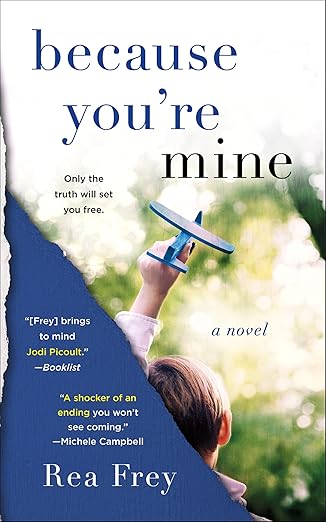
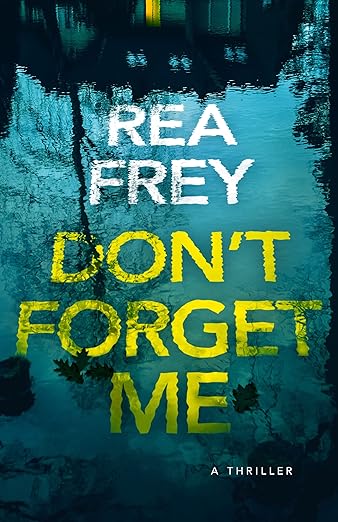
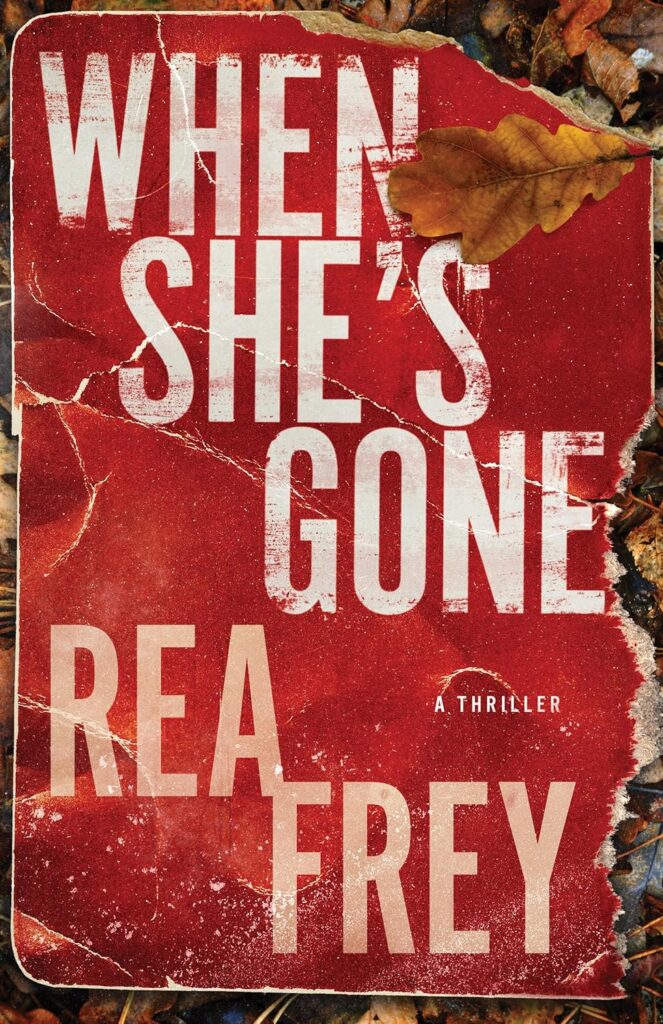
Rea Frey Books
Video
Show Notes & Transcript
In this episode, you’ll discover:
- Why Rea Frey is drawn to writing psychological thrillers centered on parent-child relationships and “worst-case scenario” fears
- The gripping premise behind Dear Mother, where a journalist returns to her hometown to uncover the truth about a deadly fire and her mother’s mysterious death
- How the moody Pacific Northwest setting became a powerful backdrop for suspense and atmosphere
- Why the “returning home to face the past” trope remains so effective in domestic and psychological thrillers
- How Rea balances writing in multiple genres, including thrillers and character-driven book club fiction
- The surprising origin of her role as “The Book Doula” and how she has helped nearly 1,000 first-time authors navigate publishing
- Her daily writing routine, including why she writes first thing in the morning and uses a distraction-free studio
- The simple tool she relies on to write all her novels—and why she prefers it over more complex software
- The shocking behind-the-scenes story of how Dear Mother was completely rewritten in just two weeks after editors rejected the original draft
- What she learned about resilience and creativity under extreme publishing deadlines
- Her thoughts on the changing publishing landscape, including digital marketing, audiobooks, and new opportunities for authors
- Why understanding the business side of publishing is just as important as writing a great story
- Practical advice for aspiring writers on how to break into the industry and avoid costly mistakes
Transcript
Heads Up:
This transcript was generated with the help of AI and only got a quick once-over from a human. So if you spot a typo or something that doesn’t make sense… let’s just blame the robots. 🤖
[00:00:04.910] – Alan Petersen
You are listening to Meet the Thriller Author, the podcast where I interview writers of mysteries, thrillers, and suspense. I’m your host, Alan Petersen, a thriller author and fan of the genre myself. This is episode number 236 with Rea Frey. Her new novel, Dear Mother, will be published on April 28th. Rea is an award-winning and number one bestselling author who writes across multiple genres including suspense, thriller and contemporary fiction. She is known for emotionally gripping stories that explore family secrets, trauma, and the complicated relationships that shape our lives. In addition to her work as a novelist, many writers also know her as the book doula, where she helps authors develop and bring their stories into the world. In her latest psychological thriller, Dear Mother, a young investigative journalist returns to her childhood home in the Pacific Northwest after her estranged mother’s death. But what begins as a simple trip to settle an estate quickly turns into a search for the truth about a tragic fire from the past, one that claimed the lives of her foster siblings and left lingering questions about whether her mother was responsible. As she digs deeper, long-buried secrets begin to surface, and the answers may be more dangerous than she ever imagined.
[00:01:12.410] – Alan Petersen
Before we get to the interview, if you enjoy this podcast, please take a moment to rate and review Meet the Thriller Author on Apple, Spotify, or whichever is your favorite podcast platform. It really helps others thriller fans discover the show, and I really do appreciate it. And be sure to visit thrillingreads.com to learn more about my books, access show notes, transcripts, archives, and a lot more. You can also sign up for the Thrilling Reads newsletter where I share new thriller books and introduce you to great authors. Okay, so here is my conversation with Rea Frey. Hey everybody, this is Alan Petersen with Meet the Thriller Author, and today I have a bestselling author, Rea Frey, who is an award-winning author known for her emotionally gripping suspense and psychological thrillers that dig deep into family secrets and buried trauma. My favorite stuff. Her new novel, Your Mother, is going to be published on April 28th. Rea, welcome to the podcast.
[00:02:07.510] – Rea Frey
Thank you so much. Lovely to be here.
[00:02:09.520] – Alan Petersen
Yeah, thank you. Thank you. And so listeners who might not be familiar with your work yet, can you tell us a little bit about your writing style and the kind of stories that you like to tell?
[00:02:17.050] – Rea Frey
Yes. So I actually write in two different genres. So I write in the suspense thriller category. I love— I’m pretty obsessed with parent-child relationships. And I always joke, like, I didn’t start writing thrillers until I I became a parent. And then I tend to write about almost worst-case scenarios or some of my worst fears as a parent, like my child goes missing or something really tragic happens. I joke that I use my writing as therapy to work through my own fears. And then I write some kind of what I call time-slip women’s fiction or book club fiction. I’m really obsessed with time, with quantum physics, with alternate or parallel universes. So I also write in that realm as well.
[00:03:04.310] – Alan Petersen
That’s cool. So that’s the good thing about writing. You can get your hobbies or your interests and get them into writing fiction stories. That’s pretty good way of covering everything.
[00:03:14.930] – Rea Frey
Exactly. I’m checking all the boxes for sure.
[00:03:17.000] – Alan Petersen
So your new thriller, Dear Mother, which comes out April 28th, I was starting to ask now, can you give us a little bit of an elevator pitch on that one?
[00:03:24.350] – Rea Frey
Yeah. Oh, the elevator pitch. Writer hate that question. It’s funny, some books you can just sum up in a sentence or two. And other books you can’t. But this is about an investigative journalist named Isabel Archer who has to go home to her very remote small town in Cedar Lock, Washington. She hasn’t been back in 25 years because it was the scene of a lot of tragedy when she was growing up. She lost her 3 foster siblings in a fire. And the whole town, including Isabel, thought her mother actually had something to do with it. So when the book starts, her mother has died, and she hasn’t seen her in for so long, she goes back and comes to find out through an autopsy report that her mother may have actually been murdered instead of dying of natural causes. So she starts to dig into it and see if what happened to her mother is tied to what happened to her siblings tragically during that fire. So the book is really fast-paced and, and again, just kind of trying to figure out what actually happened to both her mother and her siblings.
[00:04:31.980] – Alan Petersen
Interesting too that the Pacific Northwest feels like its own character. So can you tell us a little bit about that?
[00:04:37.200] – Rea Frey
Yeah, I love the Pacific Northwest. I set my first novel, Not Her Daughter, in the Pacific Northwest. And for this one, there is a very remote town, I think you pronounce it Stehekin, that I haven’t been to, but I wanted to have that very, like, teeny tiny town. I mean, it’s population 50. But this Cedarlock is actually a fictional town. I wanted to create a fictional town. I think sometimes that gives writers a little bit more freedom with, what is accurate and what isn’t. But I think there’s something about the Pacific Northwest that’s very moody and is the perfect setting for thrillers. So yeah, I wanted it to feel a little bit like its own character for sure.
[00:05:15.750] – Alan Petersen
Isabel returning home to confront her past, and that’s such a powerful trope in this genre. I’ve used it myself a few times.
[00:05:23.670] – Rea Frey
Yeah.
[00:05:24.790] – Alan Petersen
Why do we do that? What makes it such a great trope?
[00:05:27.450] – Rea Frey
I just think it’s so interesting. Like when we— when people abandon their past, or they move away to get away, quote unquote, get away from something that happened to them, and then they have to face it, I just think that automatically introduces stakes for the reader. So they want to know, you know, what happened. What happened in their past? What are they hiding? What’s going to be unfolded? And I think it’s just— yes, it’s a popular trope, but I think it works for a reason.
[00:05:55.890] – Alan Petersen
Yeah, I think that’s probably why these domestic and psychological thrillers have become so popular. I mean, I think everybody— not everyone’s an FBI agent or a CIA agent, but— Everyone has family and drama and—
[00:06:07.350] – Rea Frey
Exactly. No, that’s such a good point, actually. I mean, we all know what it’s like to care about someone or even be estranged from someone or have complex familial relationships, which so many of us do. And in my books, you know, I write a lot about these complex relationships. And everyone’s like, “God, you must have had a terrible relationship with your parents.” But it’s actually the opposite. I had a great upbringing. So it’s really fun to just, you know, play around with these characters that are so tortured.
[00:06:36.690] – Alan Petersen
Yeah, I always tell my family, don’t take anything personal when you read my books.
[00:06:40.620] – Rea Frey
Exactly. Exactly.
[00:06:42.120] – Alan Petersen
Yeah. So you mentioned earlier that you write across different genres. Kind of curious now, how does your writing brain, how does that work? Is it the same? Do you approach it the same way or is it different approaches? Can you tell us about that?
[00:06:53.730] – Rea Frey
Yeah, I love that question. I mean, it’s funny, when my debut came out in 2018, I wasn’t actually even trying to write in a genre. Wrote the story that came to me. And then my publishers were like, “Oh, you’re a domestic suspense writer. We’re gonna put you in this box. You’re gonna stay in this lane.” So for— I had a 2-book deal followed by another 2-book deal with this publisher. And so I only wrote domestic suspense. But then I kind of found myself wanting to just venture outside that genre a little bit. So when I tried my hand at kind of this more like book club women’s fiction and went with another publisher, Yes, the, the writing brain works the same, but the story, the stakes, the, the readership, they’re two completely opposite, you know, they’re opposite of each other and opposite ends of the spectrum. So I do approach it a little bit differently. I think with thrillers, they’re actually a little bit easier because they’re somewhat formulaic, you know, like there’s a murder or there’s just something that the protagonist is after and it’s very plot-driven. On the book club fiction side, not that it’s not plot-driven, but it’s a little bit more character-driven.
[00:08:07.260] – Rea Frey
There are certain expectations that readers want. So it does challenge me and in my brain and the way that I write, because with thrillers, I do think of the plot first. And with the other kind of book club fiction, I think a little bit more of character first. So it’s, it’s kind of fun to get to, to flex those different writing muscles.
[00:08:29.320] – Alan Petersen
Yeah, I can imagine. Yeah. And how does that work with, uh, just kind of my brain starts going there, uh, with, uh, do you have to have separate agents for different ones or—
[00:08:38.860] – Rea Frey
No. Yeah. And it was funny, when I started out, I was kind of told like, ah, you can’t, you can’t really step outside the genre or you’re gonna have to self-publish if you want to do something different. I’m very lucky. I’ve had the same agent for going on 10 years almost, and she’s really supportive. Like, oh, I want I want to try nonfiction, or I want to do this. And I thought I would have to write under a pen name potentially because it is a separate genre. But all the publishers have been very supportive in keeping it under the same name. A lot of my readers read both thrillers and, you know, other genres. So they’ll kind of pick up both, which is really cool. But yeah, I have not had to have separate agents, just separate publishers for sure.
[00:09:21.420] – Alan Petersen
Easier for administratively for you than to have pen names and two websites and two social media presences. Exactly.
[00:09:27.660] – Rea Frey
Exactly.
[00:09:28.480] – Alan Petersen
I was wanting to know, before you started writing these books, because you said it was— they kind of put you in there, were you a fan, though, of thrillers as a reader before?
[00:09:37.940] – Rea Frey
Oh, yeah. I mean, I’ve always been such a huge reader. I always say, you know, I got my writing start by just being such a diligent reader and reading anything and everything that I could. But again, I didn’t set out to write suspense or thrillers. It just kind of happened to be that way. But yeah, I mean, I did read thrillers and suspense. Honestly, once I got published, then I really started reading everything in the genre. Because reading, if you’re published, you know, it becomes a little bit part of your job where you want to see what other writers are doing. And you kind of dissect what, you know, what they’re doing. And ooh, maybe I could try this. So it’s changed my reading a little bit. But I do try to read pretty much everything in, in the genres that I’m writing in just to see what, what’s actually selling and, and what’s thriving.
[00:10:28.850] – Alan Petersen
Yeah, I saw that on your website. You’re very— seems like you’re very various. You read a lot of different genres.
[00:10:33.700] – Rea Frey
Uh, I do.
[00:10:34.200] – Alan Petersen
Yeah, yeah. And you’re very involved with the— in your local book community with other authors and book clubs, which I think is really cool and very important, you know, to get out— get out of our solo world.
[00:10:43.460] – Rea Frey
I completely agree. Yeah, I, I— the community of writers, I always joke that thriller writers specifically are the nicest human beings. Like, I think we get everything out on the page, so we’re, we’re just really, like, lovely and able to, to help And I’m in Nashville and I have such a wonderful community of writers here, which is wonderful. And, you know, my— like, I’m an author, but my other full, pretty much full-time gig is I’m a book coach, or what my clients refer to as a book doula. So I actually help people get their books published and get them out in the world. And I feel like it’s my, literally my obligation to help other authors try to navigate this publishing industry, which is so complex and can be very overwhelming, and you’re not really sure what to do. So it’s, it’s one of my favorite parts of being an author is giving back to other authors and helping their dreams come true too.
[00:11:37.990] – Alan Petersen
Yeah, I’m gonna ask you about that because I think it’s pretty cool, the book doula. Uh, so can you tell us how do you get into that? And you mentioned a little bit briefly, but you’re kind of curious about that. That—
[00:11:48.600] – Rea Frey
yeah, so I had my first novel come out when I was 22 years old.
[00:11:53.680] – Alan Petersen
Oh wow.
[00:11:54.460] – Rea Frey
Was a disaster. I mean, it was— the publisher was not a really legitimate publisher. It— I, you know, never saw a dime from that book. I didn’t understand what contract I was signing. And I was going to school for creative writing at Columbia, but in all 4 years, I only ever had craft classes, so classes on how to write, not classes on how to publish, how to make money, how to actually become a career author. So when I, I jumped into that publishing deal, I realized that I didn’t know anything about the publishing industry. So after that experience, I kind of took it upon myself to learn everything I could about publishing from working at literary agencies, working with publishers, ghostwriting, developmentally editing. And I kind of naturally started just working with authors, like authors who needed editing, authors who needed a nonfiction book proposal, or they needed a ghostwriter. Like, I just started trying out so many different facets of, of writing and editing. And so as I kind of continued down that path, authors would just find me and they would kind of let me know what they needed. And so I started really book coaching as a side hustle.
[00:13:07.760] – Rea Frey
And then very quickly it just became almost like a full-time job. So in 2020, I actually created a company, an actual legitimate company for it. And I’m word of mouth referral only. But I mean, to date, I’ve helped nearly 1,000 first-time authors land agents, book deals, become bestselling authors. I work with people if they want to self-publish. So It’s just been very organic, which is great. But I really help people get clear on their goals, not what society says, you know, like, oh, you’re only a successful author if you hit these 3 milestones. We actually dial into what they, what they truly, truly want, what they need a book for. We figure out their publication path, whether it’s indie publishing or traditionally published publishing, and then we kind of forged the path to get their books out into the world. So I’m really with someone from concept all the way, usually till they get their books out. So it is, it’s a lot. It’s why they call me a book doula, cuz it’s like I’m really there through the whole, through the whole birthing process of that book.
[00:14:10.840] – Alan Petersen
It’s great to hear that you also focus on the business and the, uh, because it’s, uh, authors, aspiring writers get ripped off so badly out there.
[00:14:19.870] – Rea Frey
Oh gosh.
[00:14:20.190] – Alan Petersen
Thousands, tens of thousands of dollars sometimes. That’s great. Oh, you help them out.
[00:14:24.780] – Rea Frey
And I’ve made so many, so many mistakes on my author journey. I have spent hundreds of thousands of dollars. I’ve, I mean, every mistake that you could possibly make, I’ve made. So I just want to help people avoid those same mistakes. And also though, really, like, my dream is to create— I would have always wanted to have my own publishing company because I help everyone with everything except that. But I’m really passionate about especially fiction writers being when we, when we signed up to write books, all of us wanted to just be creatives. We didn’t necessarily wanna sell our books or market them or be, you know, social media gurus and be so focused on launching the book and how to sell. So I would love to create something where creatives can be creatives and then you actually have those professionals taking care of the marketing, the publicity. I, I, you know, social media has become so synonymous with being a published author and It’s a sticky point that I talk about all the time. But I mean, I don’t know about you, but like, did you sign up to, to like shamelessly promote your books and have to be everywhere all at once?
[00:15:30.840] – Rea Frey
Or did you just want to write?
[00:15:32.500] – Alan Petersen
Yeah, I never thought it would be— I never thought in my 50s I was going to have a TikTok account.
[00:15:36.830] – Rea Frey
But that’s how things work. You know, TikTok is like— I’m not on TikTok, but I mean, it’s, it’s like blowing up careers left and right. So it’s just a very different landscape. So, you know, So helping people figure out what actually makes sense for them is important, and no two journeys have to look the same.
[00:15:54.720] – Alan Petersen
Yeah, yeah, that’s great. And I do hear about that because, you know, I interviewed a lot of authors from all levels, and even like the, the, the top, top of the— they have to do their own marketing and publicity. And so yeah, it’s kind of interesting.
[00:16:08.070] – Rea Frey
It’s crazy.
[00:16:08.780] – Alan Petersen
Yeah. Uh, so I can start with you, with your writing process. Uh, so obviously I get into like the, your your writing process. Do you outline? Do you write by the seat of your pants? Can you tell us about that?
[00:16:19.470] – Rea Frey
Yeah, I think I’m right in the middle. So back in the day, it used to just be like, ooh, I have this idea and I’m just gonna follow it and see where it goes. But, you know, once you become published and then you have, you know, pretty intense deadlines, and there were a few years there where I was putting out 2 books a year. So I am not like a 40-page outliner, like I have some author friends who literally will write thousands and thousands of words on an outline, but I do like to have a structure in place and to know where I’m going, but to leave room for some surprises to come through in there. And then I’m a really, really fast writer, so I love giving myself pretty intense deadlines. Um, because I’m working with clients so much, I try to prep when I’m on a deadline. I try to prioritize my work first So the first working hour of every day, I focus on my books, even if that means I get 1,000 words or 2,000 words. But I find that that creating that consistency every single day really helps me, you know, hit whatever deadline that I need.
[00:17:26.090] – Rea Frey
So I’m definitely a morning writer. I have a little tiny home on the back of our acre lot. That’s my writing studio. It doesn’t get Wi-Fi, so I can’t get distracted. And so I’m very— Yeah, I’m pretty disciplined with like, you know, doing that first and really still being able to get my client work done too. But I do love morning. Morning hours is when I most like to write for sure.
[00:17:54.860] – Alan Petersen
And what do you use to write your stories? Do you use Word or Scrivener or something else?
[00:18:00.400] – Rea Frey
Yeah, so I tried Scrivener and I was like, this is too complicated. I actually do everything in a Google Doc because, like, Microsoft Word— yes, we have to turn it in in Microsoft Word, but I love Google Docs because it saves automatically. I, I know it’s not going to crash on me. I can do it even if I’m offline. Um, so I, I write absolutely everything in a Google Doc, and then I download it as a Word file when I have to turn it into my agent.
[00:18:26.520] – Alan Petersen
And, uh, do you— so do you say you have your own, like, writing studio? So you always write from there, or do you like to to mix it up and go to coffee shops? Or—
[00:18:32.950] – Rea Frey
Yeah, I like to mix it up. I used to love coffee shops. Now I, I don’t so much. But it’s funny, I don’t even have an— I have a window seat in my studio. I don’t have a desk. I actually like to— I like to write. I just like sit cross-legged. I put a pillow on my lap, and then I have my laptop. So I can really write anywhere. But I go to a cool coworking space in Nashville called SwitchYards, and the— it’s so quiet in there. Um, so I’ll go there to write, but otherwise I’m either in my studio or just at home. Um, I rarely, rarely if ever go to coffee shops anymore.
[00:19:07.360] – Alan Petersen
How many thrillers have you, have you published so far?
[00:19:10.280] – Rea Frey
So I— this will be— let’s see, it’ll be my 9th novel. I have done 7, uh, 7 thrillers and then 2 kind of the like book club fiction.
[00:19:20.110] – Alan Petersen
And so this, uh, this was, this was with Thomas and Mercer, right? I really like their books. They seem to have a really good—
[00:19:24.600] – Rea Frey
yeah, really, really And a lot of people don’t know this. So Thomas and Mercer is an imprint of Amazon Publishing, and everyone thinks, I know people have feelings about Amazon, but Amazon has a traditional arm of their business. People hear Amazon and they think, oh, you’re self-publishing your books, but it is a traditional publisher. And they’re really, I mean, they’ve really taken a lot of authors away from the Big Five publishers. I was with the Big Five for 4 books, and then with HarperCollins for another 2 books. Books. But I moved over to Thomas and Mercer. This is my third book with them because they’re really innovating in the publishing space. They pay their— like, once you earn out your advance, so the money you get paid up front, they pay their authors monthly. Whereas in the traditional model with the Big Five, you get paid once every 6 months. They don’t even have a publicity department. They’re not concerned with you going out and doing like these these big book tours because they are pushing, they’re pushing all the books, but they’re really pushing the ebook, ebook sales to their already existing database of users on Amazon.
[00:20:29.730] – Rea Frey
And they’ve just got digital marketing dialed in. They know how to get a lot of reviews, how to get a lot of sales. So I, yeah, I really have liked working with them. Process is very different. The editorial process is super different. And it’s a well-oiled machine, but It’s been really fun. They put out a lot of good books for sure.
[00:20:49.380] – Alan Petersen
So what was the writing process for you with Dear Mother? Like from when you first got the idea till it’s now in my hands all the way over here in California?
[00:20:57.670] – Rea Frey
Buckle up. This is the craziest writing experience I’ve ever had. So I sold all 3 of my books to Thomas and Mercer based on like a 2-page outline and a couple chapters. So this was not a book that was already written. But I— my editor had come into town and I had already pitched her this idea. And this was actually an older book idea, but I had like, I don’t know, 50 pages or so. And she was like, yeah, this is the book we want. So I went away, I wrote it, I got done early, and I let my agent read it. She loved it. And a couple beta readers. I turned it in and I was like, man, I nailed this book. They’re gonna love this book. Uh, fast forward several months and I get an email. It’s, it’s time for me to get my developmental editor letter, which is going to tell me, you know, all the things that I need to fix. And I have two editors at Thomas Mercer, and they said, hey, can you jump on a Zoom call before we send you this letter? And that’s just never a good sign.
[00:21:55.270] – Rea Frey
I’ve never had to get on a Zoom call. So I was really nervous. I was like, okay. And so basically, long story short, they absolutely hated the book. They didn’t like anything about it. And they wanted me to completely scrap it and write something else.
[00:22:11.010] – Alan Petersen
Oh, wow.
[00:22:11.790] – Rea Frey
And so for those of you who’ve been— you’ve already written the book and you’re expecting edits, so your brain is like, okay, I’m gonna, I’m gonna edit a book. To have to start all over again is— I just wasn’t really in that creative space. I’d already finished another book, and I just was like, oh God. So we brainstormed on that call, like, coming up with some different ideas. So after that call, I completely scrapped the book. I came up with a different idea. I rewrote literally this— the book that is in your hands, I rewrote it in 2 weeks. Oh, wow. And my editors were— they were kind of— I was doing everything in a Google Doc, and they were following behind me editing live as I was rewriting this draft. So it was wild, but it is definitely a better story. But I was so nervous, you know, when early copies went out and we started getting early reviews, because I was like, I literally wrote this in 2 So does it seem like a third grader wrote it? Is everyone gonna hate it? So it’s been a little— it’s insane. It just goes to show you, like, 9 books in and I still don’t know what I’m doing.
[00:23:22.500] – Rea Frey
So that’s really fun. I’ve read it.
[00:23:26.010] – Alan Petersen
It’s not— I did not know it was 2 weeks. I did not think it was written by a third grader. It’s very good.
[00:23:31.150] – Rea Frey
So, well, thanks. I appreciate it. But I’m like, people hate it. Hey, I wrote it in 2 weeks. 2 weeks, so I did the best I could. But it was— I’ve just never been in that much of a pressure cooker situation. Like, we were already so behind. I had to get it done. So I mean, it was just so, so, so fast. So I didn’t really get to sit with anything like I normally would, even from the setting, the characters. Like, it just all had to happen really, really fast.
[00:23:56.310] – Alan Petersen
Yeah, that’s very impressive because I probably would have bawled up in the corner and—
[00:24:00.170] – Rea Frey
Well, Yeah, and that’s actually my editors. They were very kind and complimentary. But they’re like, not every writer could just like, yeah, suck it up and get it done. Because I did feel very paralyzed. Like, I don’t have another idea for this book. Like, what am I gonna do? But I like— it’s really showed me that I can be resilient, that it’s so good to be challenged this many books in to have to do something new and to take a new approach to creating a book. I don’t ever want to do that again. But, but yeah, it was actually actually good for me to go through.
[00:24:33.900] – Alan Petersen
Yeah, well, we have to have thick skin in this business, but that’s, uh, extra thick there.
[00:24:37.670] – Rea Frey
That’s a very impressive— yes, I agree.
[00:24:40.100] – Alan Petersen
Uh, so can you tell us now, what are you working on next? What’s, uh, what’s coming up?
[00:24:44.660] – Rea Frey
Yeah, so I am out on submission actually with 3 different projects currently. Um, I have written another, like, time slip kind of women’s fiction book called What Happens Next that’s currently out with, like, 17 editors. So we’re just in that lovely space of waiting to hear back. And then I’m actually collaborating with some other authors and trying some new things this year. So we, we actually have an offer on the table for, um, a collaborative audiobook-first project. So a lot of authors, you can get published as an audiobook-only or audiobook-first project. So I have a lot of friends who are doing that in between normal book releases, cuz it takes like a year for a book to come out. So this is something fun. And for those of us who don’t necessarily love to go big, do big, like book tours and tons of events, you know, launching an audiobook is very different from launching a print book. So I am— I have, you know, two projects that I’m working for with on that on the audiobook side, which is exciting. And then a friend and a friend of mine and I are actually going to write under a pen name, and we are going to self-publish publish some books because I have not self-published.
[00:25:55.790] – Rea Frey
I help people with it all the time, and I just want to be able to see the difference from traditional— the traditional side of things to independently publishing. So this is the year of just trying some new things and seeing, seeing what sticks.
[00:26:08.970] – Alan Petersen
Yeah, that’s great. I’ll be curious, yeah, to come back when you get yourself published book out because I self-publish and the freedom is really nice.
[00:26:15.940] – Rea Frey
Oh, see, and I, I talk to people all the time, and I also want to this book on TikTok shop too, because you can’t do that if you’re traditionally published. But we’re doing, we’re doing like a, it’s, we’re calling it a throwmance. So it’s like a thriller romance. We’re just like mashing genres, which is super fun. And I think I’m such a control freak, Type A. I think self-publishing is gonna be so perfect. Just from that, from that space. I mean, you still have to know how to pitch it. I mean, how to pitch it, how to launch it and market it and sell it. But I think we’re really, really gonna enjoy it for sure.
[00:26:49.220] – Alan Petersen
Yeah, yeah, great. That’s great. Uh, so where can the readers find you? Can you tell us where you are online?
[00:26:54.500] – Rea Frey
Absolutely. So everything is under my website, reafrey.com, R-E-A-F-R-E-Y.com. I am actually only on Instagram at Rea Frey Author. I always joke that I want to be an author without social media because I’ve deleted all social media but Instagram, just because I don’t know, I think we just rely on it so much and I just would love to see a I guess not rely on it, but, but yeah, everything is under my website.
[00:27:22.080] – Alan Petersen
Okay. And then the last question I always ask my guests before I let them go, because I do have a lot of aspiring writers and authors that listen to this podcast, you’re perfect. So can you tell us some advice, uh, for them?
[00:27:30.810] – Rea Frey
Yes. Okay. I know a lot of first-time authors hear the advice of just like, write the best story that you can and, you know, do all that. No, I think that if you want to be in this business, you have to understand the business. You have to learn every single thing you can on the self-publishing side or on the traditional publishing side. Like, understand how you get paid, how you land a deal, how to just navigate the ins and outs of the industry. And I think one of the best ways to do that is by asking questions, reaching out to authors that you admire. Authors are such a friendly bunch. But just starting to learn how to— like, how do you do this? Okay, I have a book, but like, how do I get it out into the world? And really understanding kind of the ins and outs of each of the publication paths so so you can make the right choice. I also offer free calls with people. I call them idea chats. That’s also on my website. But for people who just like, hey, I want to get published, but I don’t actually know what, what I should do, um, it’s one of my favorite things is just to kind of talk people through it.
[00:28:35.230] – Alan Petersen
All right, that’s great. All right, well, Rea, thank you. Dear Mother comes out April 28th. Go check it out. Thanks for being on the show.
[00:28:42.290] – Rea Frey
Thank you so much.
[00:28:45.850]
Thanks for listening to Meet the Thriller Author, hosted by Alan Petersen. If you enjoyed this episode, be sure to subscribe and leave a review on your favorite podcast platform. It helps other thriller fans discover the show. You can find all past episodes, show notes, and author interviews at thrillerauthors.com, including conversations with icons like Dean Koontz, Freda McFadden, and Lee Child. And if you’re Looking for your next gripping read? Check out Allen’s own psychological thrillers and crime fiction novels at thrillingreads.com/books. Until next time, stay safe, keep reading, and keep the thrills coming!