
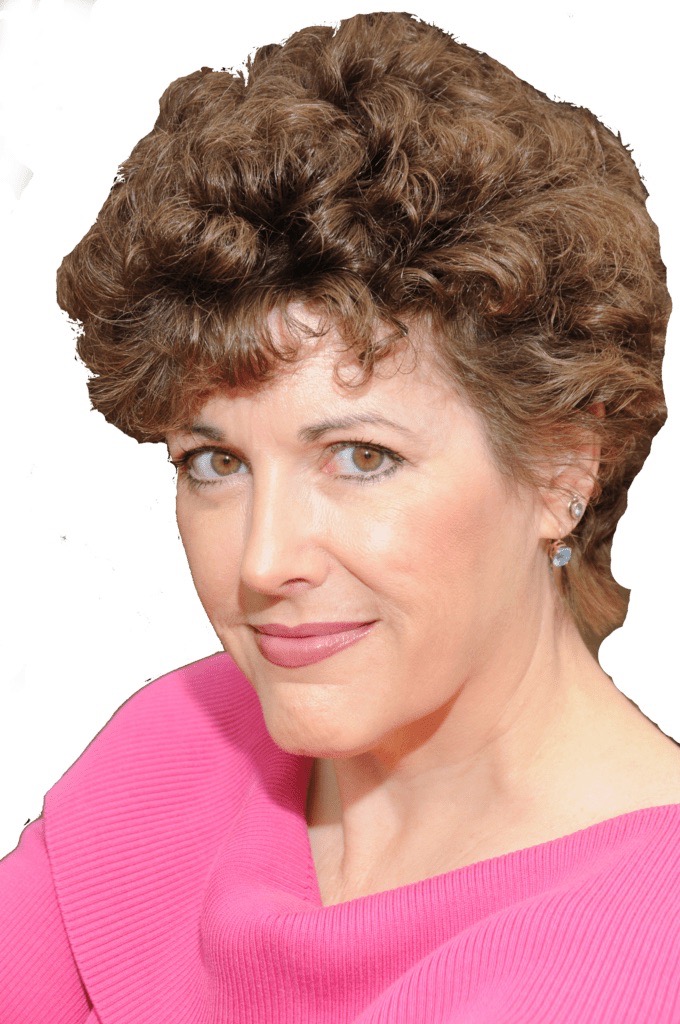
Meet the Thriller Author Episode 240: Amy Shojai on Pet-Centric Thrillers, Writing, and Publishing
In Episode 240 of Meet the Thriller Author, I’m joined by award-winning author Amy Shojai, whose fascinating career spans more than three decades of writing about pets and suspense. Amy is the author of more than 35 pet-care books and a series of unique pet-centric suspense thrillers, where dogs and cats play an integral role in the story.
Amy shares the incredible journey that led her from working as a television news anchor and veterinary technician to becoming a bestselling author. We talk about the many rejections she faced early in her career, the mentors who helped her improve her writing, and how she landed her first magazine articles before signing book contracts with a major New York publisher.
One of the highlights of our conversation is the unusual way we first connected. A scammer impersonating me and the Meet the Thriller Author podcast contacted Amy, asking her to pay for an interview. Fortunately, she recognized the warning signs and reached out to me directly. We discuss the experience and share practical advice to help authors avoid similar scams.
We also dive into Amy’s transition from nonfiction to fiction, how she developed her distinctive pet-centric thriller series, and why readers can always count on one important promise: the beloved pets in her novels never die. Along the way, we discuss writing suspense, creating memorable animal characters, and the lasting bond between people and their pets.
If you’re an author looking for publishing insights, a pet lover, or simply enjoy suspense and psychological thrillers with unforgettable characters, I think you’ll really enjoy this conversation.
Connect with Amy Shojai
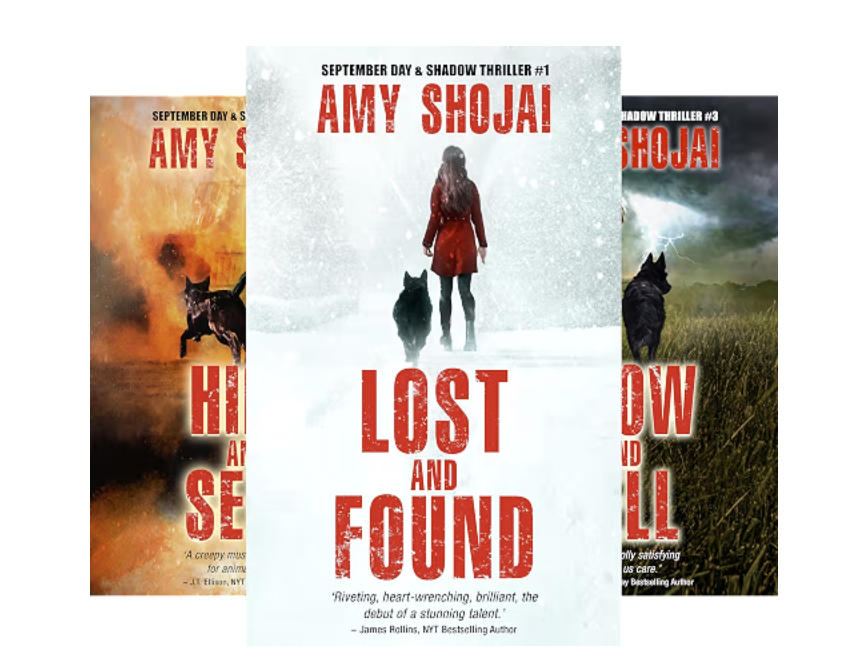
Latest Book
Amy Shojai Books
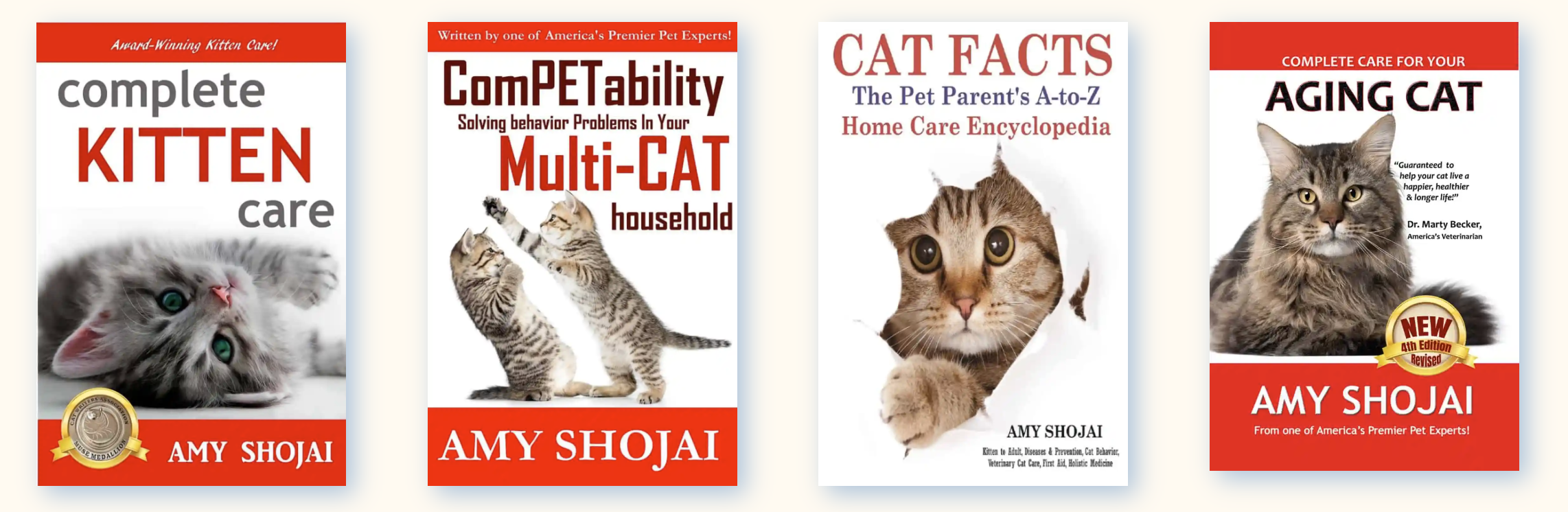
Non-Fiction Pet Care Books by Amy Shojai

Show Notes, Transcript, Video
Summary
Career Journey
- Started as a veterinary technician tasked with translating medical concepts into everyday language for pet owners.
- Broke into writing through personal experience stories published in magazines like Cat Fancy.
- New York publisher discovered her work and invited her to write The Cat Companion — a major coffee table book published by Penguin Putnam that sold 45,000 copies.
Transition to Fiction
- Wrote 35+ nonfiction pet care books over 30 years, many with major publishers (Random House, Simon & Schuster, Rodale Press).
- Shifted to thrillers because she wanted to read the book she couldn’t find — one featuring animals as integral characters, not props.
- Now writes the September and Shadow thriller series (9 books published, working on book 10).
Unique Writing Style
- Features dual viewpoints: human protagonist September Day (an animal behavior consultant) and her service dog Shadow.
- Animals are never killed on-page; she promises readers the pets survive (a core rule among animal-loving authors).
- Balances entertainment with education — includes real animal behavior facts, with a “Fact, Fiction & Acknowledgments” section in each book.
- Avoids graphic violence, explicit sex, and harsh language (uses creative curse words like “krapiocka” instead).
Publishing Evolution
- Hybrid author: self-publishes thriller series independently after leaving traditional publishing and parting with her agent.
- Uses Dragon software for dictation and Scrivener for color-coded multi-viewpoint organization.
- Shifted because internet disrupted traditional nonfiction markets; independent publishing gives her full creative control and flexibility.
Inspiration & Process
- Draws characters from real experiences: Shadow was named after her black German Shepherd; current dog Shadow is named after the character.
- Runs reader contests to name hero animals in each book — winners become named characters in the stories.
- Knows beginning and end but lets the middle surprise her; recently discovered a major twist she didn’t plan.
Transcript
Click here for full transcript
This transcript was generated with the help of AI and only got a quick once-over from a human. So if you spot a typo or something that doesn’t make sense… let’s just blame the robots. 🤖
[00:00:00.180] – Alan Petersen
You’re listening to Meet the Thriller Author, the podcast where I interview writers of mysteries, thrillers, and suspense books. I’m your host, Alan Petersen, and this is episode number 240. Before we jump into today’s interview, I have some exciting news. Today, Tuesday, June 30th, is release day for my brand new psychological thriller, The Ones You Know. If you enjoy twisty psychological suspense filled with secrets, deception, and shocking twists, I hope you’ll check it out. The book is available now in ebook and paperback, and if you’re a Kindle Unlimited subscriber, you can read it at no additional cost as part of your membership. You can learn more or order your copy at thrillingreads.com/ones. That’s ones as in O-N-E-S. Thrillingreads.com/ones. And speaking of today’s guest, I have to share a funny coincidence. Amy Shojai has spent her career writing about dogs and cats, And I’m actually recording this intro just a few hours after my wife and I adopted a 2-year-old terrier from the SPCA. She’s lying here looking at me like she’s trying to figure out why I’m talking into a microphone. I don’t think she realizes it yet, but she’s already made her podcast debut. All right, now on to today’s guest.
[00:01:16.260] – Alan Petersen
Amy Shojai is an award-winning author with one of the most unique backgrounds of any guests I’ve had on the show. She’s written more than 35 pet care books and later turned her talents to writing pet-centric suspense thrillers where the animal companions are every bit as important as the human characters. We talk about her fascinating career journey, her transition from nonfiction to fiction, and what makes her thriller so distinctive. I think you’re really going to enjoy this conversation, so let’s get right to it. Here is my interview with Amy Shojai. Hey everyone, this is Alan Petersen with Meet the Thriller Author, and on the podcast today I’m joined by Amy Shojai, the award-winning author of more than 35 pet care books and a series of pet-centric suspense thrillers. Amy has worked as a veterinary technician, pet behavior expert, and has appeared on shows like Cats 101 and Dogs 101. Amy, welcome to the podcast.
[00:02:09.570] – Amy Shojai
Oh, thank you, Alan. I’m excited. I actually, I read one of your books over the weekend, so I’m excited to, to actually meet the thriller author.
[00:02:18.970] – Alan Petersen
Oh, awesome. Well, thank you. I’m so glad you’re here. And actually, this is a good way to let the listeners know. So we met under pretty unusual circumstances. So, and I tried to reach out. I made post messages on my website and the previous episode, but there’s scammers out there impersonating me and my podcast, and they’ve been emailing a lot of authors asking them to pay a fee to be interviewed. And you were one of the people, uh, but you fortunately, you were suspicious and you reached out to me directly, so we were able to nip that in the bud before, uh, before, you know, you lost any money.
[00:02:57.580] – Amy Shojai
Um, I’m not gonna pay that stuff.
[00:02:59.750] – Alan Petersen
Yeah, yeah, that’s, that’s, yeah, that’s one thing too that’s very important to know. Like most podcasts. I never charge for guests to be on my podcast.
[00:03:08.980] – Amy Shojai
Yeah, I’ve done lots and lots of radio and podcasts, and I have never been asked to pay. So that automatically raises red flags. And also, rarely do people reach out to you directly and invite you. Usually, it’s the other way around, that you’re kind of knocking on doors and hoping somebody will, “Hey, yeah, you come talk to me. Let me be a guest.” So that, again, was a red flag. And Fortunately, you’re a very familiar name, and so I was able to find a legitimate email and copied you on that because I wanted you to know about it also. There are a lot of very legitimate authors. I mean, the author of a great movie out there right now supposedly sent me an email this week also. So, you know, and I don’t write about octopuses, but still, you know, it’s like, Oh yeah, you’re gonna make me famous. Why do you want to know about my books?
[00:04:09.980] – Alan Petersen
Yeah, yeah, I get, I get those too. Scammers for like book clubs and all these, all the movie producers, uh, want to make all my books into movies, of course. But, but yeah, so yeah, so people, yeah, so if authors listening to this, you have to be very, very careful, especially nowadays. Like, it’s, it’s very easy now, um, with the AI, very easy to write the, the emails, um, so it makes it seem very legit. I saw the, I, uh, a few people me the actual emails. I was kind of— it’s very good, looks very legit. And the email they use, they have my name on there, was alanPetersenhost@gmail.com. So FYI, I never— I, I, it’ll usually be through thrillingreads.com when I reach out to people.
[00:04:53.140] – Amy Shojai
So yeah, that’s, that’s another tell. If it’s from Gmail, often, uh, that’s, that’s not legitimate because most people are going to use their own website, uh, as part of the email address. So, I mean, I’ve gotten it supposedly from agents saying, you know, or from publishers saying, “Oh yes, I want to know more about your books.” An awful lot, they started out with the book clubs where at first, you know, the book club, “Oh, we have all of these readers and they’re interested in reading your books and there’s no charge. Oh, except for a modest little fee,” you know, and then that modest little fee is like anywhere from $25 to $75 to hundreds of dollars for a book club that really does not exist or that they’ve scammed off of. So, yeah, just if it’s AI, you know, it can be used for evil so much, which is, you know, it’s a great plot for a thriller, but it’s not for real life. It’s kind of throws a wrench in stuff.
[00:05:59.400] – Alan Petersen
Yeah, and they’re good too because they start very slow. They don’t hit you up for money right away, right? And they reached authors from other genres, and the authors pushed back like, well, why do you want to interview me, a thriller author podcast? And they’re like, oh, I want to, I want to expand to other genres. So they had an answer for everything.
[00:06:17.380] – Amy Shojai
So, oh yeah, and I actually, I did get a note back when I, when I sent very polite, uh, response saying, “Thank you very much. I’m flattered because I’m familiar with your work as an author. But could you tell me why you’re not using your regular email address?” They sent a note back saying, “Oh, well, I use this different one just for the podcast.” And I thought— and about that time, you sent me a legitimate email and said, “Aha, aha.” And then, you know, I just delete. You know, this delete finger gets an awful lot of exercise.
[00:06:52.500] – Alan Petersen
Yeah. Well, I’m glad that you know, the silver lining. We’re, we’re now— I, after, after you reached out to me, I went and checked out your website. I’m like, oh, you actually write thriller books? So I checked some more and it looked interesting, and I love your background. So I’m like, I’m gonna have her on for real. Forget that guy, that scammer.
[00:07:11.710] – Amy Shojai
Dog lovers unite!
[00:07:13.110] – Alan Petersen
Yeah, exactly. And I love dogs. So yeah, so here we are. All right, so let’s go, let’s get out to the good stuff now. Enough of the scammers. On your website, I, I love it. You describe yourself as the accidental writer. Can you tell us a little bit about that? Why Why do you think the writing found you instead of the other way around?
[00:07:28.400] – Amy Shojai
Yeah. Well, I, um, as, as you mentioned my background, I was, I was working as, as a veterinary technician, um, and working for a lot of veterinarians. And at that time, the vets didn’t have a lot of time to explain all of the stuff that pet lovers needed to know. And so I was tasked with kind of translating medicalese into language that us regular folks could understand. And that kind of became my forte. And I started writing about it for the pet Vet Press. That was back in the day when magazines were actually physical, not online. And so I started writing personal experience stories about the things that had happened at the vet clinic, the dog that had escaped out onto the roof of the clinic, the, you know, the cat that had diabetes named Sugar, appropriate. And so I started writing some of these personal experience stories to explain to readers, you know, the signs to see and how they could manage it and, you know, just to entertain also. And I kind of got my break that way. I had a New York publisher that was looking for an author to write a book that had already been sold.
[00:08:37.770] – Amy Shojai
It was a packager, which was fine. That was early in my career. And they happened to pick up one of the magazines on the— this was right around Christmas time, and I happened to have 2 articles in Cat Fancy magazine at the time. And they liked my writing style, and they reached out to my editor at the magazine. And when I got home from Christmas vacation, I had an invitation to to write a book that was then published by Penguin Putnam after I finished The Cat Companion. It was a big coffee table book, gorgeous book, and they finished the book in about 4 months, very, very fast turnaround. And they said, well, you know, it kind of occurred to us, do you know about dogs? Do you want to do a dog companion book? And so I did these 2 books, um, and the first one sold 45,000 copies, the dog one about 20 8,000, and it was on my resume, and it kind of launched my nonfiction pet book writing career. So it was all kind of purely by accident, started out that way, and it’s just grown from there. The first book was published in 1992.
[00:09:44.700] – Amy Shojai
So I tell people, you know, in dog years, I should be dead. But I’m kind of aging as gracefully, like a cat, as I can.
[00:09:52.850] – Alan Petersen
Yeah, you know, when I saw you first, I had your name, it sounded familiar, and I looked at your nonfiction books, and it ‘Cause the first time my wife and I got married, the first thing we did, we went and got a dog and a cat. And I swear I’ve seen your books on Barnes Noble back in the mid-’90s.
[00:10:09.350] – Amy Shojai
Yeah, yeah. I actually, and I got my agent from all of that also. And we published around 12 books together. One, I got rights back on most of those and I’m publishing independently now, but the First Aid Companion for Dogs and Cats, it was published by Rodale Press, is still in print and still selling really well. I’m very, very proud of that book. It has saved so many pet lives. And at book signing events, I kind of get choked up over it. I’ve had people that came up and, you know, and were looking at the books and said, oh my gosh. I said, well, oh, can I sign a copy of the book? No, no, no, we already have one. Your book saved my dog’s life. Why we do what we do. And though, you know, then when I started writing the fiction, and I’d always wanted to do, you know, kind of, I tell people that that first fiction book, the first thriller, was the book I’d always wanted read and couldn’t find. And so I wrote the book that I’d always wanted to read, and it includes all of that stuff that I have learned from my work as a vet tech.
[00:11:13.900] – Amy Shojai
And then I’m also a certified animal behavior consultant for dogs and cats, and so it informs all of the, all of the fiction stories, but it comes from the world of reality. So the back of each book, I have a section that’s called Fact, Fiction, and and acknowledgments, and I tell people, okay, this is in the thriller, and that’s fact. That actually, there is a CODIS for dogs that they use to track down, you know, dogfighting. I think that was one of the themes. This stuff that I put in there, I made it all up. And that’s the fun of writing fiction. You get to make shiitake up and have a ball doing it, and all the bad guys always pay for their crimes. If you want them to.
[00:12:00.630] – Alan Petersen
So yeah, I was gonna ask you about that. That must be very, uh, a freedom for you, uh, after all those years writing nonfiction. You have to be very specific. Now you can actually have fun, let your imagination go. But you are careful though. You, you try to balance some educational with your, with your thrillers.
[00:12:17.250] – Amy Shojai
Yeah, right, absolutely. One of the, one of the stories where they’re caught in a flood and a little, uh, one of the little dogs is caught in the flood and drowns. And, uh, the little boy, you know, you know, save my dog, save my dog! And we saved the dog. Using acupuncture. And it actually will work. And that’s a promise I make to my readers that, you know, and a lot of the pet authors do this anymore. We say, you know, the dog doesn’t die. You know, people maybe will, but the animal characters do not die. Because, you know, as a reader, if that happens to me, I’ve thrown books across the room. I’m just, I’m not going to read that that author ever again. So we make that promise upfront. And then, you know, I first started, my dog character was about 9 months old and being trained to be a service dog. And so each book came within 3 to 4 months after that, because I didn’t want the dog to age out of the series. And then it suddenly occurred to me, it’s fiction. He doesn’t ever have to get too old and die.
[00:13:25.740] – Amy Shojai
I can, you know, he can live forever. Yes. Don’t we all wish that our pets could live forever. So that is really a freedom now, and it doesn’t have to be, you know, every 3 or 4 months with the next installment in the series. It kind of becomes like, you know, Murder, She Wrote. You don’t want to be around my characters because you’re going to get in trouble.
[00:13:48.420] – Alan Petersen
Yeah, I have a t-shirt that was Jessica Fletcher that says, “I killed them all.” Oh, I love that. Very suspicious there. Uh, yeah, so, uh, so tell us a little bit about your series. You have, you have 2 different series I believe.
[00:14:02.530] – Amy Shojai
No, it’s just, it’s just one series. Well, it’s kind of interesting, I’ll tell you. Yeah, the, the series, it’s my, uh, the September and Shadow Thriller series. And my main character, September Day, she named herself. Don’t ask me why. I got a little pushback on that, but that, that was the name that she wanted. And Shadow is her service dog. The very, the very first, uh, story starts out she’s training this dog for her autistic nephew, the little boy. And they get lost in a blizzard, in a snowstorm. And when the scenes were with the child, I didn’t have a clue how to write an autistic child’s viewpoint. So I put them in the dog’s viewpoint and used my background with veterinary care and the behavior. The dog does not talk. These are not cozies. Dog does not talk. But you view the world through this young German Shepherd’s eyes. You know, he would say things like, you know, “Why is that man staring at me? He doesn’t look away the way a polite dog would.” You know, so people learned about dog behavior and why they do the things they do. And I had such a ball writing that.
[00:15:18.610] – Amy Shojai
And then the reviewers, the readers came in, and those were their favorite parts of it also. And then later on, they were— so I had people that love cats. Well, why don’t you have, you know, I have a trained Maine Coon cat in the series also. Why don’t you have cat viewpoint? Cats are very, very different. So yeah, some of the later books actually have some cat viewpoint also. But I got to a point that the, um, I thought it was going to be a standalone, and then people wanted to know, well, what happens next? You allude to a backstory. We need to know what happens next. So then I had to come up with it. And when I got to about book 4, I had worked with a colleague of mine, you may know Toby Neal, who was writing a whole series of thrillers in Hawaii.
[00:16:05.530] – Alan Petersen
Yeah, Hawaii.
[00:16:06.160] – Amy Shojai
And she was in an Amazon program where she could invite people in to write in her world novellas. And it was called Kindle Worlds. And she invited me and a whole bunch of other people to come in to right in that world. And her character had a Rottweiler police dog, her main character. And so I came up with the idea, well, where did she get a Rottweiler as a police dog? Because they’re very rarely used as police dogs because, because of— they can overheat very, very easily, especially in Hawaii. So I wrote the backstory of of her dog, uh, and how she had gotten the puppy from Texas, where I am, to Hawaii, and into her main character. And then when they discontinued the Kindle Worlds, Obi very generously said, take your characters, take your stories, rename them because she owns those, but rename them and use them however you want. And so I rewrote everything. I had 3 novellas, I’ve turned them into one, and that’s book 4. And expanded, and I put it back into my world. And so I have a second, uh, series of characters there that could spin off at some point.
[00:17:27.960] – Amy Shojai
And they’ve kind of become, uh, somehow or another she’s related to my main character. And now they’ve got a, a Rottweiler that is, uh, uh, you know, grown up and is a police, police dog in training and a bomb-sniffing dog while Her dog Shadow is a service dog and doesn’t attack. And so, yeah, it’s— it could. And I’m talking too much here, Braykin. I will shut up for a while.
[00:17:55.190] – Alan Petersen
No, no, that’s so fascinating because that’s what I— what’s so fascinating about your thrillers too. And because you mentioned before, you’re used to seeing animals in cozy mysteries, but it’s very different. Um, is that something that you were like— is that why you said you wanted to write the thriller that you— the book that you wanted to read?
[00:18:12.430] – Amy Shojai
Yeah, yeah, yes, very much so, because people people early on, um, would tell me, well, you can’t, you can’t write in a dog viewpoint unless it’s a children’s book, you know, it has to be a kid’s book. I had agents tell me, I had editors tell me that, you know, at writers’ conferences. I entered contests where they liked the writing, but they said, no, you can’t do that, it won’t sell. And then I went to Thriller Fest and, uh, you know, met a lot of people, a lot of my heroes, uh, was able to— at the time I was doing a podcast as well. It was called Pet Peeves. And I got to interview James Rollins, who is a veterinarian.
[00:18:49.970] – Alan Petersen
Oh, I didn’t know that.
[00:18:51.170] – Amy Shojai
And so when I was getting ready, my Lost and Found, the first book, was going to be a debut at Thriller Fest. And I happened to have his email because I had interviewed him before. And so I got my courage and I sent him an email and reintroduced myself and said, you know, we did this this podcast. And he had done a book with another fella where they had— he had a, um, a war dog, a military dog, and he had some chapters in that dog’s viewpoint. And I explained what I was doing, and I said, and I know you’re very busy and I hate to presume, but if you would consider— and he said, sure, I’m going on tour, send me the email, me the PDF. And he gave me a cover quote for the first book. Oh wow. Times change. If people are listening and they have a passion for something that everybody in the world is saying, “You can’t do that,” or, “It won’t sell,” or whatever, now with the freedom of independent publishing, if you think that it’s going to work, jump off that cliff. I mean, the worst that happens is it’s not going to work and then you go a new direction.
[00:20:03.500] – Amy Shojai
But give it a chance. And since that time, there have been a lot of authors that are now doing viewpoint, animal viewpoint characters, not just in fantasy, not just, you know, in a lot of different things, also in cozy mysteries. But mine are not cozy, so I have to be real careful about that. One of my favorite authors, Emily Kemelin, is, also does books thrillers with, um, with, uh, you know, dogs in— in her main character has, has a dog that protects her. I don’t think she does dog viewpoint, but she is very important to the plot. And she’s also very, very adamant. She said these are not cozies, these, you know. So you have to be very careful and upfront because you don’t want to disappoint people. Now Amazon, if you go on Amazon and look Sometimes they will put the books where they think they should go. And so it— some of my books do look like they are in a cozy category, but they’re not. And I try to be very careful about that. Um, one difference with my thrillers is I try very hard to, uh, not have on, on-scene over-the-top violence.
[00:21:22.010] – Amy Shojai
I also don’t have any sex. On scene. So like, that is true of cozies. You don’t have a lot of the graphic kinds of things. And I don’t have a lot of graphic language either. And that’s my own personal preference. I grew up in a family, we weren’t allowed to curse. So we made up curse words. As kids, we made up words. And so I take it as a challenge. Like my main character says, “Krapiocka” a lot. Or shiitake, or, you know, those. And there are ways you can do it. And it’s a challenge for me, and it’s kind of fun for me. And then when people ask me, “Well, is there bad language?” or, “Oh, my granddaughter who’s 14, is this appropriate to her, for her, because she loves animals?” And I said, “Well, you read it first. There’s no sex on stage, but there is some language, and they are thrillers, so people die. But you read it first.” If they’re 12, 13 years old or older, probably they would enjoy it.
[00:22:21.290] – Alan Petersen
I like that. Yeah, you, you read it first.
[00:22:24.250] – Amy Shojai
Yeah, you read it first. I’m not taking, you know, I don’t know what, you know, is this a Christian story? Well, she has, she has a faith of sorts, but again, people die.
[00:22:34.510] – Alan Petersen
Yeah, I think what’s different too with your books, because I’ve seen, I have noticed, uh, in the last couple years that I’ve seen more books, thrillers coming out with animals, but usually they’re like canines or they’re bomb-sniffing dogs. Yeah, but your, your character is, uh behavioral, animal behaviorist. Can you tell us a little bit about that? And I also have to ask, because since you have that background, is— are you— what parts of you are in this character?
[00:22:59.110] – Amy Shojai
She’s younger, prettier, more athletic than me.
[00:23:03.300] – Alan Petersen
Well, we all do that with our characters.
[00:23:07.720] – Amy Shojai
You know, they always say write what you know. So I do write what I know. My main character, she is a— she was a professional cellist. I’m not a professional, but I do write. I do play cello. I’m a musician. I write plays, musicals, and perform. So, I have that background. My main character has a rose garden. I have a rose garden. Part of that is it saves me time in research. Because that’s a rabbit hole I can go down. From my background with nonfiction, I can research forever and never, never write. I love research. So, So what I try to do now is write the book without doing a lot of research up front, and then kind of do bookmark things where I go back, “Okay, go find the actual thing.” And then, like, I will put in the link, “Go learn more about the dog CODIS situation.” Or, “Oh, yes, I wrote here where dogs— this, my main character, my dog Shadow climbs a tree. Here’s a video.” of a breed of dog that likes to climb trees, you know, and so you give them things like that. So there’s a lot of my background in there, but kind of, you know, you get to play around and figure out what’s fun for you, what would be fun for the reader.
[00:24:40.170] – Amy Shojai
I would love to be able to do some of the things my main character can do. But I’m happily married and she’s not. So that’s another thing. And I’ve never killed somebody, and she has. I’ve never been stalked, and she has. So there are a lot of things like that, that, you know, similar yet dissimilar. We’re both in Texas. I set my books in a fictional North Texas town, so I can make it up and people aren’t going to come back to me and say, “Well, you know, actually, in 1970—” 1972, that building was torn down. So it’s, you know, because that— and I have a gun expert that checks a lot of that stuff. I have, I have several friends that are experts in different things, in, in, um, being on the spectrum, or are, um, you know, guns, or, you know, whatever else it is. Um, I mean, I think that’s— I’m sure that you do the, you do the same thing when you’re researching something, uh, and making, making sure that you know, dotting all the, all the i’s and crossing the t’s so you don’t get a bunch of reviewers coming back and saying, well, you know, I know it’s fiction, but yeah.
[00:25:56.570] – Alan Petersen
Yeah. Oh yeah. And I make up my towns too, because yeah, same thing. I don’t want to— you can’t take a right on that on Main Street.
[00:26:03.480] – Amy Shojai
And now I did, I did in one of my books, I had her leave Texas and, and go back to South Bend, Indiana, where her first husband had died. And I grew up in that part of the country. Again, I didn’t have to research it that much. So I didn’t have to spend the cost of travel or time or that kind of thing. And this most recent story, one of the people there is a teenager and her boyfriend lost his parents and has been moved to Kentucky to live with an aunt. And I have family that’s in Kentucky. So again, if that comes up in the future, I don’t have to necessarily go and do my research. So always kind of thinking. Yeah, yeah.
[00:26:52.130] – Alan Petersen
Smart, smart. So how many books do you have in the series now?
[00:26:55.990] – Amy Shojai
Book 9 came out in this past November, and I’m working on Book 10 right now. And people ask me, well, how many are there going to be in the series? I said, when this— when the ideas stop coming, I guess I’ll wrap it up. This, this most recent one is— every one of them does, they take me in new directions. Does that, does that happen with you also? I mean, I’ve got a huge twist at the end on this one that’s going to kind of launch her in a whole new, new way of doing— she started out in the first book, she was— she, she knew she had a stalker, and she had rows of locks on her doors and didn’t want to leave. And that’s why it was so hard for her to go out and find this missing nephew in the snowstorm. And by now she’s this kick-ass, go after the bad guy before they come after you. So she’s, she’s had a big character arc and her dog has had a character arc also. And that’s, that’s fun. So you, do you find this the same thing is true that it just kind of surprises you sometimes?
[00:27:55.650] – Alan Petersen
Yeah, yeah, absolutely. And then even, even with the outline, I always outline, but I end up kind of deviating at the end. So it doesn’t really, sometimes Yeah, it takes a whole different direction. Yeah. And that’s fun.
[00:28:11.940] – Amy Shojai
I told you before we started, I just read your book. I think it’s The Good Mother.
[00:28:18.340] – Alan Petersen
Oh, yes.
[00:28:19.240] – Amy Shojai
I just— that was cool because halfway through I knew who this was. And then suddenly it was like, oh, that’s who that is. Okay. That was well done. Yeah. Well, I’m not going to do spoiler there. But yeah, for people that they haven’t read that, that’s a good one. That’s—
[00:28:35.730] – Alan Petersen
I couldn’t put that one down. Yeah, thank you. Yeah, that’s the big thing with the psychological thrillers that I’m writing now. They’re very big on the twists and they have to have a couple of fake ones. And so, yeah, that was very well done. Yeah. Yeah.
[00:28:48.360] – Amy Shojai
So I think, I think as we, as we have written these things, we kind of start to see, you know, the kind of the, the, the little hints here and there and trying to figure out, Oh, I know where he’s going with this, you know. And then, and then when you, you miss it, that makes it that much more delicious for the reader. Mm-hmm. And what—
[00:29:10.900] – Alan Petersen
another— you’re working on your 10th book. Is— do you find it like it’s getting— is your process the same? Does it get easier? Is it still challenging each book? Yes. So I figured.
[00:29:25.030] – Amy Shojai
Yeah. Well, the first one took me forever. It’s— the first one And as I said, I had entered it in contests. I entered it 3 years in a row in the same contest. And first year it was disqualified because it’s got to be a kid’s book. Second year, I think we had a snowstorm and it never got to the judge. So I didn’t get it. And then the third year I entered it and it won second place., and got a lot of great feedback. Oh, and this was fun. This was interesting. I encourage people to enter a contest for this reason. I fixed all of the things that this judge had suggested I do, and it was blinded, so I didn’t know who the judge was. And then I sent it to a small publishing house that I had been working with to bring my out-of-print nonfiction and ask her if she would consider. And she looked at it and she said, “Oh, yes, I judged this in a contest recently.” And it, you know, I would be happy to take, and they took it on. So, the judge who would give me the feedback was the one that ended up publishing it.
[00:30:33.990] – Amy Shojai
Oh, wow, small world. Small world. So, yeah, the first 3 books they published, and then I got the rights back and reissued them. So, yeah, the first books were really hard. It was like, and I’d still tell people that, The first draft is like, you know, cut your wrist and bleed on paper. It’s just, it’s very, very— I love editing. Editing part’s fun. But it’s been very difficult, very labor-intensive. Especially, I’m not doing a lot of the nonfiction writing anymore for quite a while. In fact, up till about middle of last year, I was doing a lot of work for some corporate clients writing, you know, pet behavior stuff for their online sources. But I don’t have to spend the time doing that. And I changed about middle of last year, the year before, I invested in Dragon software, and I now dictate the first draft, and it goes a whole lot faster because I don’t have to worry about spelling things correctly or any of that. And after you trained your dragon. You have to train your dragon. And I’m using Scrivener. And that way, I can kind of rearrange my chapters as I go.
[00:31:55.420] – Amy Shojai
And I’ve got them color-coded because I have multiple viewpoints. So, Shadow’s viewpoint is one color, and September’s is another, and the bad guys is a third. So, I can see, you know, I can kind of alternate whose viewpoint. It’s going a lot faster. Now, and it’s easier to manage. I try to get in. I work every day. Right now, I’m sitting at my desk, but actually, this is a stand-up desk, and I’ve got a treadmill underneath, so I can sit, stand, and walk while I’m checking email or dictating. Once it’s done, then I start, you know, the draft is done, then I can start doing the editing, and I’ll do at least 6 editorial passes before I send it to my editor in Canada. And my cover designer is in England. So, I’m all around the world.
[00:32:52.400] – Alan Petersen
And do you outline before you start to write, or do you just—
[00:32:55.130] – Amy Shojai
Yeah, I’m not like you. I’m not really strict on that. I know the beginning, I know the end, I know several of the major plot points. Through the middle. But, and as you say, you know, sometimes it changes like this, the end of it, I didn’t know that that was going to happen. When it happens, kind of like, oh my gosh, that’s great. That’s got to really, that’s going to upset readers. And then they’ll figure out, oh, it didn’t really happen. You know, it’s like, and it’s like, you go, you’re so gleeful. Oh yes, this is, and then I post little teasers, you know, on social media and say, oh my gosh, ‘You are not believing what just happened in my brain. This is so exciting.’ So I’m excited to get this one done, but my husband’s having surgery tomorrow, so it’s taking a little longer. So I’ll be taking some time off there for his recovery, and hopefully it’s going to work out really, really quickly. He’s having some back surgery. So, ah, yeah, good luck. And that’ll probably end up in a book at some point.
[00:34:04.940] – Alan Petersen
Yes, yeah, uh, I was just wondering too, because, uh, when I look at your website and your background, and I always ask guests about if they draw inspiration on their characters from people, but now with you, with animals, and do you— are you based on real animals that you’ve encountered in your life?
[00:34:24.670] – Amy Shojai
Yeah, yeah, the first, the first book, um, Shadow, was, um, his, his, uh original name was Magic, and that was my black German Shepherd at the time. And then I got to thinking, well, maybe I shouldn’t name him after my dog. But, you know, the first, the first drafts, first series drafts were, were him. And then I changed the name to Shadow. And it’s kind of full circle now because the little dog that I have now— well, he snuck out, he’s left— his name is Shadow. So I named him after the character, and he’s not a German Shepherd, he just thinks he is. Um, he’s I call him my Kelpie wannabe. So he’s much smaller. But yeah, I named the first— I’d always had German Shepherds and I just adore them. They’re super smart, super bonded to their people. And then the other fun thing that I kind of did by accident with the first book, and I’ve done it with every one since then, kind of got myself in trouble a couple of times. I do a contest for my readers with each book, name that hero pet. Oh, nice. And yeah, so I sent a note out to my newsletter list or to the blog.
[00:35:42.720] – Amy Shojai
Yeah, I still write a blog. And people can nominate their dog. Now I also do, they can name their cat. I’ve had a couple horse heroes also. And I tell them basically what the dog needs to do. Like, there was one where he was going to climb into a crashed car in a snowstorm and keep somebody warm until help could get there. So I said, you know, it can’t be a Chihuahua necessarily. But, you know, other than that— and other times I’ll say it doesn’t— there was one that was going to be a diabetic alert dog.. And the dog that won was a 3-legged dog. It was an amputee. And it really kind of touched me because we had a dog at that time that was a 3-legged amputee. And so I learn about their animal and then I write them into the story. And there was one book where I had so many that, “Oh, these are so all such good. I’m gonna write them all into the story.” And it was like, Oh my God, never do that again. Never do that again. There was too many. It was like, oh goodness. So I try to limit it now.
[00:36:59.710] – Amy Shojai
And my editor will say, well, you missed a couple of the place where you needed to replace and put the real name in. So we’ll get those figured out. But because I do that kind of once I have the book completely done, and then I have to add in extra stuff like You know, one of them, there was a cat that loved bread and would steal the whole package of bread and, you know, grab it and just take it off and chew a hole in it and eat all the bread. And so I would add that kind of thing in. And then they get bragging rights. They get an acknowledgement in the back of the book with their name and the real name of the dog or the cat. And they get to, you know, share with all of their family and friends, hey, you know, Poopsie is a hero dog in Amy’s book. So it’s, it’s good for me too. And it makes them feel good as well.
[00:37:55.130] – Alan Petersen
And in your books, what role do the animals play then in revealing that, like the true nature of the human characters? Is that something that you think about when you’re writing?
[00:38:04.660] – Amy Shojai
Yeah, it’s, it’s, it’s interesting, because sometimes, you know, sometimes I have really, really horrible mean, bad villains, but they love the animal, you know. And that’s been a big problem for me, and I think also for some other pet professionals, where you’ll have— you pick up a book and you notice, and the main character has a dog or a cat or whatever, and You know, they interact with them in the first chapter, the second chapter, and then they go off on adventures. And the whole book they’re gone. And then they come back and the dog is just sitting there waiting, you know. And it’s not like a real dog that would have pooped everywhere and the cat would have clawed the furniture, you know. So, you know, that’s— and I do lectures now. I’ll do lectures at conferences saying, you know, in fact, I’m going to be doing one I’m hoping at a future one called Writing Like Cats and Dogs and putting animal behavior in context. And don’t let them just be a prop. If you’re going to put them in there, do it in the right way. You know, I’ve heard agents say, “Yeah, give your main character a dog or a cat.
[00:39:24.710] – Amy Shojai
It makes them more human.” Well, yeah, but not just that. You know, you have to actually like them or, you know, have it work some way. So right now I have a— in the— in— The, the Curtain book, I have a, I have a bad, bad character, and she does not like cats and dogs. In fact, she is, she’s out to, to destroy and kill Shadow because that will destroy, uh, the main character. So don’t worry, Shadow won’t die. That’s so important.
[00:39:55.900] – Alan Petersen
That’s, that’s something that I remember hearing, like, you can kill countless people, but yeah, yeah, animals. Is that something— did you know that before you started writing these? You know, that was a big rule?
[00:40:05.020] – Amy Shojai
Oh, absolutely, absolutely.
[00:40:05.800] – Alan Petersen
Because that I always I was one of those readers.
[00:40:09.660] – Amy Shojai
Yeah, and I belong to two writers’ organizations, the Dog Writers Association of America and the Cat Writers Association, which I’m one of the founders of that. And that is a premise, you know, pretty much. I mean, it’s even kids, you know, and I don’t like to have kids injured or killed or anything in my stories either. You know, that may be a part of the plot, but it’s offstage. Stage. It’s nothing on stage. And even one of the books was dogfighting theme. I did not have anything on stage there. But yeah, you do not injure, you do not harm, you do not kill an animal character if you want to attract people who love animals. It’s, I mean, and it goes the other direction too. If you have somebody who absolutely adores kids and babies and everything, you’re not you’re not going to do that. You always have to think who your audience is.
[00:41:17.120] – Alan Petersen
Yeah, and you will get bad reviews. You will.
[00:41:19.780] – Amy Shojai
You absolutely will get bad reviews. And I got bad reviews, a couple of bad reviews on the first book because my bad guy in that was also on the spectrum. And they, one of the reviewers was on the spectrum and said, you know, we are not We’re not evil people. We’re not bad people. And I, you know, I resent that to be, you know, all the— and the little boy, and there was a victim, and then this was a bad guy. And I took that to heart. And so, in future books, those children that have been victimized in the first book, which is they had created a miracle drug to cure autism, which is, you know, total fabrication, but It’s fiction and it’s a thriller. And this bad guy was selling this stuff. So in future books, I had those children be the heroes to get back at the bad guys. And so it came full circle. They were no longer the victims. They were the instigators that got justice for themselves and for others. And so I let, you know, I do I do read reviews. They say you shouldn’t. I don’t read very many of them, but when it’s something like that, you can learn a lot from them.
[00:42:39.640] – Amy Shojai
And that was also people saying, “Well, what happened? Why did she have— you know, why was she always locked up? What was her backstory? Because you never told us what—” So the second story told what the backstory was, and the stalker came up. So, you know, all of these things things I think you put in the story, maybe you don’t know what it means in that book, but then that triggers something in future stories. And that’s kind of the way this whole— all 9 books, they all hang together. I didn’t— if I had to plot these and plan these all at once, there’s no way in heaven I could have done that. It’s just something in my brain is It’s very, very weird, but it works in this business.
[00:43:28.110] – Alan Petersen
So you’ve had a long and varied publishing career. So I was kind of curious because you mentioned like you’ve gotten rights back from older books. So what do you see— what has changed the most in the publishing space since you first put— started writing your books in the ’90s?
[00:43:41.480] – Amy Shojai
Oh wow. Yeah, yeah. Well, I was one of those that, you know, I was, I was published professionally by New York publishers, and, you know, I had these big publishing contracts with, you know, Random House and Simon Schuster, you know, all of the big names and everything. I had an agent, all of that good stuff. And I would never do vanity publishing, you know, that’s— but that’s what it was. That’s all that was available at that time. And then, I say, publishing went kerflooey. My agent, at one time, we were, you know, at one time, I was writing 3 nonfiction books at one time. A lot of things changed with the internet. And the kinds of nonfiction I was writing, very prescriptive, very how-to, very, very how-to. So, eventually, the internet was answering the questions that my books were answering. People could go to Dr. Google and get their answers very, very easily and very quickly for free without buying a book. And my agent couldn’t sell a book anymore. And so, as the books were going out of print, I was being very emphatic to get the rights back. I didn’t know what I was going to do, but I wasn’t going to just leave them there.
[00:45:13.490] – Amy Shojai
And at the time, it was very easy. Easy to get your rights back. Um, and once, once I had those, then I met, um, at Thriller Fest actually, um, I met Bob Mayer, and, uh, very well-known, uh, prolific thriller writer, and, uh, Jennifer Talti, uh, and they helped me bring my first non-fiction pet books back, uh, self-publishing. They were, they were starting to do that, and they got in on the ground floor and did great work with it. And so, it’s changed a lot. So, I consider myself a hybrid publisher. I’m no longer with my agent because, again, we parted on amicable terms, but she was not able to sell my books anymore. She was not interested in starting from scratch with me as a new fiction author. And so that’s kind of where we’re at. And I’m enjoying not having huge deadlines now. I write what I want when I want. And if I need to, I take time off. I go out, I do my stained glass, or I do roses, or whatever it is that I want to do.
[00:46:30.930] – Alan Petersen
Yeah, it’s a lot more freedom, huh? A lot more freedom.
[00:46:34.820] – Amy Shojai
Yeah. And I’m kind of a a control freak also. I mean, I had my first aid pet book with Rodale. I had to dig in my heels and thankfully my agent helped me. They weren’t going to put my name on the COVID Oh, wow. I did all of the work. I did all the interviews, everything. And the consultant on it, very well-known emergency veterinarian from The Ohio State University, they were going to put his name on the COVID because they Marketing thought his name will sell the book. And one of the first times I had ever gotten a cover review on a book, and I just happened to look to, “Where’s my name?” Oh my gosh.
[00:47:17.560] – Alan Petersen
Oh, you see it from the other side?
[00:47:19.790] – Amy Shojai
So, I sent a very polite and very pointed email copied to my agent, to the publisher, and to my editor. And the publisher emailed me back back very short, put her name back on the COVID Oh, nice. That was it. That was it. And then, you know, so sometimes you have to kind of stand up for yourself. In another life, I worked for an attorney for a short time, so I kind of knew how— what language legalese is. And I always look at my, my contracts that way too.
[00:47:49.730] – Alan Petersen
So, all right, Amy, so before I let you go, and I always ask my guests, um, advice, especially, uh, if there’s animal lovers out there that want to write thrillers— feature animals. Any advice for aspiring writers out there?
[00:48:02.650] – Amy Shojai
Well, love animals first. Yeah. And then do your homework. I mean, if you love dogs and cats or hamsters, or you’re going to write fantasy or science fiction with a dragon, use bird behavior. You know, find something that works for you and do it. Write the book you’ve always wanted to read. For heaven’s sakes, why not? Life is short. Do it now. That’s good.
[00:48:30.420] – Alan Petersen
That’s great advice. So where can the listeners find you? What’s your website? Where can they learn more about you?
[00:48:35.780] – Amy Shojai
Sure, sure. You can go to my website is shojai.com, and that’s S-H-O-J-A-I dot com. And from there you can click on the link to my blog with a lot of free pet behavior advice and information you can find there. And I have a direct bookstore. You can buy books directly from me at a discount if you want, and you can just— that’s bookstore.shojai.com. So you got 3 places you can go.
[00:49:07.790] – Alan Petersen
All right, sounds great. Well, Amy, it was very nice talking to you and very nice to meet you, and I’m glad, uh, I, I’m glad you didn’t get taken and that you didn’t get scammed, but I’m glad that’s how you came on my radar.
[00:49:20.570] – Amy Shojai
So it all worked out in In the end, it all worked out. Thank you so much, Alan. This was great fun.
[00:49:31.650] – Alan Petersen
Thanks for listening to Meet the Thriller Author, hosted by Alan Petersen. If you enjoyed this episode, be sure to subscribe and leave a review on your favorite podcast platform. It helps other thriller fans discover the show. You can find all past episodes, show notes, and author interviews at thrillerauthors.com, including conversations with icons like Dean Koontz, Freida McFadden, and Lee Child. And if you’re looking for your next gripping read, check out Allen’s own psychological thrillers and crime fiction novels at thrillingreads.com/books. Until next time, stay safe, keep reading, and keep the thrills coming.